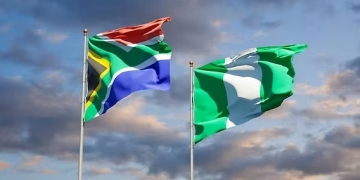
The Trump South Africa tariffs decision has delivered a major blow to one of Africa’s leading economies. Starting 7 August, South African exports will face a 30% tariff when entering the United States. President Donald Trump announced the change, making South Africa the only sub-Saharan country hit with such a steep rate.
By contrast, other nations like Lesotho and Zimbabwe will face 15% tariffs. These too begin within seven days. However, South Africa’s higher rate reflects Trump’s increasingly tense relationship with President Cyril Ramaphosa.
This development poses serious risks. The US is South Africa’s second-largest trading partner. Until now, sectors such as agriculture, textiles, and automobiles have benefited from duty-free access under the African Growth and Opportunity Act (AGOA). The new tariff disrupts that arrangement, placing exporters under pressure.
In a bid to avoid this outcome, South Africa proposed a deal. It included buying US liquefied natural gas, relaxing poultry import rules, and investing $3.3 billion in US industries. Despite these concessions, Trump chose to implement the tariff plan.
According to Trump, this move will protect American businesses, boost domestic manufacturing, and create more jobs. He argues that shielding the US economy from foreign competition is long overdue.
Meanwhile, President Ramaphosa has confirmed that his administration will keep negotiating with Washington. He noted that a framework trade proposal has already been submitted. Furthermore, the government is finalizing a support package to assist vulnerable exporters during this transition.
Since Trump took office, bilateral relations have steadily declined. Not only did he end all US aid to South Africa, but he also accused the country of discriminating against the white minority. South African leaders have consistently denied the allegation.
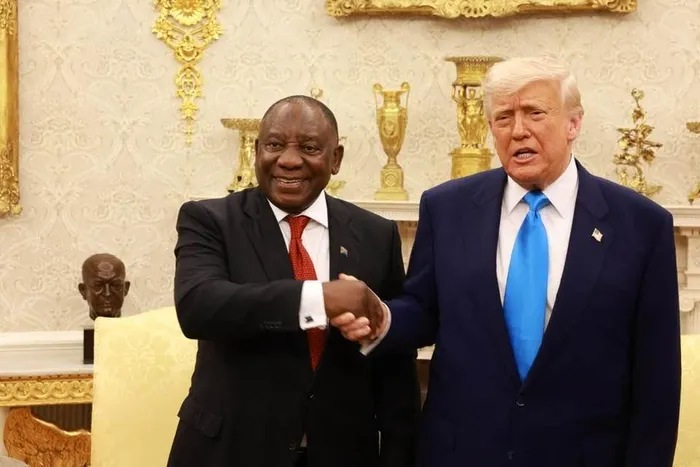
Although Ramaphosa met Trump in May to repair diplomatic ties, the talks produced no meaningful outcome. This week, Trump went further by suggesting he might skip the G20 Leaders Summit in Johannesburg. “I’ve had a lot of problems with South Africa. They have some very bad policies,” he told reporters.
Unsurprisingly, the Trump South Africa tariffs have drawn widespread concern. Many observers see this as a threat to the future of AGOA, which has been a foundation of US-African trade for two decades. The impact could ripple across the continent if the agreement loses traction.
For now, South Africa faces two challenges. First, it must protect its industries from financial damage. Second, it needs to revive trade talks before the situation worsens. How Pretoria navigates the coming months could reshape its role in US-Africa relations.