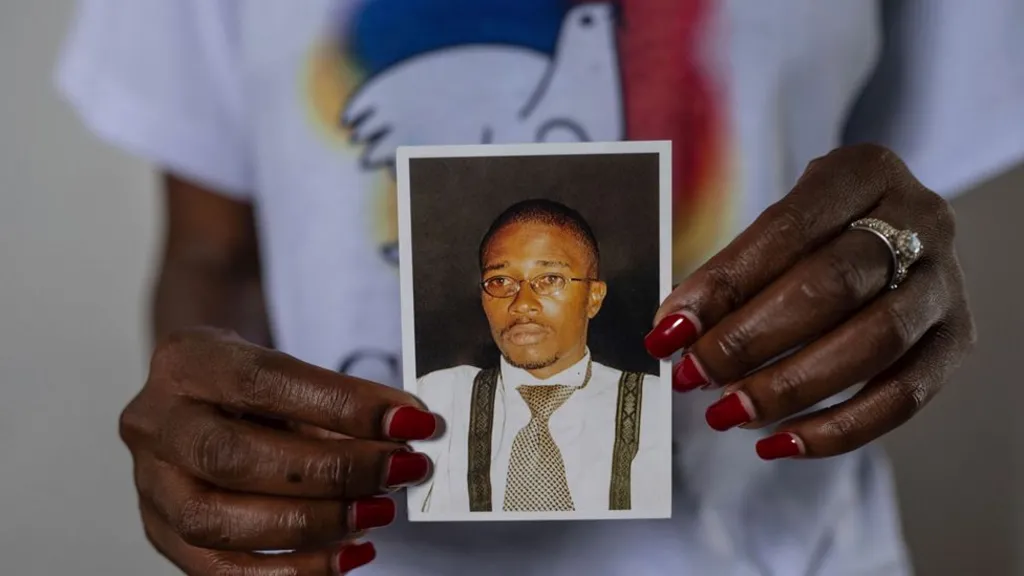
Floribert Bwana Chui was a 26-year-old customs officer in the Democratic Republic of Congo who chose justice over survival. Two days after armed men kidnapped him in July 2007, they dumped his bloodied body outside a university campus in Goma. His crime? He refused to allow spoiled rice to be smuggled from Rwanda—a decision rooted in his Catholic faith and deep sense of duty.
His murder carried a clear message. Fr Francesco Tedeschi, who leads the campaign for his sainthood, called it a “mafia-style” warning to anyone who defies corruption. In eastern Congo, where guns often overpower the law, such killings aim to silence dissent. However, Floribert Bwana Chui’s story has done the opposite. Instead, it has grown into a powerful symbol of moral courage.
He had only worked as a customs official for three months. Yet he immediately rejected bribes—first $1,000, then $2,000, and even more. Smugglers pressured him relentlessly. Even public officials urged him to look away. But he stood firm. His strength came from his faith and his commitment to the Sant’Egidio community, which promotes peace, service, and justice.
As a result, the Catholic Church has declared him a martyr. In June, he was beatified in Rome—officially becoming “Blessed Floribert.” This is a major step toward sainthood. Now, the Church awaits a miracle attributed to his intercession, which would allow full canonization. Given the speed of his recognition, this could happen in the coming years.
A Life Rooted in Faith and Service
Floribert Bwana Chui was born in Goma in 1981, the eldest of 11 children. His father worked at a bank; his mother served as a border police officer. From an early age, he showed intelligence, eloquence, and deep respect for others. “I saw a bright future in him,” his mother, Gertrude Kamara Ntawiha, recalled.
While studying law at the University of Goma, he attended a 2001 student conference in Rwanda. There, an Italian priest from the Sant’Egidio community spoke about peace and Christian mission. Floribert Bwana Chui approached him immediately. He wanted to start a Sant’Egidio chapter in Goma.
From that moment, he dedicated himself to helping others—especially street children. He was deeply affected by the suffering caused by decades of conflict. Consequently, he helped fund school fees, provided food, and supported self-reliance programs. Eventually, he founded a “School of Peace” in Goma, now named in his honor.
His compassion extended beyond borders. In Kigali, Rwanda, fellow Sant’Egidio member Bernard Musana Segatagara remembers their shared dream: “Changing Africa and building peace.” Their friendship grew stronger because they lived in a region of constant tension. Similarly, both believed that young people could be agents of change.
A Stand That Cost Everything
After graduating in 2006, Floribert trained in Kinshasa before taking a senior customs post on the Rwanda-DRC border in April 2007. When a shipment of four to five tonnes of spoiled rice arrived, he had it tested. Once he confirmed it was unsafe, he ordered its destruction.
The smugglers first offered bribes. When he refused, they threatened him. Still, he held his ground. He even consulted a doctor—a nun in Goma—to understand the health risks. “So me as a Christian,” he concluded, “I can neither accept money nor let people die from poisoned food.”
Fr Tedeschi says this moment revealed his loyalty to the Gospel: love for neighbor, justice, and moral courage. Lawyer Jean Jacques Bakinahe, a friend and fellow Sant’Egidio leader, agrees. “He profoundly followed the gospel of peace,” he said. That commitment cost him his life.
A Legacy That Lives On
No one has been arrested for his murder. Nevertheless, Floribert Bwana Chui’s story continues to inspire. Pope Francis spoke of him in 2023 during a visit to Kinshasa. He urged Congolese youth: “Do not fall into the trap” of corruption. “Do not be sucked into the swamp of evil!”
Pope Leo XIV, who presided over the beatification, praised him as a symbol of hope. “This African martyr, in a continent rich in youths, shows how young people can give rise to peace,” he said. The ceremony in Rome was filled with joyful Congolese faithful waving flags.
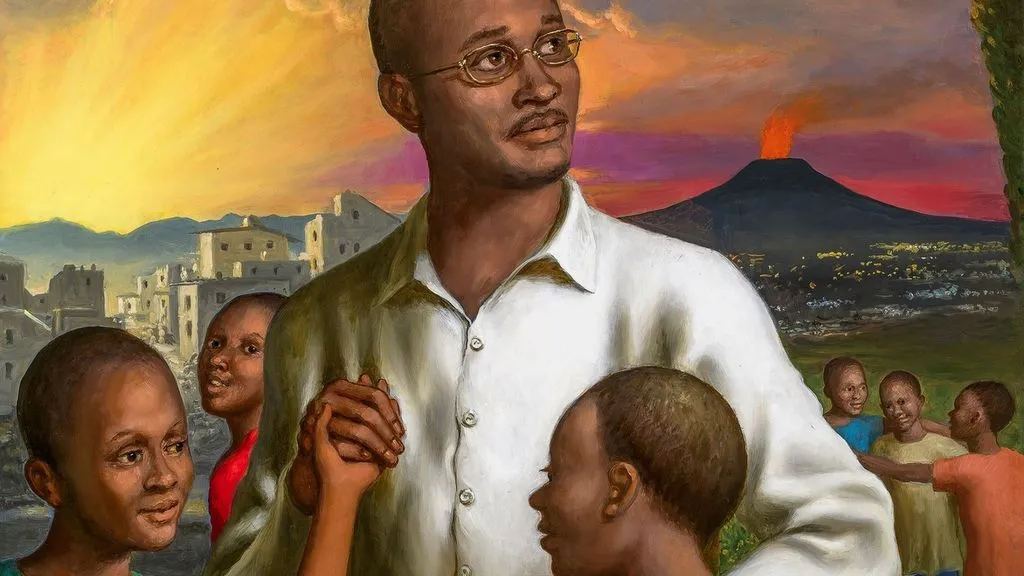
Today, a painting by Stefano Di Stasio honors Floribert, showing him protecting street children with Nyiragongo volcano erupting behind him—a symbol of both danger and resilience.
If lasting peace comes to Goma—a city now under rebel control—it may be seen as the miracle needed for sainthood. And if it does, many will credit the quiet courage of Floribert Bwana Chui. Ultimately, his life proves that one person’s integrity can ignite a movement.
READ: Kenyan Blogger’s Death Sparks Murder Charges Against Police