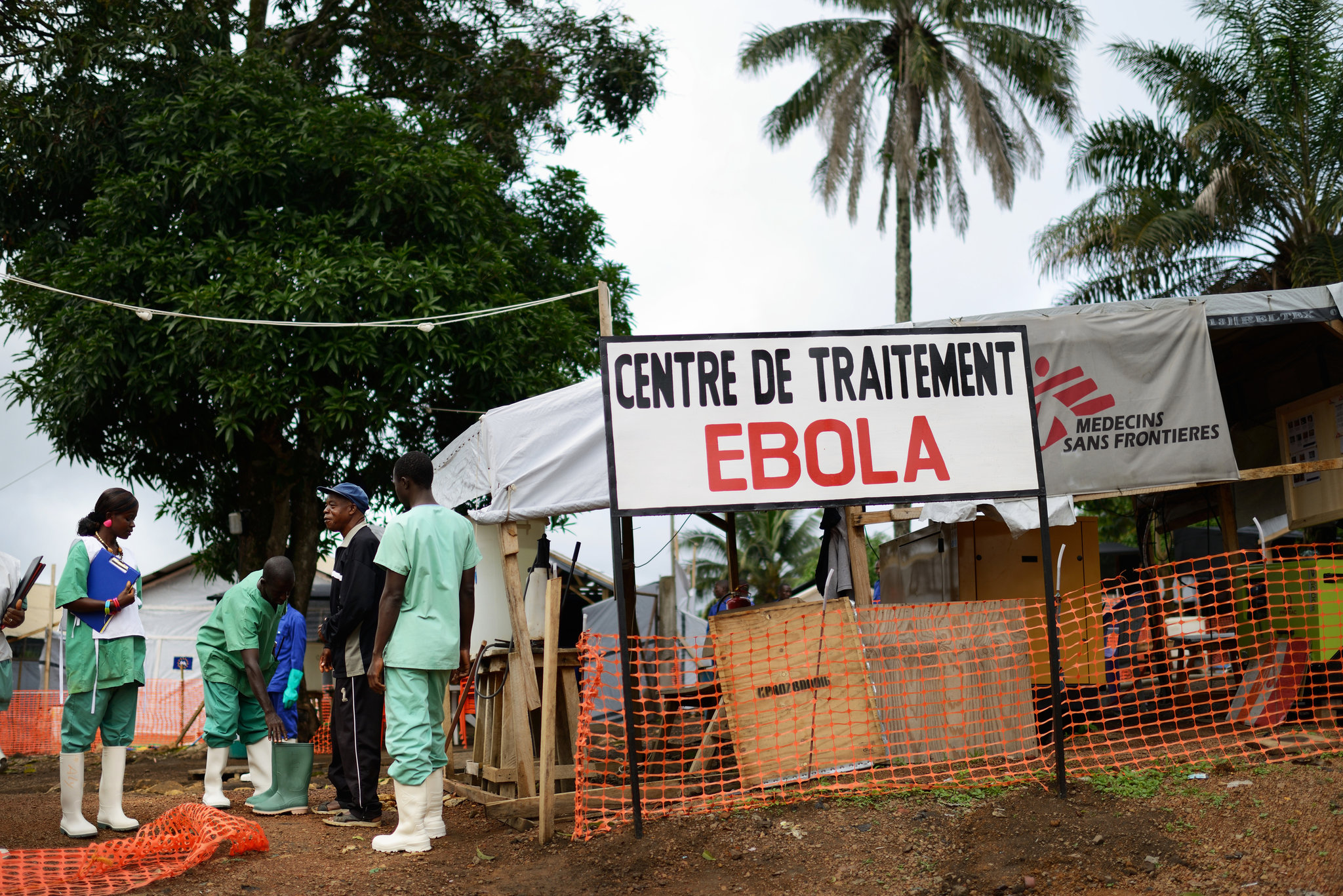
Uganda and regional health authorities are racing to contain a fast-moving Ebola outbreak spreading across eastern DR Congo and threatening neighbouring countries.
The Ebola Outbreak Africa is once again placing East and Central Africa on high alert as health authorities scramble to contain a rapidly evolving crisis centred in eastern Democratic Republic of Congo.
Uganda, which has battled multiple Ebola epidemics over the past two decades, is mobilising emergency response systems as officials warn that the outbreak is becoming increasingly difficult to predict. Health experts say the combination of armed conflict, mass displacement, porous borders and misinformation is creating dangerous conditions that could accelerate the spread of the virus across the region.
Emergency meetings held in Kampala this week brought together ministers, epidemiologists, humanitarian organisations and development partners under growing concern that the outbreak could escalate into one of Africa’s most serious public health emergencies in recent years.
Ebola Outbreak Africa Raises Regional Alarm
The current Ebola outbreak is being driven by the Bundibugyo strain of Ebola Virus Disease, a rare strain for which there is no approved vaccine or targeted treatment.
Health authorities say hundreds of suspected infections and multiple deaths have already been reported in eastern DR Congo, particularly in Ituri Province. The outbreak has spread across several health zones, including Bunia, Mongbwalu and Rwampara, raising fears of wider regional transmission.
What worries officials most is the speed at which the virus is moving through one of East Africa’s busiest border regions.
The Uganda-DR Congo border experiences heavy daily movement involving traders, transporters, refugees, healthcare seekers and informal cross-border workers. Public health experts warn that such mobility significantly increases the risk of cross-border transmission.
Uganda Confirms Imported Cases
Ugandan authorities confirmed that some of the country’s initial Ebola cases involved Congolese nationals who crossed into Uganda seeking medical treatment after exposure in DR Congo.
Within days, infections were detected among healthcare workers and individuals who came into contact with imported cases.
The infection of frontline medical workers is particularly concerning because Ebola outbreaks become more dangerous once transmission spreads within healthcare facilities.
Health officials in both Uganda and DR Congo have already reported the deaths of healthcare workers involved in treating patients during the outbreak.
Uganda’s Ministry of Health has now intensified surveillance operations across high-risk districts while strengthening laboratory systems, emergency coordination units and rapid response teams.
Uganda Deploys Ebola Experience
Uganda is widely regarded as one of Africa’s most experienced countries in handling Ebola outbreaks.
Over the years, the country has developed specialised surveillance systems, treatment facilities and emergency response structures designed to detect and contain outbreaks quickly.
Ugandan officials say those investments are now proving critical as neighbouring countries increasingly rely on Kampala for technical support and regional coordination.
Dr Diana Atwine, Uganda’s Permanent Secretary at the Ministry of Health, said the country remains determined to prevent large-scale transmission.
Ugandan authorities have intensified screening at border crossings, expanded testing systems and deployed emergency preparedness teams across multiple districts, including Kampala.
However, officials admit that Uganda’s success ultimately depends on controlling the outbreak inside eastern DR Congo, where insecurity continues limiting response operations.
Conflict Complicates Ebola Response
The Ebola Outbreak Africa is unfolding inside one of the continent’s most unstable regions.
Armed violence and insecurity in eastern DR Congo are making it difficult for health teams to access affected communities, trace contacts and isolate infections.
Congolese health authorities say some areas remain inaccessible due to ongoing conflict, limiting efforts to fully deploy emergency response operations.
Laboratory challenges also complicated the early stages of the outbreak.
Officials revealed that local testing facilities initially struggled to identify the Bundibugyo strain because systems were configured to detect the more common Ebola Zaire strain. Samples reportedly had to be transported long distances for confirmation, causing delays that allowed transmission to continue.
Health experts say such delays are especially dangerous during Ebola outbreaks because early detection is critical to containing the virus before transmission chains expand.
Healthcare Workers Under Pressure
Frontline healthcare workers are carrying much of the burden as the Ebola Outbreak Africa intensifies.
Medical staff in affected areas are working under immense pressure inside overstretched treatment facilities while facing high exposure risks.
Humanitarian agencies say healthcare worker infections are becoming one of the most worrying aspects of the outbreak because hospitals can rapidly become centres of transmission when infection control systems are overwhelmed.
Women are also disproportionately affected during Ebola outbreaks because they often care for sick family members and participate in traditional burial practices that increase exposure risks.
Aid organisations warn that pregnant women face particularly severe dangers during Ebola infections, with extremely high fatality rates reported in previous outbreaks.
Governments Fear Economic Fallout
The Ebola Outbreak Africa is not only being viewed as a health crisis but also as a growing economic threat.
Regional authorities fear prolonged transmission could disrupt trade corridors, damage cross-border commerce and weaken already fragile economies still recovering from the effects of COVID-19.
Eastern DR Congo sits at the centre of important transport and mineral supply routes connecting multiple African economies. Health experts warn that escalating instability could affect trade, humanitarian operations and regional supply chains.
Uganda has already tightened screening operations in western districts and introduced restrictions aimed at reducing transmission risks while attempting to maintain economic activity.
Public transport monitoring has increased, and surveillance operations are expanding across schools, markets and refugee-hosting communities.
Africa CDC and WHO Intensify Coordination
Africa CDC and the World Health Organization are coordinating a broader continental response strategy aimed at improving outbreak management and avoiding the fragmented responses seen during past epidemics.
Health agencies say the goal is to unify governments, donors and humanitarian organisations under a single operational structure to improve efficiency and speed.
Public health leaders believe stronger coordination will be critical in preventing the outbreak from evolving into a wider continental emergency.
At the same time, aid organisations are intensifying public awareness campaigns to combat misinformation and community resistance.
In some affected areas, fear and distrust have already triggered tensions between communities and response teams. Humanitarian workers say rumours and misinformation remain major obstacles because Ebola containment depends heavily on public cooperation and rapid reporting of suspected cases.
Funding Remains a Major Concern
The financial cost of responding to the Ebola Outbreak Africa is rising rapidly.
Africa CDC estimates that at least US$319 million will be required to support emergency operations and preparedness activities across affected and high-risk countries.
Uganda alone recently unveiled a major response plan covering surveillance, logistics, quarantine systems and emergency coordination.
However, officials warn that Ebola responses are extremely expensive due to the need for specialised treatment centres, protective equipment, laboratory testing and thousands of trained personnel.
Health authorities fear that delays in funding could weaken containment efforts and increase the risk of wider regional spread.
Ebola Outbreak Africa Tests Regional Preparedness
As neighbouring countries strengthen emergency surveillance systems, health experts say the outbreak is becoming one of the biggest tests yet for Africa’s post-COVID public health preparedness.
South Sudan and other nearby countries have already activated emergency response mechanisms amid concerns that the virus could spread through highly porous borders.
Officials attending emergency coordination meetings in Kampala warned that every delay in funding, contact tracing, testing or public communication increases the danger of uncontrolled transmission.
For now, the centre of the battle remains inside eastern DR Congo, where exhausted healthcare workers and humanitarian teams continue struggling to contain an outbreak evolving faster than many initially expected.
Regional leaders say the coming weeks could determine whether the Ebola Outbreak Africa remains manageable or develops into a much larger continental crisis with global implications.