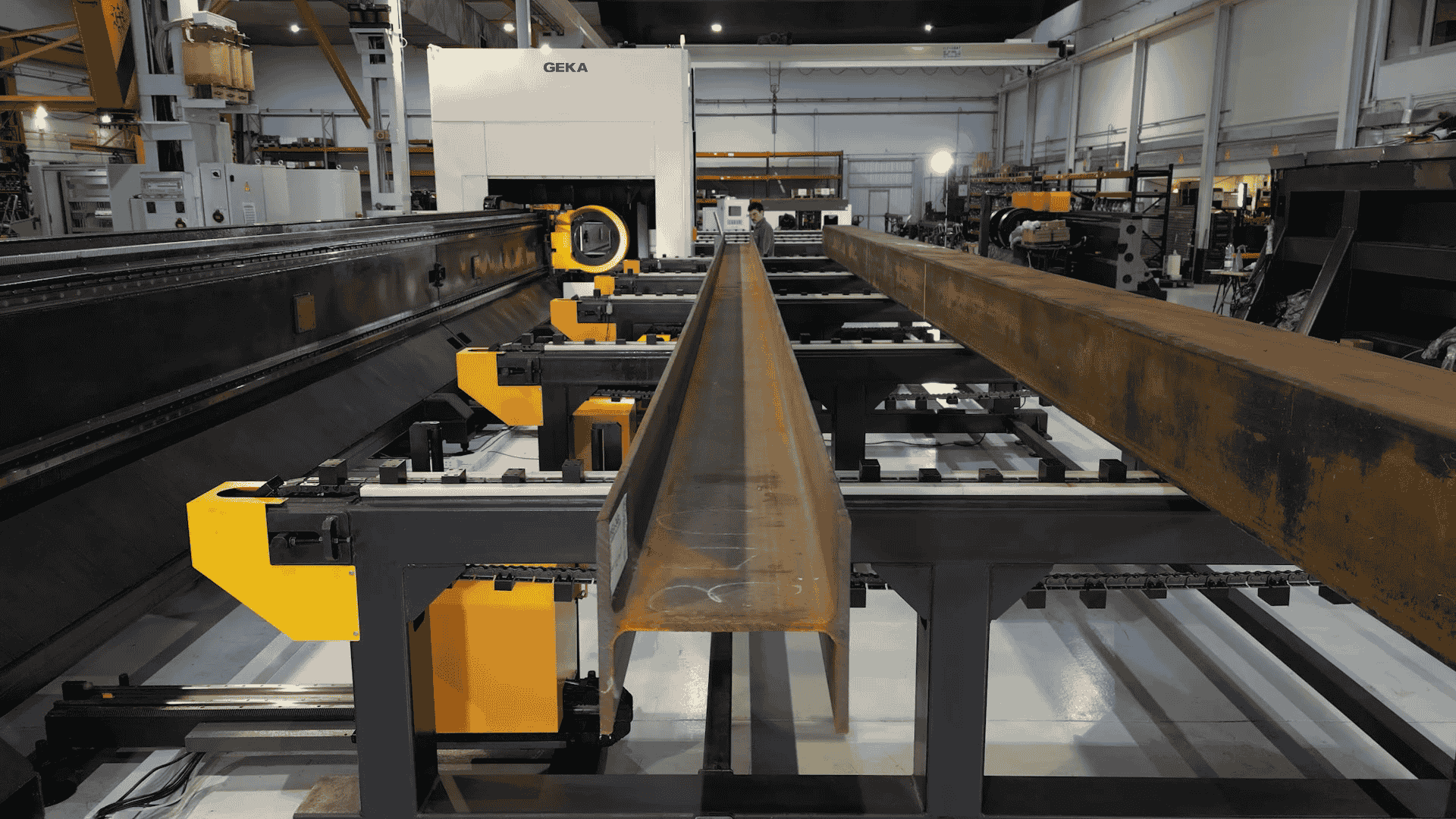
Precision fabrication technologies are redefining Africa’s steel industry as manufacturers race to meet rising infrastructure and construction demand.
Africa’s manufacturing sector is entering a new industrial era, and CNC Steel Processing is emerging as one of the key technologies driving that transformation.
Across major economies including Kenya, South Africa, Egypt, Nigeria and Morocco, fabrication workshops and steel manufacturers are increasingly investing in computer-controlled steel processing systems that improve speed, precision and efficiency. The shift is helping local companies compete for larger infrastructure contracts while reducing reliance on imported steel components.
The rise of CNC Steel Processing comes at a time when Africa is experiencing rapid urbanisation, rising industrial activity and unprecedented infrastructure expansion. From bridges and highways to renewable energy projects and commercial developments, demand for accurately fabricated steel products is growing fast.
Industry analysts believe the trend could significantly reshape Africa’s industrial landscape over the next decade.
What CNC Steel Processing Means for Africa
CNC Steel Processing refers to the use of computer numerical control technology in steel fabrication. These systems automate processes such as laser cutting, plasma cutting, bending, drilling and milling using digital programming and design software.
Unlike traditional manual fabrication methods, CNC systems can produce steel components with extremely high precision and consistency. Manufacturers can process large volumes faster while minimising errors and material waste.
For African manufacturers, the benefits are substantial.
Many fabrication businesses across the continent have historically struggled with inconsistent production quality, high labour dependence and expensive material losses. CNC Steel Processing allows companies to improve productivity while lowering operational inefficiencies.
The technology also enables fabricators to create complex steel designs that were previously difficult or impossible using conventional fabrication techniques.
Why CNC Steel Processing Is Expanding Rapidly
The growth of CNC Steel Processing is closely linked to Africa’s infrastructure boom.
Governments and private investors are pouring billions of dollars into roads, ports, railways, housing projects and energy developments. These projects require steel components manufactured to strict engineering standards.
As a result, contractors increasingly prefer suppliers capable of delivering precision-engineered products at scale.
Africa’s steel market is projected to expand significantly over the coming years, with growing demand expected from construction, mining, energy and industrial sectors. CNC-enabled fabrication companies are positioning themselves to benefit from this surge.
Renewable energy is also accelerating the adoption of CNC Steel Processing. Solar farms, wind energy installations and transmission infrastructure rely heavily on accurately fabricated steel parts for durability and safety.
This growing demand is creating opportunities for local manufacturers that can meet international quality requirements.
Kenya Emerging as an East African Hub
Kenya has become one of East Africa’s fastest-growing centres for CNC Steel Processing.
Fabrication firms in Nairobi and surrounding industrial zones are increasingly adopting plasma cutting, laser cutting and automated bending systems to serve construction and industrial markets across the region.
Local companies are using advanced fabrication technologies to produce structural steel components, architectural products, industrial machinery parts and decorative steel solutions.
Industry observers say the shift is helping Kenyan manufacturers reduce dependence on imported fabricated steel products while improving competitiveness within East Africa.
Tanzania is also witnessing rising investment in automated fabrication technologies as demand for modern infrastructure and industrial development increases.
Across the region, project developers are demanding higher-quality materials and more precise engineering standards, pushing local fabricators toward digital manufacturing systems.
South Africa Maintains Leadership
South Africa remains Africa’s most advanced market for CNC Steel Processing.
The country has a long-established steel and fabrication industry supported by mining, construction, automotive manufacturing and energy sectors. South African manufacturers have invested heavily in high-definition plasma cutting, laser technology and advanced CNC machinery.
Local fabrication companies increasingly supply products to international markets while supporting large domestic infrastructure projects.
South African manufacturers are also developing locally designed CNC systems tailored to African operating conditions. Industry experts say this could reduce dependence on imported machinery while lowering costs for regional fabricators.
The country’s strong industrial base continues to position it as a continental leader in precision steel manufacturing.
North Africa’s Manufacturing Expansion
North African economies are also strengthening their role in the CNC Steel Processing industry.
Egypt is attracting significant investment into steel manufacturing and industrial production. The country’s growing automotive sector is creating strong demand for precision-engineered steel components used in assembly plants and industrial facilities.
Morocco is emerging as another important manufacturing hub due to its proximity to European markets and growing automotive supply chain connections.
Manufacturers in the region are increasingly adopting CNC technologies to meet global production standards and improve export competitiveness.
How AfCFTA Could Accelerate CNC Steel Processing
The African Continental Free Trade Area could become one of the biggest long-term drivers of CNC Steel Processing growth.
By reducing trade barriers across Africa, AfCFTA creates opportunities for steel manufacturers and fabrication companies to supply products to a much larger regional market.
Precision-manufactured steel components produced in one African country can now potentially reach customers across the continent more efficiently.
This larger market could encourage further investment in advanced fabrication technologies, helping manufacturers achieve economies of scale.
Industrial parks and manufacturing zones being developed across Africa are expected to further strengthen regional supply chains linked to steel processing and industrial production.
Challenges Slowing Industry Growth
Despite the strong momentum, several major challenges continue to limit the growth of CNC Steel Processing across Africa.
One of the biggest obstacles is the shortage of skilled workers.
Operating CNC systems requires specialised training in programming, digital design and machine maintenance. Many African countries still face gaps in technical education and industrial training capacity.
Power reliability also remains a concern. CNC systems require stable electricity supplies to maintain precision and prevent equipment damage. Frequent outages and voltage fluctuations increase operational risks for manufacturers.
Financing presents another challenge.
Industrial-grade CNC machinery is expensive, with advanced systems costing tens or even hundreds of thousands of dollars. Small and medium-sized fabrication businesses often struggle to secure financing for equipment upgrades.
Industry leaders argue that improved access to credit and stronger vocational training programmes will be critical to sustaining long-term growth.
China’s Influence on the Sector
Chinese manufacturers are playing a major role in expanding CNC Steel Processing across Africa.
Affordable Chinese-made CNC equipment has lowered entry barriers for many fabrication businesses, allowing smaller firms to adopt automated technologies that were previously too expensive.
Chinese construction companies operating in Africa have also contributed to skills transfer by introducing advanced fabrication systems to local subcontractors and technicians.
Indian equipment manufacturers are similarly increasing their presence in African markets by supplying machinery and technical support services.
This growing international competition is gradually making CNC technologies more accessible across the continent.
The Future of CNC Steel Processing in Africa
The future outlook for CNC Steel Processing in Africa remains highly positive.
As infrastructure investment continues rising and industrialisation accelerates, demand for precision-engineered steel products is expected to increase significantly.
Manufacturers that invest early in advanced fabrication technologies, workforce development and digital engineering capabilities are likely to gain a strong competitive advantage.
Analysts say Africa’s steel industry is moving beyond raw material production toward higher-value manufacturing and industrial processing.
That transition could help create jobs, strengthen regional supply chains and support broader economic development across the continent.
For many industry players, the shift toward CNC Steel Processing is no longer optional. It is becoming a necessary step for companies hoping to compete in Africa’s rapidly modernising industrial economy.