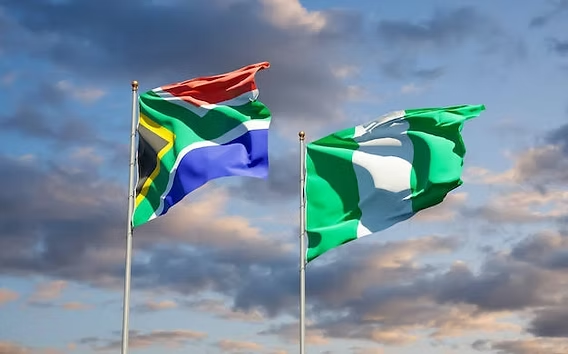
Nigeria South Africa tensions have escalated sharply after Abuja began bringing home hundreds of its citizens from South Africa following a new wave of anti-immigrant violence and growing fears among foreign nationals.
The diplomatic dispute has added pressure to an already sensitive relationship between two of Africa’s biggest economies. Nigeria has accused South African authorities of failing to protect its citizens, while South Africa says it is tightening immigration enforcement without endorsing vigilante action.
The latest crisis follows weeks of anti-immigration protests in South African cities, where demonstrators have demanded tougher action against undocumented migrants. Some protests have turned violent, with foreign-owned businesses reportedly targeted and migrants saying they feel unsafe regardless of their legal status.
Nigeria South Africa Tensions Deepen After Repatriations
Nigeria’s government has started repatriating citizens from South Africa, with at least 1,000 people initially expected to return. Officials in Abuja say more Nigerians have since expressed interest in leaving as anxiety grows over their safety.
Foreign Minister Bianca Odumegwu-Ojukwu has strongly criticised South Africa’s response, saying Nigerian nationals have faced harassment, business attacks and intimidation despite some having legal permission to live in the country.
She said Nigeria was disappointed by what it sees as a weak response from Pretoria, arguing that South Africa has not done enough to publicly condemn attacks on Nigerians or stop violence against foreign communities.
The Nigerian government has also said retaliatory measures are being considered, although officials have not yet announced what form those measures could take.
Why Nigeria Is Angry Over Attacks in South Africa
Nigeria’s anger has been fuelled by reports of Nigerian citizens being killed, attacked or threatened during the latest anti-immigration unrest.
Two Nigerian men reportedly died in April during the recent wave of violence. Nigerian officials say the deaths, along with alleged looting of businesses and threats against families, show that the problem has moved beyond immigration enforcement and into targeted hostility.
Abuja has also framed the issue through history. Nigerian officials have reminded South Africa of the support Nigeria gave during the anti-apartheid struggle, saying that bond makes the treatment of Nigerians in South Africa especially painful.
The emotional weight of that history has made the current dispute more than a routine diplomatic disagreement. For many Nigerians, the attacks are seen as a betrayal of a long-standing African solidarity.
South Africa Responds With Tougher Immigration Measures
South African President Cyril Ramaphosa has responded to public pressure by announcing new steps aimed at tackling irregular migration.
The measures include harsher punishment for employers who hire undocumented workers, dedicated courts to speed up deportation cases, and a new biometric register intended to help prevent identity fraud.
However, Ramaphosa has also warned citizens against taking the law into their own hands. He said immigration enforcement is the responsibility of the state, not private groups or street movements.
The South African government has tried to strike a careful balance. It acknowledges public frustration over jobs, crime and pressure on services, but it has also warned that illegal immigration cannot be blamed for all of the country’s economic problems.
What Is Driving Nigeria South Africa Tensions?
Nigeria South Africa tensions are being driven by a mix of migration fears, unemployment, crime concerns and political pressure inside South Africa.
South Africa remains one of the continent’s biggest destinations for migrants. People from Zimbabwe, Mozambique, Malawi, Nigeria, Ghana and other countries have moved there in search of work, business opportunities and safety.
But high unemployment and deep inequality have made migration a highly emotional political issue. Many South Africans believe undocumented migrants compete for jobs, strain public services and contribute to crime.
Rights groups and migrant advocates argue that these claims often turn into broad hostility against foreign nationals, including people who are legally in the country.
Vigilante Groups Fuel Anti-Immigration Sentiment
The rise of anti-immigration movements has intensified the crisis.
Groups such as Operation Dudula and March and March have gained attention by campaigning against undocumented migration. Their supporters say they are only demanding lawful immigration control.
Critics, however, accuse these movements of encouraging xenophobia and creating a climate where foreign nationals are threatened, assaulted or pushed out of homes and businesses.
The latest protests reportedly began in late April and spread across major cities, including Johannesburg, Pretoria and Durban. Videos circulating online have also added to fears, with some activists setting a June 30 deadline for irregular migrants to leave South Africa.
The South African government has not issued any such deadline.
Ghana and Mozambique Also Repatriate Citizens
Nigeria is not the only country affected by the unrest.
Ghana has also brought home citizens from South Africa, with officials saying at least 1,000 nationals have been repatriated. Ghanaian authorities have pushed back against claims that their citizens are involved in criminal activity.
Mozambique has also repatriated hundreds of its nationals, while many others have reportedly returned voluntarily. Mozambican authorities have said several of their citizens were killed as a direct result of xenophobic attacks, deepening regional concern over the situation.
The movement of citizens back to their home countries has turned the South African migration crisis into a broader African diplomatic issue.
A Long History of Xenophobic Violence
The latest Nigeria South Africa tensions are part of a longer pattern of anti-immigrant violence in South Africa.
Major attacks broke out in 2008, when mobs targeted African migrants in Johannesburg and other areas. Dozens of people were killed, including both foreigners and South Africans.
Violence flared again in 2015 and 2019, with foreign-owned shops looted and several people killed. In 2019, attacks on foreign nationals triggered anger in Nigeria, where some South African businesses were targeted by protesters.
Companies such as MTN, Multichoice and Shoprite have previously found themselves caught in the middle of diplomatic anger whenever tensions between the two countries rise.
Nigeria Warns Against Revenge Attacks
Despite public anger, Nigerian authorities have warned citizens not to attack South African people or businesses in Nigeria.
Police officials have said reprisal attacks will not be tolerated. The warning reflects concern that anger over xenophobic violence in South Africa could spill over into attacks on South African commercial interests in Nigeria.
This has happened before, especially when images of attacks on Nigerians in South Africa spread online and triggered public outrage.
For now, Nigeria appears to be pursuing repatriation and diplomatic pressure rather than encouraging retaliation on the streets.
What Happens Next?
The next phase of Nigeria South Africa tensions will depend on how both governments manage the crisis.
Nigeria wants stronger protection for its citizens and a clearer condemnation of xenophobic attacks. South Africa, meanwhile, is under pressure at home to show that it is serious about immigration control.
The challenge for Pretoria is to enforce immigration laws without allowing vigilante groups to intimidate or attack migrants. The challenge for Abuja is to protect Nigerians abroad while preventing anger at home from turning into revenge attacks.
The dispute has exposed a difficult truth for Africa’s two major powers: migration, unemployment and nationalism are now testing diplomatic relationships across the continent.
Unless both governments act carefully, the current crisis could damage trade, travel, business ties and public trust between Nigeria and South Africa for years to come.