The Trump Nigeria aid cuts have triggered a humanitarian emergency in northeast Nigeria, where thousands of displaced people now face starvation. With the World Food Programme (WFP) forced to halt distributions due to funding gaps, aid officials warn that militant groups like Boko Haram may exploit this desperation to recruit vulnerable youth.
WFP’s head of operations in the region, Trust Mlambo, described the crisis as a potential tipping point. “It will be much easier for militants to lure youths to join them,” he said. The situation threatens to deepen insecurity across an already fragile region.
The Gwoza area, home to tens of thousands of internally displaced persons (IDPs), has become a stark symbol of this crisis. Located at the foot of forested hills where Boko Haram militants still operate, the town offers relative safety—but little else. Food, medicine, and hope are in short supply.
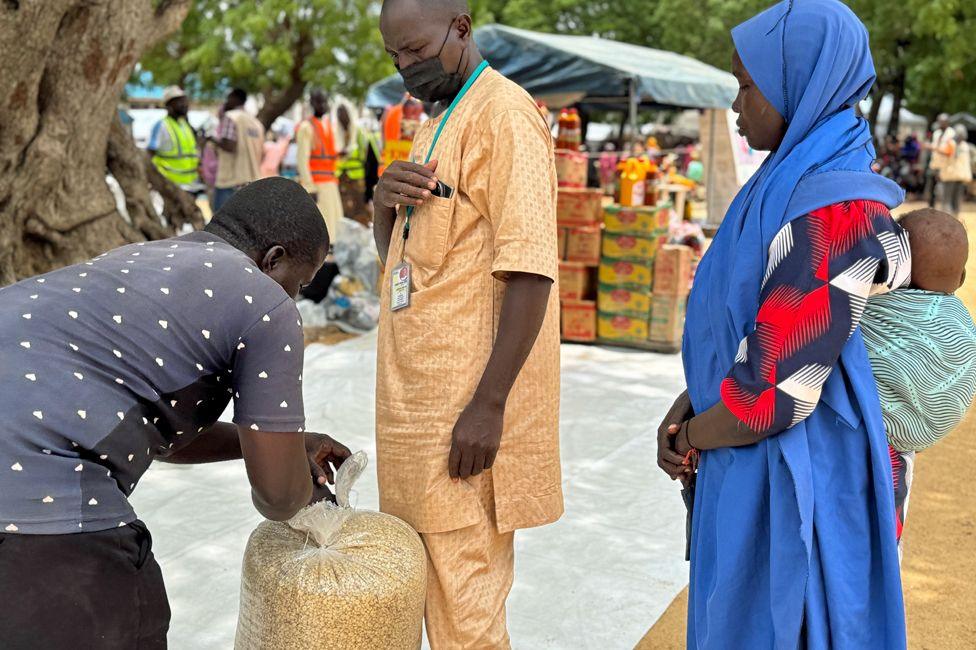
Aisha Abubakar, a mother of four, lost her husband and six other children in attacks by insurgents. She now survives on occasional aid and lives with a new husband in Gwoza’s IDP camp. This month, she received $20, which she used to buy a bag of maize. “It’s not enough to last us a month,” she told the BBC.
Like Aisha, nearly 1.4 million people in Nigeria’s northeast rely entirely on humanitarian assistance. Yet WFP says its warehouses are empty, and without fresh funding, no more food distributions will follow.
The US State Department confirmed recent aid program reorganizations as part of Trump’s America First policy. While officials maintain that 80% of US support for WFP remains unaffected, on-the-ground impacts tell a different story. Malnutrition rates are rising fast.
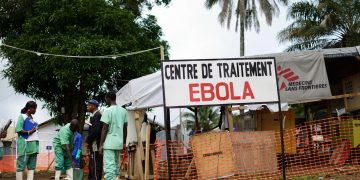
According to Médecins Sans Frontières (MSF), severe malnutrition has more than doubled this year. In the first half of 2025 alone, 652 children died in MSF-run facilities due to delayed access to treatment. MSF’s Nigeria director, Ahmed Aldikhari, said the crisis has surpassed all expectations. He added that 2024 marked a turning point, as key donors—including the US, UK, and EU—scaled down or withdrew their support.
In response, Nigeria’s government recently acknowledged the gravity of the malnutrition crisis. Vice-President Kashim Shettima said nearly 40% of children under five suffer from stunted growth and poor brain development due to undernutrition. He promised action, launching a national nutrition board, dubbed a “war room” to battle hunger.
However, those on the ground remain skeptical. Hauwa Badamasi, a young mother in Gwoza, recently discovered her daughter Amina is now malnourished. She wept as she watched the three-year-old eat a nutrition supplement at a crowded clinic. “The aid has stopped and people are killed on the farm,” she said. “What are we going to do with our lives?”
She, like many, has been unable to return to her family’s land due to insurgent threats. “Our survival depends on these essentials,” she added, clutching a bag of peanut paste she was told might be the last she receives.
Over 150 donor-funded clinics in northern Nigeria also face imminent shutdowns. These facilities have been lifelines for thousands of children suffering from malnutrition. Without them, mortality rates could soar.
Mlambo from WFP offered a grim forecast. “If people here feel they’ve lost everything—even the chance for their next meal—they will be pushed to go just across the hills to enroll,” he said, referring to Boko Haram.
While military forces provide some protection in towns like Gwoza, many residents fear the army cannot fully contain the insurgency. The Trump Nigeria aid cuts have compounded years of instability, inflation, and poor governance—pushing already desperate communities even closer to the edge.
With little food and no clear solutions, many in Gwoza wonder if the world has forgotten them. As aid dries up, they face a dangerous choice: starve in silence or accept help from those who once terrorized them.