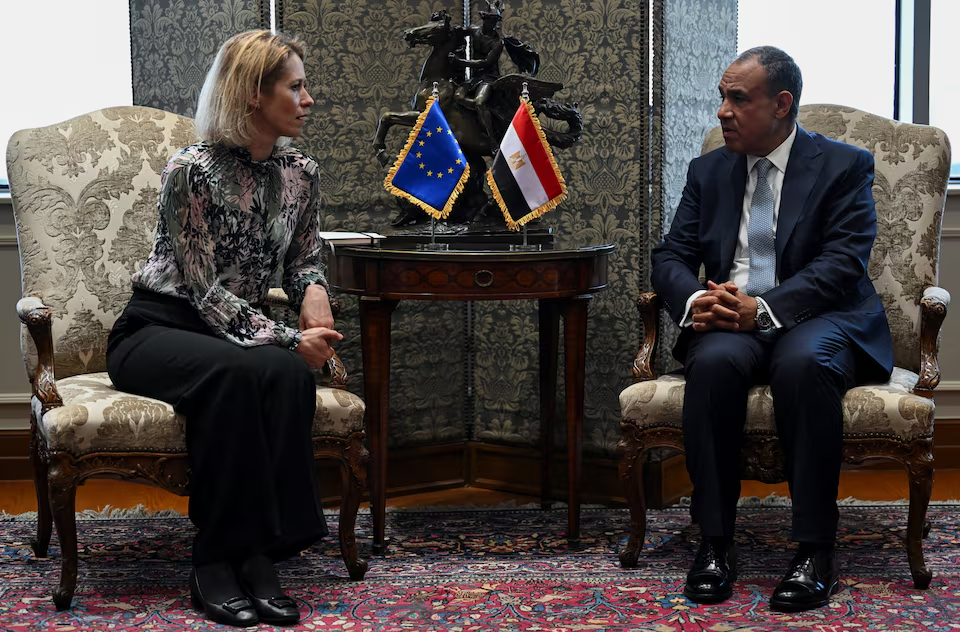
Egypt’s government expects to receive the remaining €4 billion of a major EU financial package by 2027. Foreign Minister Badr Abdelatty provided this timeline following the completion of key IMF program reviews. The funds are part of a broader €7.4 billion support package the European Union announced in 2024. This assistance is crucial for Egypt as it navigates severe economic pressures from regional conflicts.
Details of the EU Funding Timeline and Structure
The €5 billion macro-financial assistance package consists of concessional loans from the EU. Egypt received the first €1 billion tranche in January 2025. Minister Abdelatty stated the remaining €4 billion will arrive in three installments, concluding by 2027. He expressed hope that the next €1 billion tranche would be transferred “in the coming days.” This disbursement follows Cairo’s successful completion of its fifth and sixth reviews with the International Monetary Fund (IMF), a critical precondition for the funds.
A Response to Compounding Economic Crises
The EU designed this substantial financial package for Egypt as a direct response to acute external shocks. These include the economic fallout from the war in Ukraine, the Gaza conflict, and disruptive Houthi attacks on Red Sea shipping. These events have strained Egypt’s foreign currency reserves and exacerbated inflation. Consequently, the package aims to stabilize the economy and support ongoing reform programs. For broader context on EU assistance frameworks, see the European Commission’s MFA page.
Linkage to IMF Reform Program
The disbursement is tightly linked to Egypt’s $8 billion IMF Extended Fund Facility agreed upon in 2023. The EU conditions its macro-financial assistance on Egypt meeting specific reform benchmarks under the IMF program. Completing the fifth and sixth reviews signals progress on fiscal consolidation, monetary policy reforms, and state asset sales. Therefore, the imminent tranche represents a vote of confidence from both the EU and IMF in Egypt’s economic management.
Strategic Importance for the European Union
For the EU, this package serves strategic interests beyond humanitarian aid. It aims to bolster economic and political stability in a key regional partner. Egypt is a critical actor on migration, energy, and regional security. Supporting its economy helps mitigate risks of instability that could affect European interests. EU foreign policy chief Kaja Kallas, standing alongside Minister Abdelatty, emphasized the partnership’s importance during their Cairo press conference.
Broader Package: Grants and Investments
The total €7.4 billion EU package includes more than just loans. It also encompasses grants and direct investments aimed at long-term development. These elements are designed to support sectors like energy, digital infrastructure, and small businesses. This blended finance approach seeks to create sustainable growth beyond immediate budgetary support.
Challenges and Outlook
While the funding provides a crucial lifeline, challenges remain. Egypt must continue its demanding reform agenda amidst a challenging socio-economic climate. Global economic uncertainty and persistent regional tensions could further pressure its finances. However, the structured, conditional flow of EU funds provides a clear financial anchor through 2027.
A Vital Financial Anchor
The scheduled €4 billion in EU funds represents a vital financial anchor for Egypt’s economy over the next three years. It rewards reform progress and provides necessary resources to weather external storms. The partnership underscores the EU’s commitment to a stable Egypt as a cornerstone of Mediterranean and Middle Eastern stability. As Minister Abdelatty indicated, all parties now focus on the swift transfer of the next tranche, ensuring this critical EU support continues to bolster Egypt’s economic resilience.