European defence stocks surged to a record high on Thursday, January 8th, as escalating geopolitical events fueled risk sentiment. The STOXX Europe Aerospace and Defence index rose 1%, marking its fifth consecutive gain. This surge reflects a broader market realization that geopolitical instability is a persistent theme. Consequently, investors are flocking to sectors perceived as beneficiaries of increased military spending and global uncertainty.
Drivers Behind the Defence Sector Rally
The index has skyrocketed more than 260% since Russia’s 2022 invasion of Ukraine. Its 13% jump in early 2026 alone underscores accelerating momentum. Analysts cite multiple catalysts. Firstly, the recent seizure of Venezuela-linked oil tankers underscored ongoing maritime tensions. Secondly, news of a planned U.S.-Denmark meeting on Greenland hinted at strategic Arctic competition. Most significantly, former President Donald Trump’s call for a two-thirds increase in the U.S. military budget bolstered the outlook for global defence contractors.
A Global Pattern of Military Prioritization
Peter McLean of Stonehage Fleming noted, “What investors are realising is that the threat of geopolitics is not going away.” This sentiment is driving a structural re-rating of defence stocks across Europe and the U.S. The sector is transitioning from a cyclical investment to a strategic one, as governments worldwide signal longer-term commitments to military modernization.
Commodities and Currency Movements
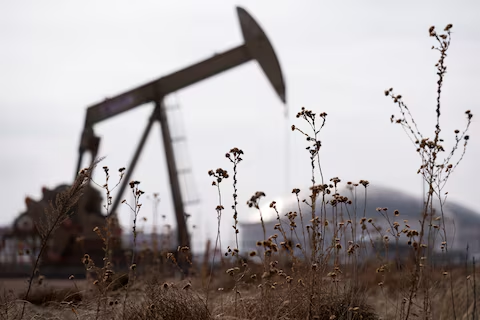
Geopolitical friction also propelled oil and the U.S. dollar. Brent crude oil clawed back above $60 a barrel, recovering from earlier losses linked to potential Venezuelan output increases. Analysts suggested that U.S. control over Venezuela’s oil sales might maintain supply restrictions, supporting prices. Meanwhile, the U.S. dollar gained ground against major currencies. The euro struggled, flirting with an eighth straight daily loss, as traders awaited key U.S. employment data.
Focus Shifts to U.S. Economic Data
Market attention turned squarely to the upcoming U.S. nonfarm payrolls report due Friday. A tick up in weekly jobless claims did little to alter expectations for continued labor market resilience. Goldman Sachs forecast a strong 70,000 rise in December payrolls. This data will crucially inform the Federal Reserve’s rate path, with markets still pricing in two potential Fed rate cuts later in the year.
Broad Market Performance and Asian Tensions
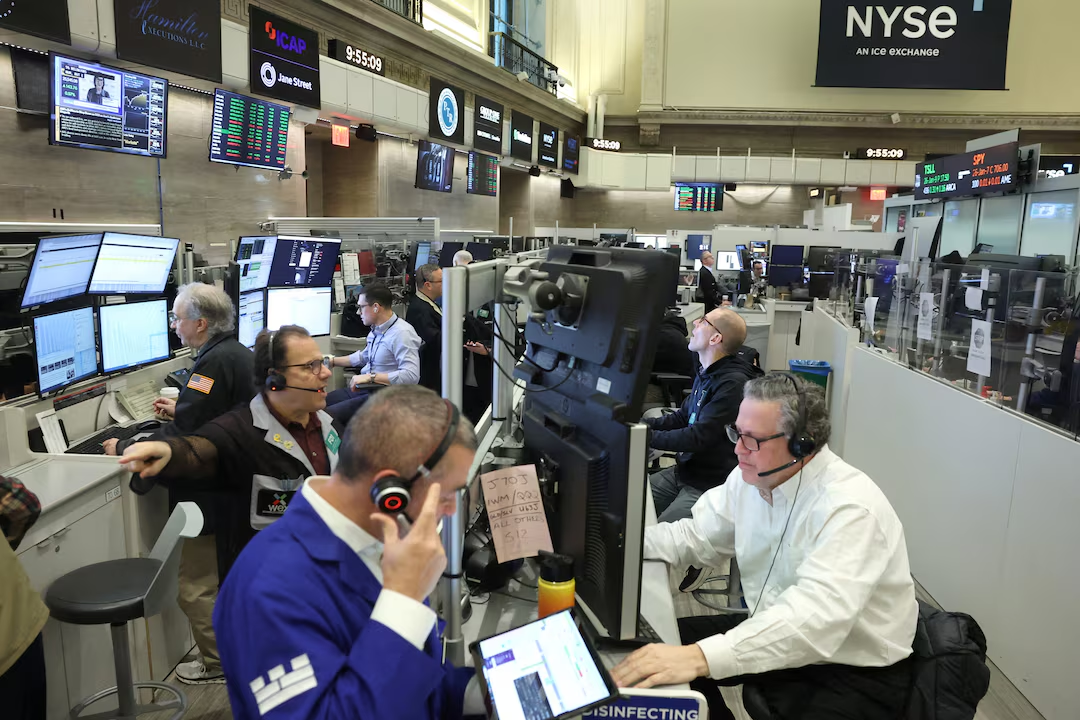
Outside defence, broader equity markets took a breather. The pan-European STOXX 600 fell 0.4%, and U.S. futures pointed lower. In Asia, Japan’s Nikkei dropped 1.6% amid rising trade tensions with China. Beijing announced an anti-dumping probe into a Japanese chemical used in semiconductors. Saxo’s Charu Chanana stated, “Geopolitical headlines are in the driver’s seat,” also citing Chinese export restrictions.
Bond Markets and Safe Havens
Government bond yields held steady, with the U.S. 10-year Treasury yield at 4.16%. Safe-haven gold dipped slightly to $4,420 an ounce. McLean highlighted bonds as a key 2026 risk factor, suggesting that a sustained drop in the 10-year yield below 4% could provide a significant market boost. For real-time tracking of defence indices, resources like the STOXX Index Dashboard are valuable.
Venezuela’s Complex Debt Outlook
In credit markets, Venezuelan bonds cooled after a 40% rally triggered by the capture of President Nicolás Maduro. Restructuring expert Richard Cooper tempered expectations, noting a resolution is “closer to the beginning than it was six months ago, but we are still not at the beginning yet.” The process awaits clarity on rebuilding Venezuela’s oil sector and its future political leadership.
Conclusion: Geopolitics as a Market Constant
The day’s trading underscores a dominant 2026 theme: geopolitical risk is a primary market driver. The record-setting rally in European defence stocks confirms that investors are allocating capital around this premise. While Friday’s payrolls data will dictate short-term Fed policy expectations, the underlying trend toward defence and energy security appears firmly established. Markets will continue to navigate a landscape where political events wield as much influence as economic fundamentals.