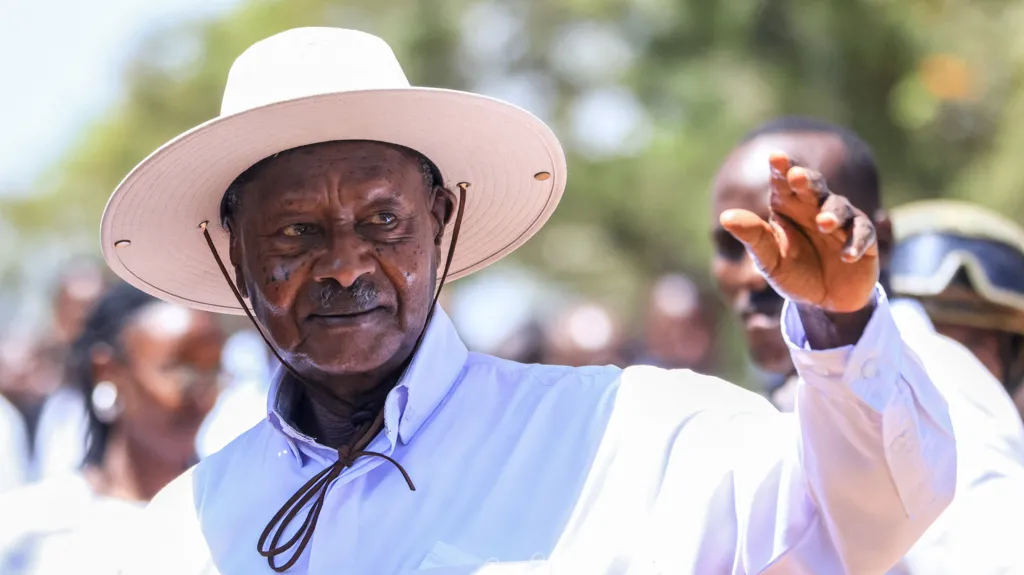
Kampala, Uganda: Uganda’s long-serving president Yoweri Museveni has been declared the winner of a highly disputed national election, extending his rule beyond four decades and setting the stage for another five-year term in office. The announcement has intensified political tension, with opposition leaders rejecting the outcome and calling for peaceful resistance.
According to the country’s electoral authorities, Museveni secured 72 percent of the vote, while his closest challenger, opposition figure Bobi Wine, garnered 25 percent. The results were announced amid heavy security deployment and widespread restrictions, including a nationwide internet shutdown that has limited independent verification and real-time reporting.
The Ugandan election has drawn both domestic and international attention, as it comes against the backdrop of long-standing concerns about political freedoms in Uganda. In the opening days following the vote, opposition leaders alleged widespread irregularities, including ballot manipulation and voter intimidation. While these claims remain unproven, they have fueled public distrust and heightened calls for transparency.
Bobi Wine, a former musician turned politician, dismissed the announced results as illegitimate and urged supporters to engage only in non-violent protests. He accused authorities of suppressing dissent through arrests, movement restrictions, and information blackouts. Security officials, however, have denied any wrongdoing, insisting that restrictions were imposed to prevent unrest and protect public order.
The election period was marked by reports of violence in several regions. Opposition sources claim that more than 20 people were killed in incidents linked to the vote, while authorities have acknowledged fewer casualties. Human rights groups have expressed concern over the use of force and the lack of independent access to affected areas due to the communications blackout.
The government has defended the internet shutdown, arguing that it was necessary to curb misinformation and prevent incitement. This justification has been sharply criticized by international observers, including United Nations officials, who warned that cutting access to digital communication undermines civil liberties and electoral credibility. Opposition leaders have since demanded the immediate restoration of online services.
Museveni, now in his early eighties, first rose to power in 1986 after leading a rebel movement that promised democratic renewal. Over the years, he has won multiple elections, while critics argue that constitutional changes and state power have entrenched his rule. Supporters, however, credit him with maintaining stability in a country once plagued by conflict.
During the campaign, Museveni positioned himself as a guarantor of peace and economic continuity, warning that abrupt political change could destabilize the nation. In contrast, Bobi Wine centered his message on anti-corruption reforms, youth empowerment, and democratic accountability, appealing strongly to Uganda’s young population, most of whom are under the age of 30.
Despite the presence of multiple candidates, none of the remaining contenders secured more than a small fraction of the vote. Official turnout stood slightly above 50 percent, a figure that analysts say reflects both voter engagement and widespread disillusionment with the political process.
As Uganda enters another Museveni term, the aftermath of the Ugandan election is likely to shape the country’s political climate in the months ahead. With opposition challenges ongoing and international scrutiny increasing, the durability of stability, governance reforms, and civic freedoms will remain at the center of national debate.