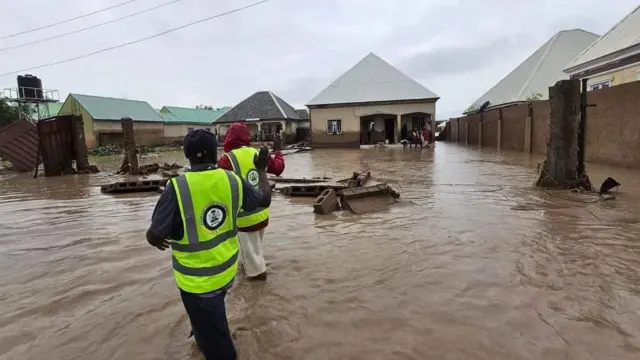
Nigeria floods have killed at least 25 people in Adamawa State after torrential rains caused flash flooding across five communities near Yola. The flooding began Sunday, sweeping away homes and destroying livelihoods.
Authorities confirmed that 11 individuals remain missing, while 5,560 residents have been displaced. Emergency shelters have been set up to provide food, water, and temporary housing to those affected.
Flash flooding is a recurring threat during Nigeria’s wet season. Experts link the worsening patterns to climate change, which has led to more intense downpours following prolonged dry spells.
In May, a similar flood hit Mokwa in Niger State, killing around 200 people. The United Nations reported that floods affected over four million West Africans in 2024—three times more than in 2023.
Nigeria floods continue to expose deep weaknesses in infrastructure and emergency planning. Aid agencies are urging local and national governments to invest in drainage systems, early warning systems, and disaster relief preparedness.
Adamawa remains among the hardest-hit regions due to its low-lying terrain and poor drainage. With rainfall expected to continue in the coming weeks, residents fear more devastation.
Environmental experts emphasize that climate adaptation must now become a national priority. Without urgent action, floods will continue to displace thousands and threaten lives across northern Nigeria.