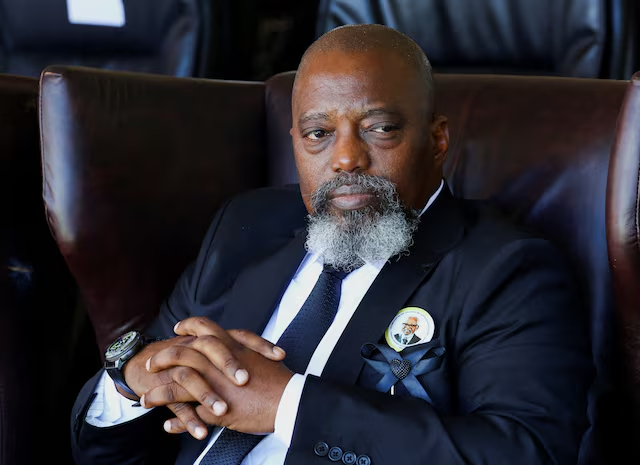
Joseph Kabila Goma visit has reignited political and security tensions in the Democratic Republic of Congo, just weeks after the former president declared his intention to help resolve the worsening crisis in the country’s conflict-ridden east. According to three sources close to Kabila, he arrived in the M23-held city of Goma on Sunday night, where he plans to consult with local citizens starting Wednesday.
Although unconfirmed by Kabila himself, the news has quickly spread, sparking concern both in Kinshasa and among international stakeholders. Corneille Nangaa, leader of the rebel coalition that includes M23, announced Kabila’s presence on social media. However, no public statement or photo has surfaced to verify the former president’s arrival in Goma.
The timing of Kabila’s visit to Goma is critical. The region has seen escalating violence from the Rwandan-backed M23 group, which has seized vast territory since January, including Goma. The city now serves as a symbolic and strategic hub for the rebels, whose control undermines government authority and threatens to derail U.S.-backed peace efforts.
Kabila, who governed Congo from 2001 to 2019, has faced increasing pressure from President Félix Tshisekedi’s administration. Last week, the Senate voted overwhelmingly to lift Kabila’s immunity, clearing the way for potential prosecution over alleged ties to M23 and accusations of crimes against humanity. Authorities accuse him of supporting the insurgency and implicate him in civilian massacres.
Congo’s government spokesperson, Patrick Muyaya, went further on national television. He claimed Kabila was “positioning himself as the rebel leader” alongside Rwandan President Paul Kagame. Muyaya’s remarks signal a significant escalation in rhetoric, as the Congolese state intensifies its crackdown on Kabila and his political allies. The government has already suspended his party and initiated the seizure of its assets.
In response, Kabila delivered a speech last Friday condemning the accusations. He claimed the justice system in Congo was “an instrument of oppression” exploited by the Tshisekedi government for political purposes. He also warned against what he described as the weaponization of legal institutions to silence opposition.
Kabila’s presence in Goma also introduces a new layer of complexity to international diplomacy. The United States is currently pressing for a peace agreement that would be finalized this summer. The goal is to stabilize eastern Congo and unlock billions of dollars in Western investment tied to mineral extraction, particularly for electric vehicle batteries.
Massad Boulos, a senior adviser to former U.S. President Donald Trump, told Reuters that Washington’s strategy includes brokering deals involving valuable resources found in the region. However, Kabila’s reappearance could disrupt these plans if his alleged links to rebel groups deepen mistrust among negotiating parties.
Meanwhile, the role of Rwanda remains a flashpoint. The United Nations and several Western governments accuse Rwanda of providing arms and troops to M23. Kigali denies the allegations, claiming that its forces act solely in self-defense against Congolese army operations and threats from Hutu militias linked to the 1994 genocide.
As the Joseph Kabila Goma visit unfolds, the situation remains volatile. His reemergence not only risks derailing diplomatic progress but could also inflame tensions within Congo’s fragile political landscape. With the stakes higher than ever, both domestic and international actors will closely monitor what comes next.