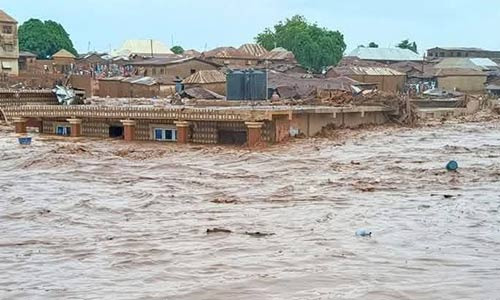
At Least 110 Killed as Flash Floods Ravage Mokwa, Central Nigeria
Torrential rains have triggered catastrophic flooding in Mokwa, a town in central Nigeria’s Niger State, killing at least 110 people and destroying dozens of homes, local authorities report.
According to Abullahi Baba-Arah, head of the Niger State Emergency Management Agency (NSEMA), the flooding submerged entire neighborhoods and swept away more than 50 residential structures—many with residents still inside.
Whole Communities Washed Away
“The floodwaters surged through with terrifying force, destroying everything in their path,” Baba-Arah told the BBC.
The Tiffin Maza and Anguwan Hausawa districts were the worst affected. Rescue operations are still ongoing as many people remain missing. Officials warn that more lives could be at risk if rains continue.
Local Voices & Government Response
Mokwa District Head, Muhammad Shaba Aliyu, called it the worst flood in 60 years, pleading with authorities for urgent aid.
“I beg the government to support us,” he said.
Information Minister Mohammed Idris expressed “profound sorrow” on behalf of the federal government and confirmed that security forces and emergency units have been mobilized to assist with rescue and recovery.
One local fisherman, Danjuma Shaba, told AFP that he lost everything.
“My house has collapsed. I have nowhere to sleep,” he said.
Flooding a Recurring Threat
Nigeria’s rainy season typically runs from April to October, often bringing widespread devastation. This latest disaster adds to a worrying trend.
In 2022, Nigeria experienced one of its worst flood seasons, displacing over 1.3 million people and claiming more than 600 lives. Last year, northern regions also faced severe rainfall, leading to deaths and infrastructure damage.
Weather agencies have warned that at least 15 states across the country could experience similar heavy downpours in the coming months.
Outlook and Ongoing Concern
As climate patterns grow more extreme, officials and environmental groups are urging Nigeria to invest in flood management infrastructure and early-warning systems.
With communities like Mokwa still reeling and many survivors left without shelter, aid groups are calling for swift action to prevent a larger humanitarian crisis.