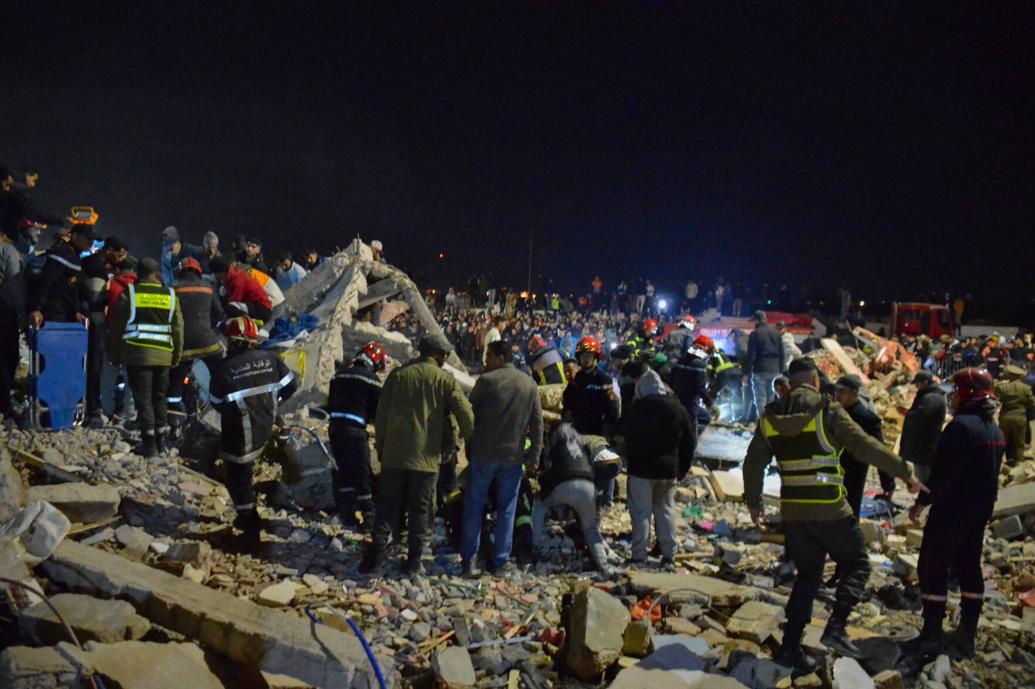
At least 19 people died and 16 others suffered injuries early Wednesday after a Fez building collapse destroyed two adjacent four-storey buildings in one of Morocco’s oldest cities. State media reported that the buildings showed visible signs of deterioration for months—and authorities failed to act.
The collapse happened overnight in Fez’s Al-Mustaqbal neighborhood. Eight families lived in the two structures. Local officials confirmed the incident through the state news agency, which noted cracks had long marred the buildings.
As soon as they learned of the disaster, local authorities, security forces, and civil protection teams rushed to the scene. They launched search and rescue operations immediately. Emergency crews worked through the morning to pull survivors from the rubble and recover bodies.
The state news website SNRT stated, “The scene shows the two collapsed buildings had clear cracking for some time, yet no one took effective preventive measures.” This points to serious lapses in urban safety oversight.
The Fez building collapse arrives amid rising public anger over poor infrastructure and declining living conditions. Just two months ago, Fez joined nationwide protests demanding better public services and accountable governance. These demonstrations formed part of a larger wave of youth-led unrest across Morocco.
Indeed, October saw widespread riots in rural towns and smaller cities. Protesters—inspired by uprisings in Nepal, Madagascar, and Peru—demanded action on poverty, unemployment, and failing public systems. During one violent clash, security forces shot dead three people who tried to storm a headquarters. Police arrested over 400 others before tensions eased.
Fez, founded in the eighth century, serves as Morocco’s third-largest city and a former imperial capital. Yet like many historic urban centers, it struggles with aging infrastructure. Most of Morocco’s population, industries, and critical infrastructure cluster in the northwest. The rest of the country depends heavily on farming, fishing, and tourism—sectors sensitive to economic and climate pressures.
Meanwhile, the government pushes ahead with high-profile projects, including modern stadiums for the 2030 World Cup. But critics say these initiatives ignore urgent needs in housing safety and basic municipal services.
Reuters could not independently verify the damage report. Morocco’s Interior Ministry also did not respond to a request for comment at the time of reporting.
Still, the Al-Mustaqbal tragedy reveals a dangerous gap between urban development and maintenance. Without stronger inspections and faster interventions, more disasters like this Fez building collapse may occur.
For now, rescue teams have shifted focus to recovery and aid for displaced families. City officials now face intense pressure to inspect other at-risk buildings—and to hold responsible parties accountable for ignoring clear warning signs.
READ: Fort Hare University Closes After Violent Student Protests