The Uganda refugee crisis is reaching a critical point as the country nears hosting 2 million refugees. Ongoing violence in Sudan, South Sudan, and the Democratic Republic of the Congo continues to force hundreds across Uganda’s borders each day, straining one of the world’s most generous refugee-hosting nations.
Since January 2025, Uganda has received an average of 600 refugees daily. Officials expect the total number to surpass 2 million by the end of the year. Currently, the country shelters 1.93 million displaced people, including more than one million children under the age of 18.
Uganda is Africa’s largest refugee-hosting nation and ranks third globally. Its progressive refugee policy allows newcomers to work, live freely, and access public services. However, that generosity now faces immense pressure as funding from international donors declines sharply.
Humanitarian agencies warn that aid delivery has reached crisis levels. According to the UN Refugee Agency (UNHCR), refugees are only receiving about one-third of the support needed to cover basic yearly needs.
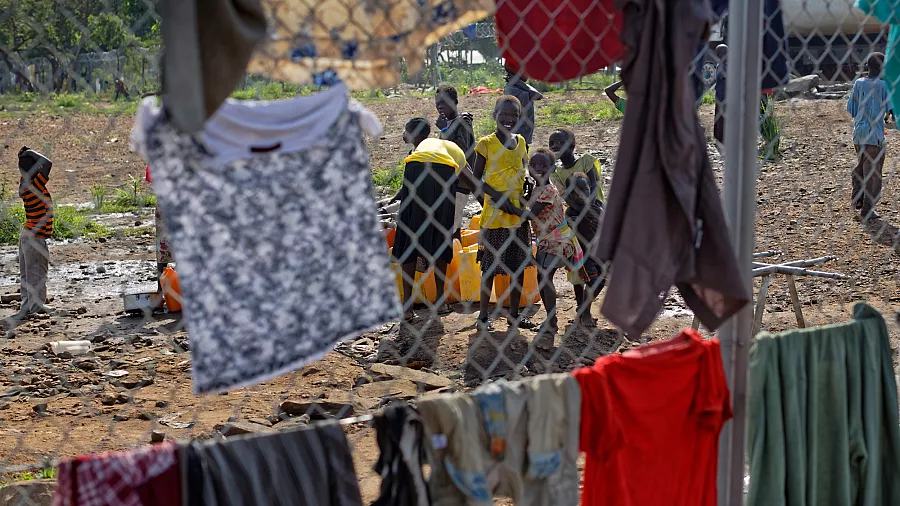
Dominique Hyde, Director for External Relations at UNHCR, visited Kiryandongo settlement in northern Uganda, where Sudanese and South Sudanese families continue to arrive. She described desperate conditions, especially for women and children arriving with no belongings, food, or shelter.
“I’m seeing children that are malnourished and women who are desperate. They arrive with nothing. We lack clean water, food, and medicine,” Hyde said. She added that aid funding is only 25% of the required amount and may run out completely by September if donors do not intervene.
Newly arrived refugees like Hamida Ibrahim Amin reflect the human toll of the crisis. Fleeing war in Khartoum and then Darfur, she arrived in Uganda with her daughters after her husband died. They’ve been living in a settlement for three months with no money and poor access to healthcare or education.
Food shortages and medicine cuts have triggered a spike in child malnutrition. Mental health issues are also rising, with refugee youth facing a higher risk of suicide. As staff shortages grow, access to mental health support is shrinking rapidly.
At the same time, reports of gender-based violence are increasing. Many girls and women are left vulnerable due to overcrowded camps and a lack of protective services. Schools are seeing declining attendance as families are forced to prioritize survival.
Hyde warned that unless global donors respond immediately, the situation will worsen. “The emergency needs are massive, and we are simply not able to meet them,” she said. “It’s not just about UNHCR. It’s also about the World Food Programme, other UN agencies, and the government of Uganda. They’ve opened their borders and their homes. But without funding, we cannot help.”
Uganda’s open-door refugee policy remains one of the most progressive globally. Yet, even the most generous systems can falter under intense pressure. Without urgent financial support, the Uganda refugee crisis could escalate into a full-blown humanitarian disaster, threatening the lives and futures of nearly 2 million displaced people.