The latest US tariffs have placed South African jobs at risk, as nearly 30,000 workers may lose employment across major export sectors. President Donald Trump signed the 30% reciprocal tariff into law, with implementation set for August 8, 2025.
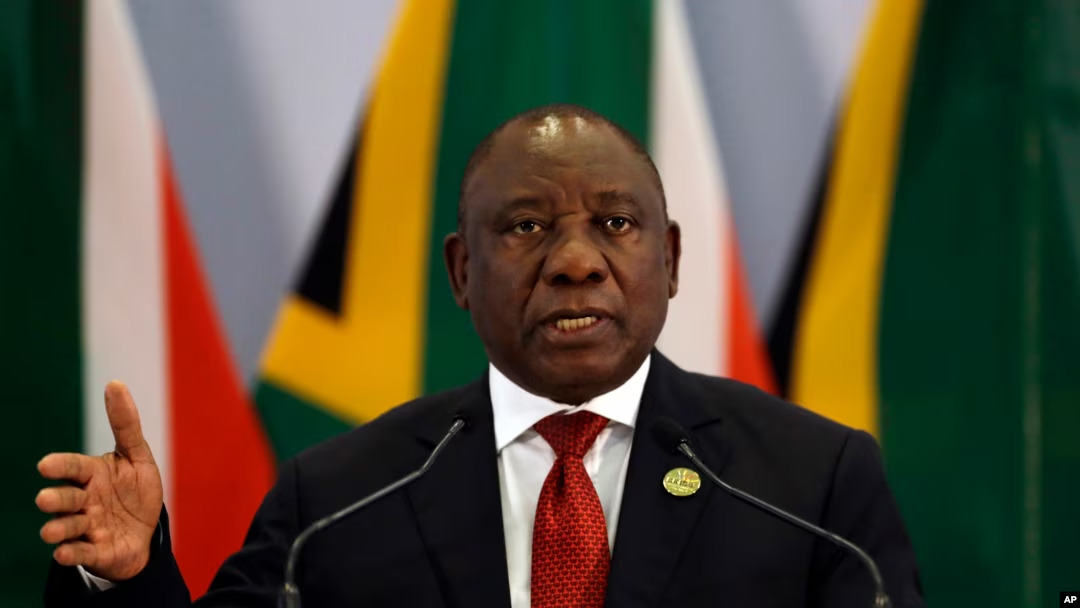
Simphiwe Hamilton, Director-General of the Department of Trade, Industry and Competition, spoke to the media on Monday. He explained that the figure came from ongoing consultations with stakeholders in agriculture, automotive, and manufacturing. “We’re looking at approximately 30,000 jobs. If we mismanage this, the outcome could be disastrous,” he said.
While several countries negotiated lower rates before the August 1 deadline, South Africa did not receive any adjustment. As a result, it now faces one of the highest tariff rates under the new US policy.
The United States is South Africa’s third-largest trading partner, making up 7.5% of total exports. By contrast, the European Union accounts for 17%, and China for 11%. With the 30% tariff targeting high-export industries, the economic impact is expected to be severe.
Importantly, the automotive and agriculture sectors will bear the brunt of the duties. These industries not only contribute heavily to GDP but also employ tens of thousands across the country. Because of the tariff, South African products may become too expensive in the American market, reducing export volumes and threatening jobs.
South Africa already faces a crisis in the job market. According to StatsSA, the unemployment rate stood at 32.9% in the first quarter of 2025. Any further job losses would deepen the socio-economic strain. Consequently, the government has moved quickly to develop a response strategy.
The Trade Ministry confirmed it is drafting emergency measures. These include direct support for exporters, talks with other trade partners, and urgent diplomatic engagement with the US. Officials are working to prevent long-term damage and reassure affected businesses.
Hamilton emphasized the importance of unity and swift action. “This is not just about tariffs. It’s about our economy, our workers, and our reputation in global trade,” he noted. “We must respond as one.”
Meanwhile, exporters are already feeling the effects. Several companies have delayed investment plans and frozen hiring. Others are reviewing contracts and product pricing, hoping to absorb some of the cost and avoid layoffs.
Although the government’s plan aims to soften the impact, its success depends heavily on timing. If negotiations stall or aid packages fall short, thousands of workers could still lose their jobs. Therefore, every decision made in the coming weeks will carry serious consequences.
Ultimately, how South Africa navigates this trade crisis will shape its economic future. The government’s efforts must remain focused, coordinated, and proactive to protect both livelihoods and long-standing trade partnerships.