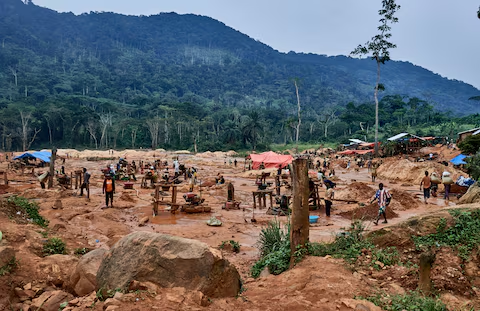
A sustainability bond aimed at integrating artisanal miners into formal supply chains will pilot in Africa this year. A Canada-based advisory firm and a mid-tier Zambian copper miner will lead the initiative. Artisanal mining provides livelihoods for hundreds of millions globally. However, in Africa, it often operates informally on or near company-run mines. This informal activity hits company profits, spreads pollution, and deprives nations of tax revenue.
The proposed “stakeholder prosperity bond” aims to address these challenges. Veridicor, the advisory firm, developed the bond alongside Zambia’s Metalex Commodities. Rob Karpati, Veridicor’s finance director, explained the approach. “Instead of pushing artisanal miners off land, this model professionalises them,” he told Reuters. The instrument links investor returns to predefined social and environmental outcomes rather than production output.
How the Artisanal Mining Bond Works
The artisanal mining bond represents a novel financial instrument. Its returns depend on social and environmental performance for workers, communities, and host economies. This structure contrasts sharply with traditional mining bonds tied solely to production volumes. The debut issuance would raise between $100 million and $200 million by year-end.
Metalex Commodities will use the funds to integrate artisanal and small-scale miners into its supply chain. The company will achieve this through regulated offtake agreements. It will also invest in shared infrastructure and equipment. Industrial mines will sit at the centre of each bond structure to support repayment. Sustainability-linked terms will adjust interest rates based on social and environmental performance.
Potential investors include European sustainability bond funds and impact investors. Mining investors, banks, and wealthy individuals focused on sustainability have also shown interest. The artisanal mining bond therefore taps into growing demand for responsible investment vehicles across the continent.
Zambia’s Artisanal Mining Challenge
Zambia stands as Africa’s second-largest copper producer. The country hosts tens of thousands of artisanal miners, including many around Metalex’s northwestern permit. Large mines typically anchor these bonds because they have the balance sheet strength to support repayment. “They end up gaining financially because they get offtake from it,” Karpati said. “The artisanal miners gain financially because it’s a fair price, not some predatory intermediate.”
Metalex founder and chief executive Ayo Sopitan expressed enthusiasm for the bond’s potential. “We plan to source around 30% of our ore from trained, licensed local miners,” he said. “The bond lets us do that at a much larger scale than our balance sheet alone would allow.” This approach could transform the relationship between industrial mining companies and informal workers.
Broader Implications for African Mining
The artisanal mining bond could expand beyond Zambia. Veridicor and Metalex plan similar instruments in the Democratic Republic of Congo and Ghana. Both countries face significant challenges with informal mining operations. The DRC produces vast quantities of cobalt, copper, and gold. Ghana remains a major gold producer with a large artisanal mining sector.
Artisanal mining employs millions across Africa. However, informal operations often use dangerous practices and lack safety equipment. Child labour and environmental degradation remain widespread problems. Formalisation would help address these issues while increasing government revenue. The bond model offers a market-based solution that benefits all stakeholders.
Industrial mines often view artisanal miners as a nuisance. Trespassing, theft, and safety conflicts occur regularly. The artisanal mining bond instead turns these workers into partners. Trained and licensed miners would supply ore at fair prices. Companies gain reliable supply chains. Miners gain safe working conditions and fair compensation. Governments gain tax revenue from formalised transactions.
The pilot program will test whether this model works in practice. Success could unlock significant investment in formalisation across Africa. Failure would highlight the difficulty of integrating informal economies into formal financial systems. Either way, the artisanal mining bond represents an innovative attempt to solve a long-standing problem. The coming months will reveal whether investors embrace this new approach to responsible mining finance.