Senegal’s economic growth will slow to 2.5% this year from 6.7% in 2025 due to declining hydrocarbon production. The country’s economy ministry released this forecast on Wednesday. The West African nation has faced significant economic challenges since the discovery of $13 billion in hidden debt attributed to the previous administration. Consequently, Senegal economic slowdown has become a pressing concern for policymakers and international partners.
Senegal has relied heavily on the regional debt market to meet its funding needs since last year. The misreporting case has closed off funding from the International Monetary Fund and other traditional financiers. Therefore, the country has turned to alternative sources of capital. An economic outlook document from the economy ministry revealed that the public debt-to-GDP ratio will decline from 121.3% in 2024 to 116.2% in 2025. However, the overall risk of sovereign debt stress remains high in the medium term.
Budget Deficit Shows Improvement Despite Senegal Economic Slowdown
The budget deficit declined to 6.2% of gross domestic product in 2025 from 13.7% the previous year. Deep cuts in public spending drove this improvement. The deficit will narrow further to about 5.4% of GDP in 2026. New tax measures under a government recovery programme will help achieve this reduction. Rising hydrocarbon revenues will also contribute to narrowing the deficit. These revenues will help offset a planned rebound in public investment.
The deficit is expected to return to the West African regional ceiling of 3% of GDP in 2027. This target aligns with the requirements of the West African Economic and Monetary Union. Meeting this target will require sustained fiscal discipline and revenue growth. The Senegal economic slowdown makes this task more challenging, as slower growth typically reduces tax revenues.
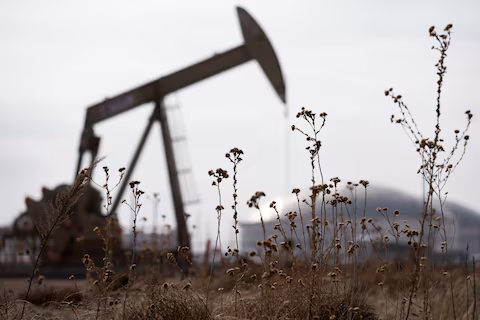
Declining hydrocarbon production represents a major factor behind the Senegal economic slowdown. The country had hoped to boost growth through oil and gas revenues. However, production levels have fallen short of expectations. This decline comes at a difficult time for the national economy. The government must now balance spending cuts with the need to stimulate growth.
Hydrocarbon Production Decline Hits Senegal’s Growth Prospects
The discovery of hidden debt has severely damaged Senegal’s reputation with international lenders. The IMF has suspended funding while investigations continue. Other bilateral and multilateral donors have adopted a wait-and-see approach. Therefore, Senegal has turned to the regional debt market for financing. The West African regional market offers some relief but cannot fully replace traditional development assistance.
The government recovery programme includes new tax measures designed to boost revenue. These measures target both corporate and individual taxpayers. However, raising taxes during an economic slowdown carries risks. Higher taxes could further dampen economic activity and business investment. The government must carefully calibrate its approach to avoid exacerbating the Senegal economic slowdown.
Public spending cuts have helped reduce the budget deficit significantly. However, these cuts also reduce government services and infrastructure investment. The planned rebound in public investment will require careful prioritization. Rising hydrocarbon revenues should help fund this investment without widening the deficit. Nevertheless, hydrocarbon production remains volatile and unpredictable.
The medium-term outlook for Senegal depends on several factors. Resolving the hidden debt scandal would restore confidence among international lenders. Stabilizing hydrocarbon production would support growth and government revenues. Implementing effective tax measures without harming the private sector presents another challenge. The Senegal economic slowdown may persist until these issues find resolution.
Regional economic conditions also affect Senegal’s prospects. The West African Economic and Monetary Union requires member states to maintain fiscal discipline. Exceeding the 3% deficit ceiling can trigger penalties and loss of confidence. Senegal’s return to this ceiling by 2027 would mark a significant achievement. However, achieving this goal during an economic slowdown will require skillful economic management. The coming months will reveal whether the government’s recovery programme can deliver on its promises.