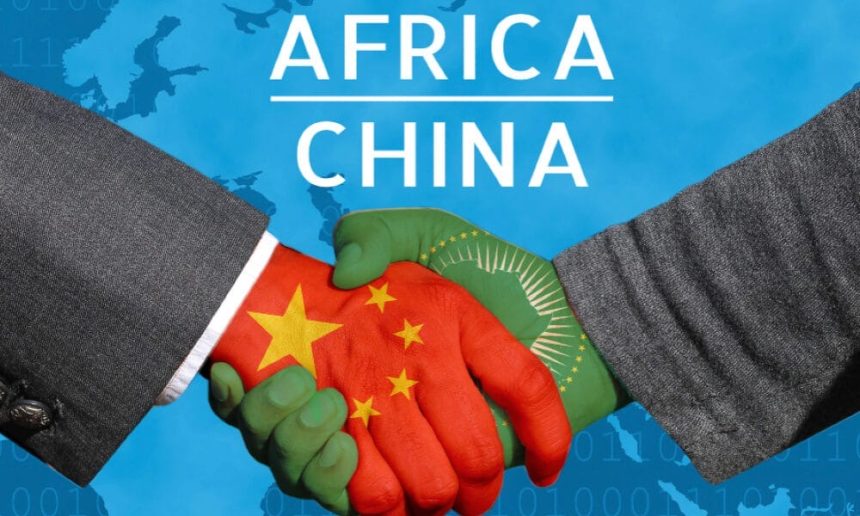
African nations are now sending more money to China than they receive in new loans, according to a new analysis. A report from the ONE Data initiative reveals a dramatic reversal in financial flows. Consequently, China has shifted from a net provider to a net receiver of funds from low-income countries. This change highlights the evolving nature of China loans and their repayment phase. Between 2020 and 2024, Africa experienced a $52 billion swing, moving from a $30 billion inflow to a $22 billion outflow. Therefore, many African governments face a tightening fiscal squeeze as they service old debts without receiving equivalent new financing. This trend coincides with a sharp rise in net financing from multilateral institutions.
The Data Behind the Financial Reversal
The ONE Data report provides clear figures on the shift. From 2015 to 2019, Africa received a net inflow of $30 billion from China. However, from 2020 to 2024, this became a net outflow of $22 billion. This represents a $52 billion negative swing for the continent. The data does not include cuts that took effect in 2025. David McNair of ONE Data explained the dynamic: less new lending is coming in, but previous lending still requires servicing. This creates the net outflow. The trend is a direct result of China scaling back new large-scale lending while existing loan repayments continue and even increase. Meanwhile, multilateral lenders have increased their net financing by 124% over the past decade.
Impact on African Economies and Public Finances
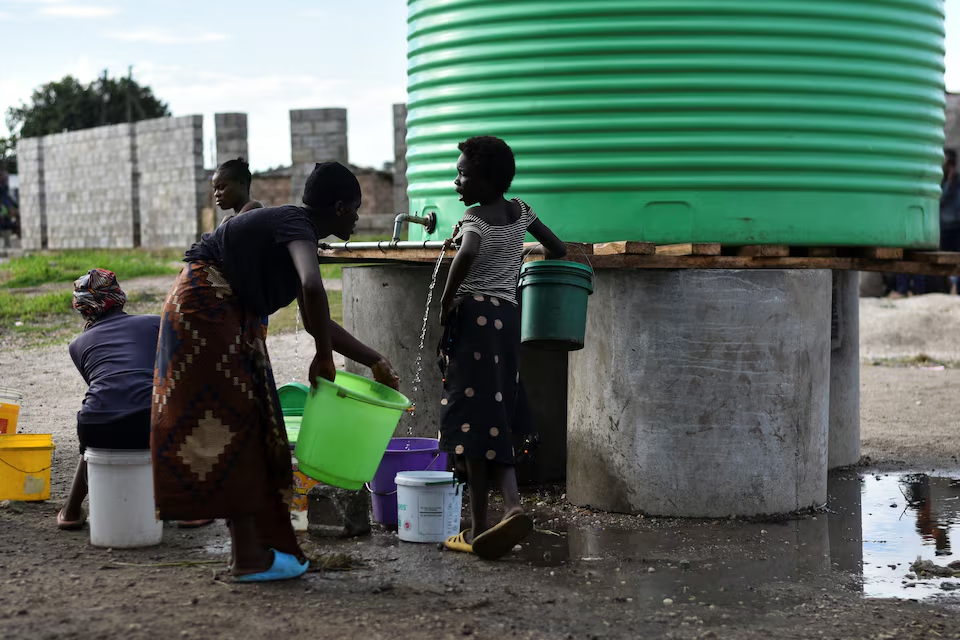
This reversal presents a significant challenge for African nations. Governments must allocate scarce foreign exchange to service Chinese debts. At the same time, they are not receiving fresh inflows to fund public services or new infrastructure. McNair called the trend “a net negative” for African nations facing funding difficulties. However, he noted a potential silver lining: reduced reliance on external finance may promote greater domestic accountability. Governments will need to rely more on domestic revenue mobilization. Yet, the immediate effect is a constriction of fiscal space, potentially slowing development and economic growth across the continent.
Rise of Multilateral Lenders and Global Context
As China’s net flows turn negative, multilateral institutions have filled the gap. These lenders now provide 56% of net development finance flows globally. From 2020 to 2024, they supplied $379 billion in net financing. This shift makes organizations like the World Bank and regional development banks the main source of development finance. The report also noted a broader decline in bilateral finance flows and private external debt. Furthermore, 2025 aid cuts from the U.S. and other developed nations will exacerbate the funding shortfall for developing economies. Thus, the financial landscape for Africa is becoming more complex and constrained.
Belt and Road Initiative Activity in 2025
Despite the net outflow trend, Chinese overseas dealmaking rebounded in 2025. A separate study by the Griffith Asia Institute found record Belt and Road Initiative (BRI) activity. Deals reached $213.5 billion last year, including construction contracts and investments. Africa emerged as the largest recipient of this BRI activity. This indicates that while net financial flows are negative, commercial engagement continues. The BRI, launched in 2013, aims to expand China’s economic and political influence through global infrastructure projects. The high deal value suggests a shift from direct government lending to more project-based, commercially structured engagements.
Strategic Implications for China-Africa Relations
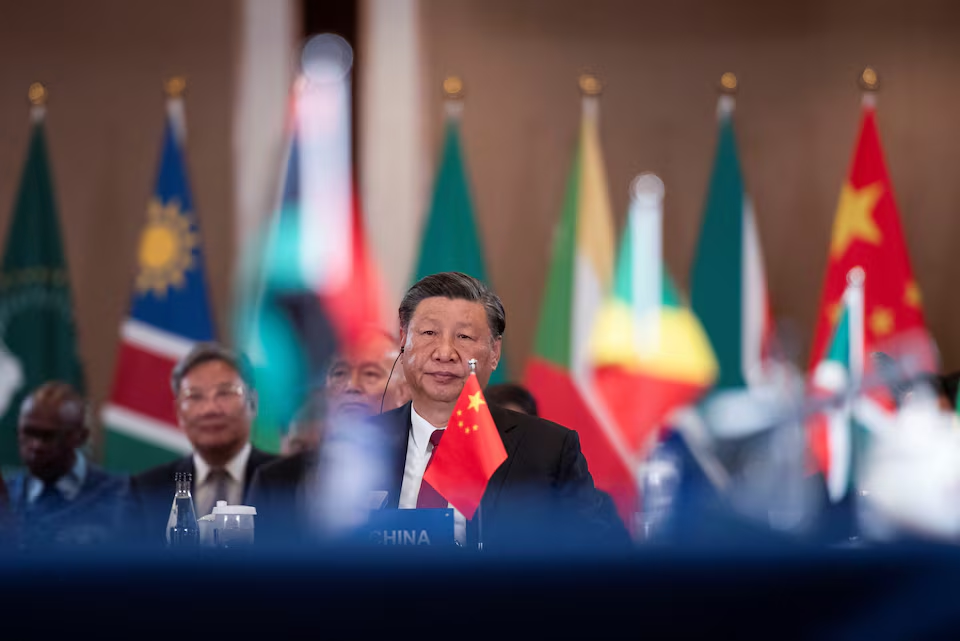
The financial shift marks a new chapter in China-Africa relations. The era of massive, straightforward China loans is likely over. The relationship is maturing into a more complex mix of debt servicing, commercial contracts, and strategic partnerships. African governments must now navigate repayment burdens while seeking new forms of cooperation. For China, the focus may be on securing returns on existing investments rather than extending new credit. This could lead to tougher negotiations and a more transactional dynamic. The long-term sustainability of the partnership will depend on how both sides manage this debt repayment phase.
Future Outlook and Policy Considerations
The coming years will be critical for African debt management. With China loans requiring repayment and other aid sources shrinking, policymakers face difficult choices. They may need to pursue debt restructuring or seek relief through international mechanisms. Increasing domestic revenue collection and improving public financial management are becoming urgent priorities. The role of multilateral institutions will be more important than ever, though their resources are also finite. The data underscores a global development finance system under strain, requiring new models and greater cooperation to support growth in low-income countries.
The ONE Data report reveals a pivotal moment in development finance. Africa’s shift to being a net payer to China underscores the end of an expansive lending cycle. While Belt and Road commercial deals continue, the net financial benefit for African treasuries has reversed. This creates immediate fiscal pressures but also forces a necessary debate on sustainable financing. The growing role of multilateral lenders offers a partial counterbalance. Ultimately, African nations must chart a path that reduces dependency, maximizes domestic resources, and negotiates sustainable partnerships in a changing global financial landscape.