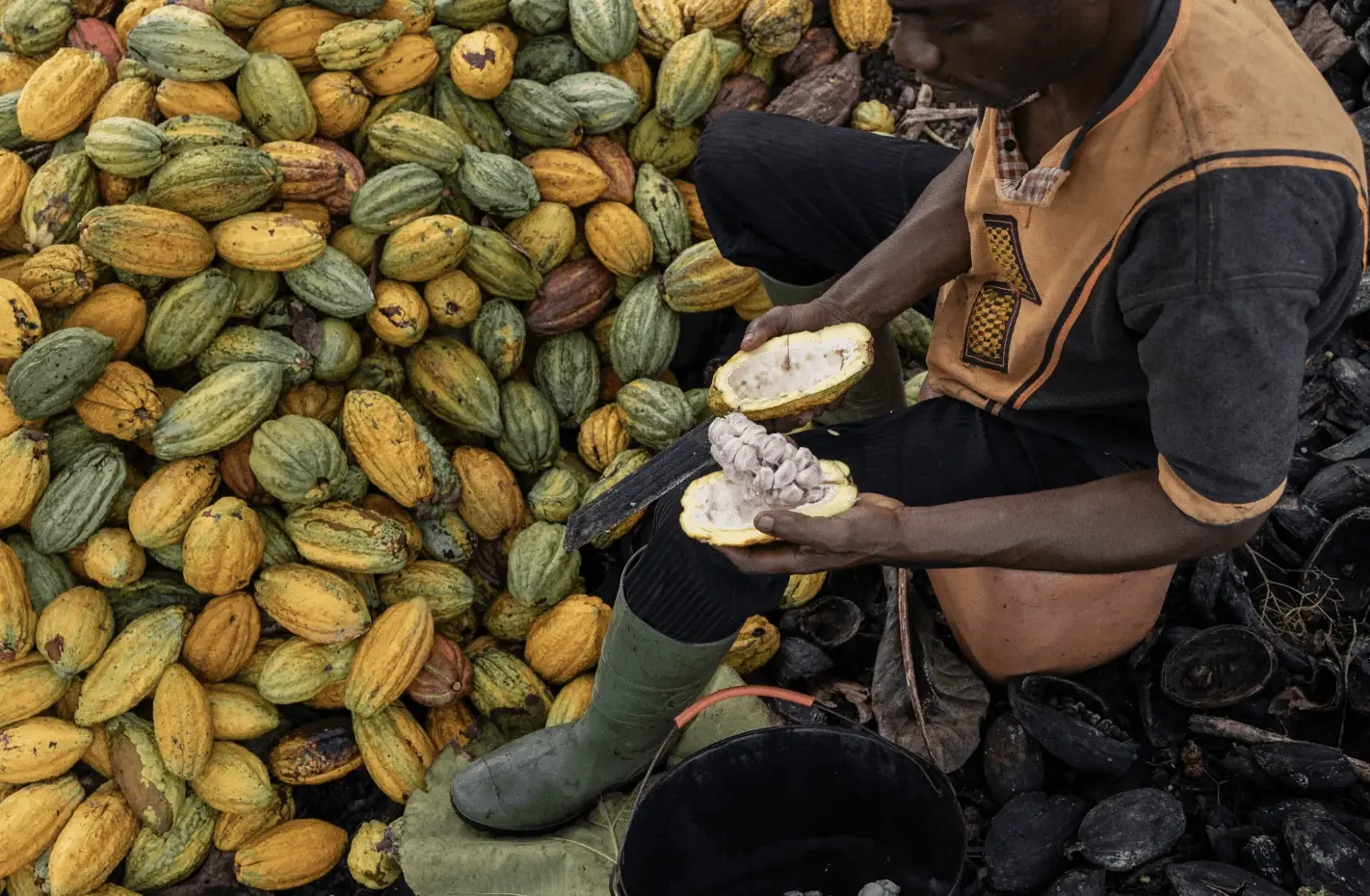
The world’s largest cocoa producer is facing a severe economic paralysis. Ivory Coast’s cocoa industry is in crisis as global prices have collapsed, leaving exports stalled and farmers destitute. Since October 2025, plummeting international prices have created a massive disconnect with government-fixed farmgate prices. Consequently, buyers are refusing to purchase at the official rate, causing harvests to pile up unsold. This deadlock has trapped approximately one-fifth of the nation’s population, who depend on cocoa for their livelihood, in a cycle of poverty and desperation.
Farmers describe a dire situation. Marty Somda, director of a local cooperative, states plainly, “Today, producers are dying. Producers are dying of poverty even though they have products.” He recounts a farmer who lost his wife but lacked the funds for a funeral despite having millions worth of cocoa in storage. The government-set price of 2,800 CFA francs per kilo is now unaffordable for international buyers, with global prices hovering around $5 per kilogram. Many desperate farmers are forced to sell far below the official rate to meet urgent needs, undermining the entire price support system.
The Price Disconnect and Human Cost
The crisis stems from a rigid pricing system unable to adapt to volatile global markets. Ivory Coast’s government establishes farmgate prices biannually to guarantee farmer income. However, when world prices crash, as they have since mid-2025, buyers withdraw. The resulting oversupply and lack of demand create a logistical and financial logjam. Farmers like Laurent Kone from Duekoue are compelled to sell at severe losses. “They took my cocoa at 2,000 francs because there are needs,” he explains, highlighting the impossible choice between financial ruin and immediate survival.
This collapse devastates rural communities. Cocoa revenue funds healthcare, education, and food. Without it, families are pushed into acute vulnerability. The human stories—like the farmer who cannot bury his wife—illustrate a systemic failure. The cocoa industry, designed to stabilize income, is instead amplifying market shocks for the most vulnerable. While warehouses fill with unsold beans, the people who grew them cannot afford basic necessities, creating a stark contradiction of poverty amid plenty.
Official Response and Attempts at Reassurance
Government authorities are attempting to manage the crisis and maintain confidence. Yves Brahima Kone, Director of the Coffee and Cocoa Council (CCC), has issued public reassurances. “We have made forecasts. All of the Ivory Coast’s production from our plantations will be purchased,” he stated. This promise aims to prevent panic and a total collapse in farmer morale. However, without buyers willing to pay the official price, this guarantee rings hollow for many.
The CCC’s challenge is immense. It must balance protecting farmer income with maintaining the country’s competitive position on the global market. If it lowers the official farmgate price to match world levels, it would plunge millions deeper into poverty. If it holds the price, exports stagnate and the financial burden on the state and cooperatives grows. There is no simple solution, leaving the cocoa industry in a state of prolonged uncertainty as officials seek a viable path forward.
Broader Implications for the Global Cocoa Market
Ivory Coast’s paralysis has significant ripple effects. As the source of roughly 40% of the world’s cocoa, a prolonged halt in its exports could eventually lead to supply shortages and price volatility for chocolate manufacturers globally. However, the current price collapse suggests adequate stocks elsewhere or reduced demand. The situation exposes the profound vulnerability of commodity-dependent economies to speculative market swings.
The crisis also questions the sustainability of the current commodity pricing model. Fixed farmgate prices provide stability but can create disastrous mismatches with international markets. Alternative models, like direct trade or greater price transparency, may gain traction. For now, the immediate need is to find a mechanism to move the stored cocoa and inject liquidity into rural communities before the social fabric unravels further.
Path Forward for Farmers and the Industry
Resolving the deadlock requires coordinated action. The government may need to facilitate urgent sales at negotiated prices to clear stocks and provide farmers with some income. Simultaneously, long-term reforms to the pricing mechanism are essential to introduce more flexibility. Support programs for farmers’ immediate humanitarian needs are critical to prevent further tragedy.
International partners and chocolate corporations have a role to play in supporting a sustainable solution. The crisis demonstrates that the health of the entire cocoa industry depends on the economic viability of the farmers at its base. Without a fair and functional market, the supply chain itself breaks down. The world watches as Ivory Coast, the cocoa giant, struggles to reconcile the brutal mathematics of global trade with the urgent human needs of its people.