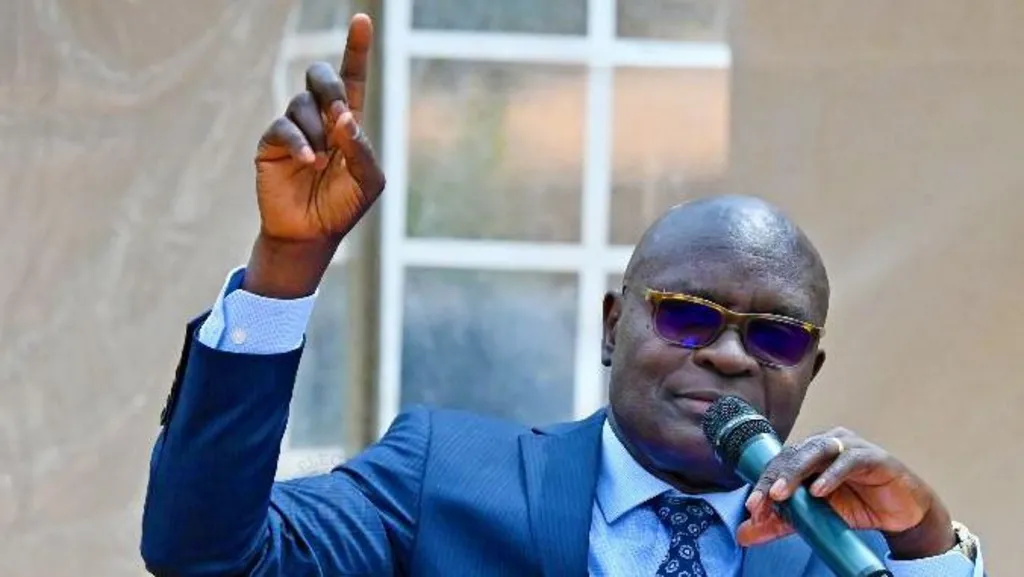
The head of Uganda’s Electoral Commission, Simon Byabakama, has spoken out about receiving threats concerning his role in declaring the outcome of the country’s presidential election. Byabakama, who has been at the helm of the commission, revealed that senior state officials had warned him against declaring certain presidential candidates as winners. Despite these threats, Byabakama remains firm in his commitment to uphold the law and ensure that the will of the voters is respected.
Responding to media inquiries about a viral video showing a presidential assistant making statements about rigging the election in favor of incumbent President Yoweri Museveni, Byabakama reassured the public that he would not be intimidated. The video, shared by the Daily Monitor, captures a senior presidential advisor stating that even if opposition candidate Bobi Wine, a popular pop star-turned-politician, were to win, the results would never be acknowledged by the Electoral Commission.
Byabakama’s statement is a direct response to these threats, reinforcing that only Uganda’s electoral laws, not political pressure or personal opinions, would guide the results. He firmly stated, “I am not in the business of donating votes,” asserting that the decision lies with the voters and that he would announce the results in line with the law.
The presidential race has seen President Museveni, now 81, seek his seventh term in office, against Bobi Wine, 43, who previously finished as a runner-up in the 2021 elections. Six other candidates are also vying for the presidency, with approximately 21.6 million voters registered.
Byabakama emphasized that voters—not political figures or threats—would ultimately determine the next president, as stipulated in Uganda’s electoral law. He assured that the results would be declared within 48 hours of the close of voting, as per the legal framework.
Despite heavy security forces patrolling the streets and concerns about military presence near polling stations, Byabakama sought to allay fears of voter intimidation. He noted that the military’s role was to maintain peace and stability throughout the electoral process. However, he acknowledged reports about polling stations being located within military premises and pledged that any legitimate concerns would be thoroughly investigated and addressed.
The internet shutdown imposed by the authorities in the run-up to the election has raised alarm over potential human rights abuses, with critics fearing that it could be a tactic to suppress opposition and control election-related information. The UN human rights office has expressed deep concerns over these actions, labeling them as deeply troubling.
Byabakama remains resolute in his stance that Uganda’s election results will be determined by the voters’ choices, not by external pressures or intimidation tactics. The upcoming announcement of the results is expected to be closely scrutinized by both local and international observers.