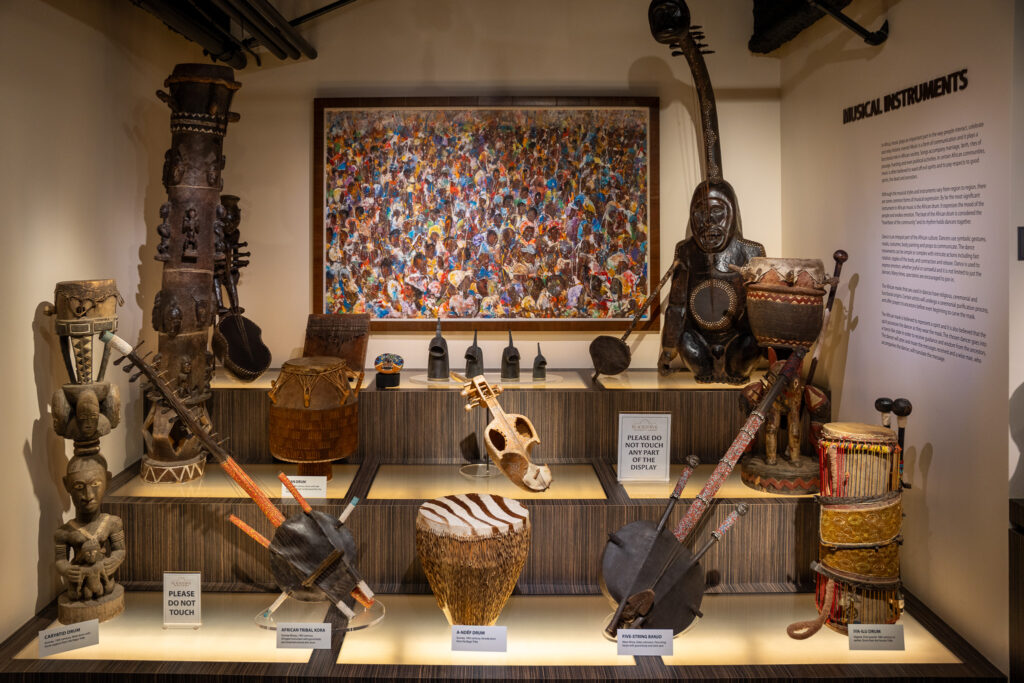
Manchester Museum has launched an Africa Hub to showcase thousands of African artifacts collected during the height of the British Empire. However, the museum has openly admitted that it knows “little to nothing” about the origins of many items in its collection. This display of artifacts aims to spark a conversation about the gaps in historical records and whether these items should be returned to their places of origin.
Unknown Origins of African Artifacts in the Museum
Among the displayed items, one figure—a wooden horse with an ibis on its back—is only listed with a donation note from Mrs. M A Bellhouse in 1976. No further information is available regarding its traditional use or place of origin. The museum admits that many pieces have been in storage for years, with key details missing from their object labels. The Africa Hub gallery, unlike most exhibits, is not the culmination of years of research, but rather the beginning of an ongoing dialogue on how these artifacts should be handled.
Repatriation and Cultural Heritage Discussion
The museum hopes its honest approach will help facilitate discussions on how to properly display or even return these cultural objects. As part of this initiative, some items have been co-curated with the Igbo Community Greater Manchester (ICM), who emphasize the importance of bringing these objects together to celebrate and share cultural heritage. Sylvia Mgbeahurike, the vice-chairwoman of ICM, highlighted that these objects were “given, stolen, or forcefully taken” during the colonial era, underscoring the historical injustices involved.
The Africa Hub showcases more than 40,000 objects, many of which were acquired through trade, anthropology, and even looting. This exhibit brings together historical objects from multiple African regions, encouraging deeper engagement with the diaspora communities in Manchester. The aim is to create a space where both the community and museum can reflect on the past and engage in more inclusive discussions about ownership and repatriation.
Looking Forward: What Should Happen to These Artifacts?
The Manchester Museum is pushing for a broader understanding of cultural exchange and historical accountability, inviting the public to consider returning cultural objects and allowing diaspora communities to share their insights. The display invites an ongoing discussion about the future of the artifacts and whether museums should actively work with communities to ensure respectful representation of their cultural heritage.