
Ghana has begun discussions with Russia’s state nuclear corporation, Rosatom, about establishing the country’s first nuclear power station, President John Dramani Mahama has announced.
Speaking at the Russia–Africa summit in Moscow, Mahama said reliable and affordable electricity was essential to industrial development. He outlined Ghana’s ambition to diversify its energy supply, combining renewable sources with preparations for nuclear generation.
The announcement confirms that discussions are under way. It does not establish that Ghana has awarded a construction contract or approved a final project. Ghana News Agency
The nuclear talks come alongside a separate agreement between Russian aluminium producer Rusal and the Ghana Integrated Aluminium Development Corporation, known as GIADEC, to develop bauxite mining and alumina production.
Reliable electricity central to Ghana’s industrial ambitions
Mahama identified inadequate electricity supply as a major obstacle to Africa’s economic development.
For Ghana, the proposed nuclear cooperation forms part of a broader effort to secure power for households, businesses and expanding industrial activity. A more diversified energy mix is intended to support that ambition.
However, the announcement did not include a proposed plant location, construction cost or commissioning date. Those details remain important unanswered questions as discussions progress. Pulse Ghana
The immediate development is therefore diplomatic and commercial engagement, rather than the start of construction.
Rusal signs agreement for Nyinahin bauxite development
In a separate announcement on October 29, Rusal said it had agreed with GIADEC to develop mining operations at the Nyinahin deposit in Ghana’s Ashanti Region.
The company estimates that the area earmarked for development contains more than 100 million tonnes of bauxite, the principal raw material used in aluminium production.
The planned mine would produce up to five million tonnes annually. A second phase would establish an alumina refinery with an annual capacity of 1.2 million tonnes.
| Project component | Announced plan |
|---|---|
| Mining location | Nyinahin deposit, Ashanti Region |
| Estimated bauxite resources | More than 100 million tonnes |
| Planned annual bauxite output | Up to five million tonnes |
| Proposed annual alumina capacity | 1.2 million tonnes |
| Ownership structure | Two joint ventures with Rusal holding majority stakes |
These figures describe planned capacity, rather than existing production. Rusal said the proposed refinery would use natural gas. rusal.ru
Ghana seeks more domestic mineral processing
The mining agreement supports Ghana’s ambition to retain more value from its mineral resources through domestic processing.
Bauxite is processed into alumina, which is subsequently used to produce aluminium. Establishing a refinery would therefore add an industrial processing stage beyond extracting and exporting ore.
Rusal and GIADEC expect the projects to create opportunities for local contractors and suppliers, alongside construction and operational employment. Those benefits remain dependent on implementation.
Although both announcements concern Ghana’s industrial development, the nuclear discussions and the bauxite agreement are separate initiatives. No dedicated nuclear electricity supply arrangement for the mining project was announced.
Mahama–Putin meeting signals closer bilateral engagement
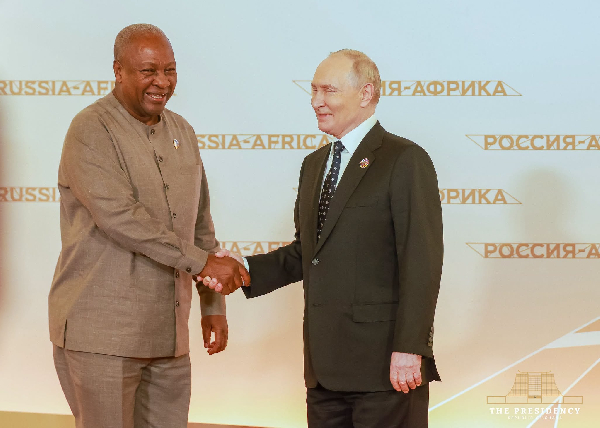
Mahama also held bilateral talks with Russian President Vladimir Putin following the Moscow summit, as the two countries explored deeper cooperation.
The engagement comes as Russia seeks to expand its economic and diplomatic relationships across Africa while facing Western sanctions over its war in Ukraine.
Ghana has also announced plans to apply formally for BRICS membership. Foreign Minister Samuel Okudzeto Ablakwa said Russia supported the prospective application. That support does not mean Ghana has already joined the grouping. Africanews
For Ghana’s proposed nuclear programme, the next significant developments would be concrete information on project scope, financing and delivery arrangements. For the Nyinahin mining and refining plans, attention will turn to how the signed agreement translates into development on the ground.