Military courts Uganda, are at the center of a heated political storm in 2025, accused of stifling dissent as the 2026 general elections approach. For instance, these courts, traditionally reserved for military personnel, are increasingly prosecuting civilians, particularly opposition figures. Consequently, this trend raises alarms about democratic erosion under President Yoweri Museveni’s 39-year rule. Thus, this article delves into the role of military courts Uganda, their impact on politics, challenges, and implications for Uganda’s future. Internal link: Uganda’s Political Landscape
The Rise of Military Courts in Uganda
Prosecution of Civilians
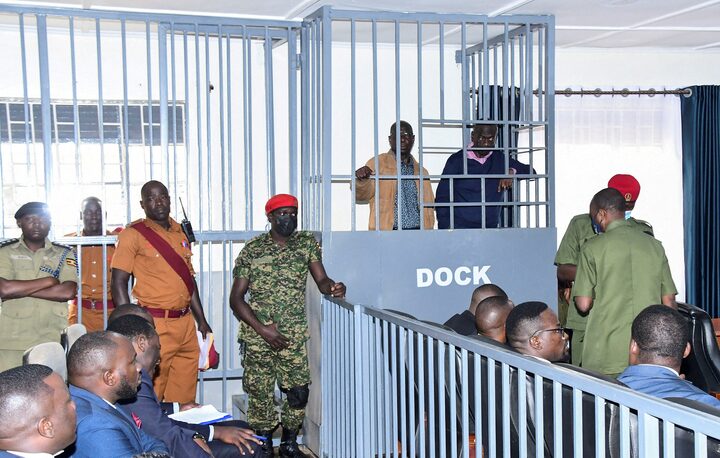
In 2025, **military courts Ugandatopics are prosecuting civilians, a practice deemed unconstitutional by Uganda’s Supreme Court in January 2025, per The Guardian. Specifically, opposition supporters, including National Unity Platform (NUP) members, face charges like illegal firearm possession, often without transparent trials. For example, the detention of Bobi Wine’s bodyguard, Eddie Mutwe, sparked outrage, with #FreeEddieMutwe trending on X. Moreover, these actions fuel accusations of political oppression. As a result, military courts Uganda are seen as tools to silence dissent.
Historical Context and Legal Concerns
Furthermore, military courts Uganda have expanded since the 2005 Anti-Terrorism Act, targeting civilians under vague charges, per Al Jazeera. Despite the Supreme Court’s ruling, the government seeks to legalize this practice, per posts on X. The Uganda Law Society calls it a “systematic campaign to crush dissent,” citing cases like the 2024 trial of 36 NUP supporters. Therefore, political repression undermines judicial independence.
Impact on the 2026 Elections
Opposition Crackdown
Military courts Uganda are intensifying the opposition crackdown ahead of 2026. For instance, NUP leader Bobi Wine reports over 1,000 supporters detained since 2021, many in military tribunals, per BBC News. Additionally, raids on NUP headquarters by military units, led by Gen Muhoozi Kainerugaba, Museveni’s son, signal targeted harassment, per X posts. Thus, electoral fairness is at risk as opposition campaigns face disruption.
Youth and Political Dynamics
Moreover, military courts Uganda are alienating the youth, who form 78% of the population, per OpenSpaceUganda on X. Young activists, energized by Bobi Wine’s message, face arrests, fueling protests in Kampala and Gulu, per Nile Post. The Democratic Party’s constitutional changes to limit internal dissent further stifle youth voices, per NBS TV. As a result, youth activism could reshape electoral dynamics.
Challenges to Democratic Reform
Government Surveillance and Repression
However, military courts Uganda operate amid broader state repression. For example, the 2025 Intelligent Transport Monitoring System (ITMS) tracks activists’ movements, per Human Rights Watch. Furthermore, opposition MPs visiting detainees, like Leader of Opposition Joel Ssenyonyi, face harassment, per Daily Monitor. Consequently, fear of prosecution discourages political participation.
International and Regional Concerns
Another challenge is limited international pressure. Specifically, Uganda’s role in regional stability, such as deploying troops to South Sudan, shields it from sanctions, per Reuters. Despite concerns from Amnesty International, Western allies prioritize counterterrorism over democratic reform, per Al Jazeera. Therefore, democratic reform faces global indifference.
The Future of Uganda’s Political Landscape
Electoral Reforms and Accountability
Looking ahead, military courts Uganda could galvanize calls for electoral reforms. For instance, the Electoral Commission is reorganizing polling stations for 20 million voters, but youth demand transparent voter rolls, per Daily Monitor. Moreover, civil society pushes for judicial oversight to curb military trials, per Uganda Law Society. Thus, judicial independence is critical for fair elections.
Opposition and Regional Influence
Additionally, opposition parties like UPC, fronting young leader Jimmy Akena, aim to challenge Museveni, per Daily Monitor. Uganda’s youth activism inspires movements in Kenya and Tanzania, per The Economist. Furthermore, regional bodies like IGAD could mediate electoral disputes if tensions escalate, per Reuters. As a result, opposition strength may grow with regional support.
In summary, military courts Uganda are casting a shadow over the 2026 elections, intensifying political repression and threatening democracy. By targeting opposition figures and youth activists, these courts undermine electoral fairness. However, growing youth mobilization and calls for reform offer hope. With international scrutiny and regional collaboration, military courts Uganda could face pressure to align with democratic principles, shaping a freer political future.