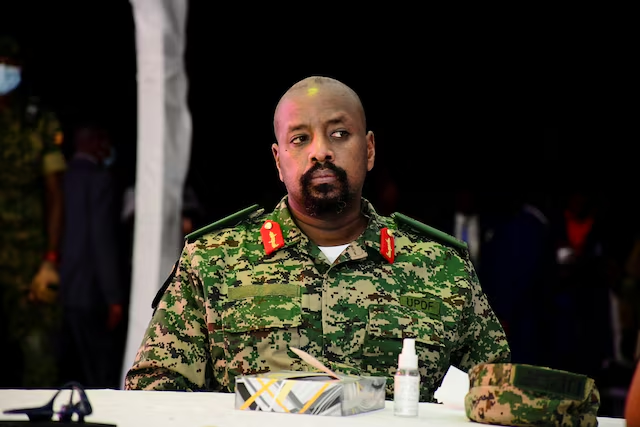
Uganda military chief Muhoozi Kainerugaba, son of President Yoweri Museveni, has sparked outrage after he openly admitted to detaining Eddie Mutwe, the bodyguard of opposition leader Bobi Wine. Armed men abducted Mutwe near Kampala, and for several days, no one knew where he was. Eventually, Muhoozi revealed the detention in a series of posts on social media, triggering widespread condemnation over the abuse of military authority.
He posted a shirtless image of Mutwe and boasted about capturing him “like a grasshopper.” Furthermore, Muhoozi directly threatened Bobi Wine, saying, “You are next.” He also warned that he would only release Mutwe if President Museveni instructed him to. In one of the most disturbing remarks, he suggested his intention to harm Mutwe. The National Unity Platform (NUP) quickly reposted the image, demanding public support to pressure for Mutwe’s release.
The Uganda Human Rights Commission responded swiftly. It declared the detention illegal and ordered Muhoozi to release Mutwe without delay. If he refuses, the Commission warned, he would violate the constitution and face contempt charges. This firm stance highlighted the growing unease about politically motivated abductions and military overreach.
Reacting strongly, Bobi Wine denounced the abduction as yet another tactic to suppress dissent. He also revealed that, shortly after Muhoozi’s threats, soldiers raided the NUP headquarters. The raid disrupted a planned event meant to rally support for Mutwe. Wine emphasized that the state continues to use force to stifle opposition and intimidate his supporters.
Moreover, the Uganda Law Society strongly condemned Muhoozi’s actions. In their statement, they insisted that Mutwe’s ordeal represents a larger strategy to crush freedom of expression. They pointed out that young Ugandans demanding democratic reforms are consistently targeted by the regime.
Critics have long argued that Muhoozi used his father’s influence to climb the military ranks. Many observers believe that Museveni is positioning him as his successor. Despite making several inflammatory remarks—including past threats to invade Kenya—Muhoozi still holds a powerful role in the army. This latest incident has only intensified concerns about military dominance in politics.
Opposition leader Kizza Besigye remains in detention on charges including treason. His ongoing incarceration, alongside many others, reveals a disturbing pattern of political persecution. Security forces frequently arrest critics and hold them without trial, reinforcing a climate of fear. As a result, many citizens have lost faith in the judicial system.
So far, government officials and security agencies have avoided commenting on the situation. Nevertheless, human rights organizations are increasing pressure on the administration. They are demanding independent investigations into unlawful arrests and military misconduct. Groups like Human Rights Watch and Amnesty International are expected to release formal statements soon.
Muhoozi’s admission has raised serious alarms. Holding a civilian in a private basement is not only unlawful but also a clear act of intimidation. It underscores how power is being misused to settle personal political scores. As Uganda approaches the 2026 election, this case will remain a critical test of its democratic institutions.
To restore public trust, the government must act transparently and uphold the rule of law. Uganda’s future depends on protecting civil liberties and ensuring that no one—regardless of rank—is above the law.