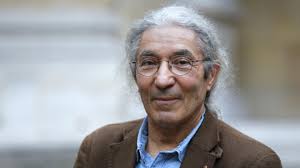
Renowned French-Algerian novelist Boualem Sansal has been sentenced to five years in prison by an Algerian court in a case that’s sending diplomatic shockwaves through North Africa and Europe.
Sansal, 80, was arrested in November after arriving from Paris to Algiers. His crime? Comments made during an interview with a far-right French outlet, where he suggested that France, during the colonial era, gave Algeria too much land and not enough to Morocco. He also asserted that the disputed Western Sahara rightfully belongs to Morocco—comments that have inflamed an already delicate geopolitical rift.
Human rights advocates, fellow writers, and world leaders have rushed to Sansal’s defense, decrying the charges as politically motivated and dangerously repressive.
“He has become an unwilling pawn in a deeper power struggle between Paris and Algiers,” said a statement from his French supporters’ committee.
Political Powder Keg: Literature Meets Geopolitics
The ruling has intensified tensions in a region already on edge. Relations between Algeria and France soured last year after Paris backed Morocco’s claim to Western Sahara—an area long supported by Algeria’s allies in the Polisario independence movement. Algeria responded by recalling its ambassador.
In recent years, Algeria also severed ties with Morocco altogether, worsening an already icy triangle of diplomacy.
President Emmanuel Macron, speaking in February, called Sansal’s imprisonment a blow to trust-building between the nations:
“His arbitrary detention, especially given his fragile health, must be resolved to restore full confidence between our countries.”
Free Speech or Political Provocation?
Sansal is best known for his literary critique of religious extremism and authoritarianism, particularly in his award-winning novel 2084, a satirical take on totalitarian regimes.
His upcoming book Vivre is set to be released in May, telling the dystopian tale of humanity’s escape to a new planet as Earth collapses.
However, critics say his views align too comfortably with far-right ideology in France. Marine Le Pen, leader of the National Rally, called him a “fighter for liberty and a courageous opponent of Islamism.”
Sansal’s defenders argue he’s being punished not for politics—but for thought. His supporters, including Nigerian Nobel laureate Wole Soyinka, warn that the crackdown reflects a disturbing intolerance for dissent.
Calls for Clemency Grow Louder
Following the sentencing, Sansal’s lawyer publicly appealed to Algerian President Abdelmadjid Tebboune for mercy. “Show humanity,” he urged, citing Sansal’s age and worsening health condition.
The trial has sparked international debate over freedom of expression, nationalism, and the weaponization of historical narratives. For now, Sansal remains behind bars, a literary voice silenced in the middle of a diplomatic crossfire.