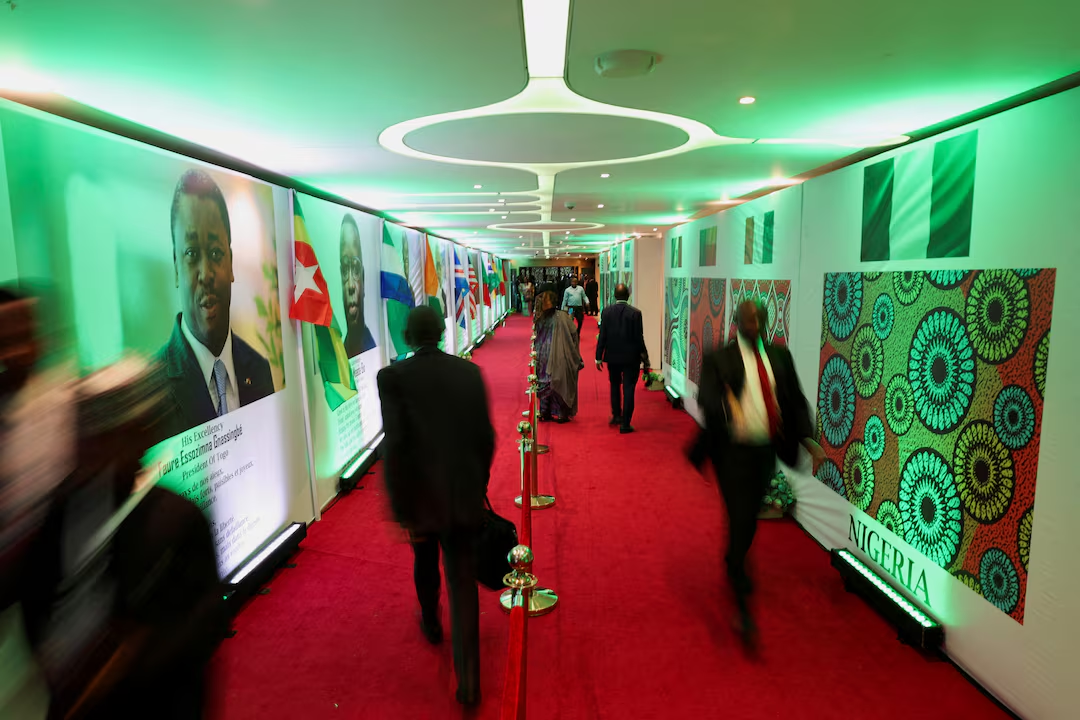
ECOWAS 50th anniversary challenges took center stage as leaders gathered in Nigeria to mark five decades of the bloc’s existence. The Economic Community of West African States (ECOWAS), formed on May 28, 1975, aimed to foster regional integration, promote democracy, and enhance security. Today, however, the group faces some of the most difficult tests in its history.
During the event, ECOWAS Commission President Omar Alieu Touray listed the threats facing the region. “We are confronting the greatest challenges we face today—terrorism, climate change, unconstitutional government changes, poverty, and economic disparities,” he said. Despite these obstacles, Touray remained hopeful, insisting the bloc could overcome them.
Yet, the union has lost key members. Burkina Faso, Mali, and Niger, all founding states, have withdrawn from ECOWAS following military coups and subsequent sanctions. In response, the three nations created the Alliance of Sahel States, forming their own confederation. They also cut ties with Western powers and moved closer to Russia.
Violence by jihadist groups continues to rise, especially in Nigeria and the broader Sahel region. These attacks displace communities, stall development, and threaten the fragile economies of the region. Without peace, growth becomes nearly impossible.
According to security analysts, restoring order is essential. Beverly Ochieng, a senior analyst based in Dakar, stated that economic progress relies on regional stability. “If you don’t have security, then of course it means that you cannot guarantee a robust economy in the region,” she explained. Her comment reflects a growing belief that economic development hinges on solving insecurity.
Analysts also criticize ECOWAS for ignoring undemocratic practices. Some leaders amend constitutions to extend their time in office. This undermines democracy and fuels public frustration. In many cases, citizens welcome coups, seeing them as a way to break the cycle of long-term rulers.
A recent example emerged in Togo. President Faure Gnassingbé was given a new role—President of the Council of Ministers—with no term limit. Opposition parties have condemned the move as a “constitutional coup” that may let him stay in power indefinitely. Such decisions damage the bloc’s credibility as a defender of democratic governance.
Despite these setbacks, ECOWAS remains committed to rebuilding ties with breakaway nations. Touray stressed the importance of continued dialogue with Burkina Faso, Mali, and Niger. The bloc hopes to restore cooperation without compromising on democratic standards or regional goals.
As ECOWAS turns 50, it stands at a critical crossroads. The region needs leadership that addresses real concerns—security, poverty, climate impact, and corruption. Empty promises are no longer enough. Action is required now.
To remain relevant, ECOWAS must evolve. It must hold leaders accountable, rebuild trust, and deliver on its founding mission. Millions of West Africans still believe in the bloc’s potential. What they need is proof that those at the top believe in it too.