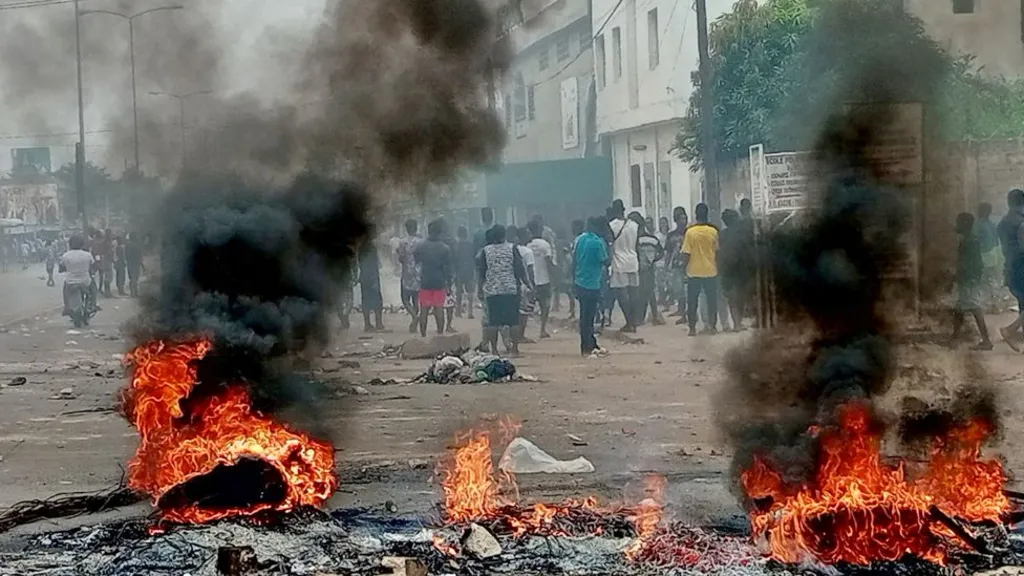
Togo’s new constitution has sparked widespread anger in Lomé, where people have taken to the streets to protest changes that grant Faure Gnassingbé the role of all-powerful prime minister. This shift allows him to bypass presidential term limits and maintain his grip on power. At least five demonstrators have died while confronting security forces in recent weeks, and more protests are expected to take place this Friday.
Interestingly, it is not the typical political opposition leading these protests. Instead, musicians, bloggers, and activists have emerged as the driving force behind the movement. These figures have successfully tapped into the frustrations of young Togolese people, many of whom are disillusioned with a regime that has been in power for nearly six decades. The Gnassingbé family has held power for longer than any other African dynasty, outlasting even Cameroon’s Paul Biya.
Faure Gnassingbé has shown himself to be a shrewd operator. By assuming the role of prime minister, he can maintain control over the country without facing direct re-election. This strategic move enables him to continue his rule while stepping out of the public spotlight.
The changes to the constitution, introduced in 2024, allow Faure to consolidate power while playing down his personal profile. Union pour la République (Unir), his party, continues to dominate the national assembly, thanks to a gerrymandered constituency map that overrepresents the northern regions. This ensures his political power remains unchallenged, particularly in the face of a divided opposition.
While Gilbert Bawara, Togo’s civil service and labor minister, insists the 2024 elections were fair, many critics disagree. Bawara argued that the opposition’s failure to mobilize was their own doing, and blamed external activists for inciting violence. He claimed that the government should not be held responsible for the opposition’s weakness.
In early 2024, the new constitutional framework passed quickly through the government-controlled national assembly, bypassing any public referendum. This move generated anger in Lomé, where many saw it as a clear attempt to entrench the Gnassingbé family’s hold on power. By May 2024, the transition concluded, and Faure stepped down from the presidency to take on the premiership, a post now responsible for all executive power.
In the newly ceremonial role of president, the national assembly selected Jean-Lucien Savi de Tové, an 86-year-old former business minister, as a figurehead. The regime presented this shift as a move towards a more democratic, “parliamentary” system. However, critics argue that this constitutional reform merely consolidates the power of the Gnassingbé family.
International attention has largely ignored Togo’s political shifts. Ecowas and other global powers have not challenged the changes, perhaps distracted by the crises in Gaza and Ukraine. However, in Lomé, protests have intensified. Cultural figures such as Aamron and Honoré Sitsopé Sokpor have played pivotal roles in rallying the public. Aamron, a rapper, became a symbol of resistance after his arrest in May 2024. His forced hostage-style apology only deepened the anger among young Togolese.
Protests continued in June 2024, with youths setting up burning barricades. Security forces responded violently, detaining bystanders and clashing with demonstrators. Armed pro-government militias roamed the streets, adding to the chaos. At least five people were killed, though the exact circumstances of their deaths remain unclear.
Despite the regime’s efforts to suppress dissent, activists like Aamron and Sokpor have continued to inspire the masses. Their influence among the youth has proven stronger than that of traditional politicians, who seem increasingly disconnected from the struggles of ordinary Togolese.
The local elections on 17 July 2024 proceeded quietly, with Unir winning predictably. Jean-Pierre Fabre, an opposition leader, reported finding no voters at his polling station, further underscoring the public’s disillusionment with the political process.
Critics argue that the new constitution is simply a means to entrench Faure Gnassingbé’s dynasty. Some have described the regime as a “republican monarchy” or “legalist authoritarianism.” The widespread frustration with Togo’s political system is evident, particularly among the youth.
The #FaureMustGo movement has gained momentum, and the new M66 Movement (representing the 6 June Movement) continues to call for change. These campaigns highlight the growing desire for reform and political transformation in Togo.
READ: Kenya Police Use Tear Gas to Quell Saba Saba Protest in Nairobi