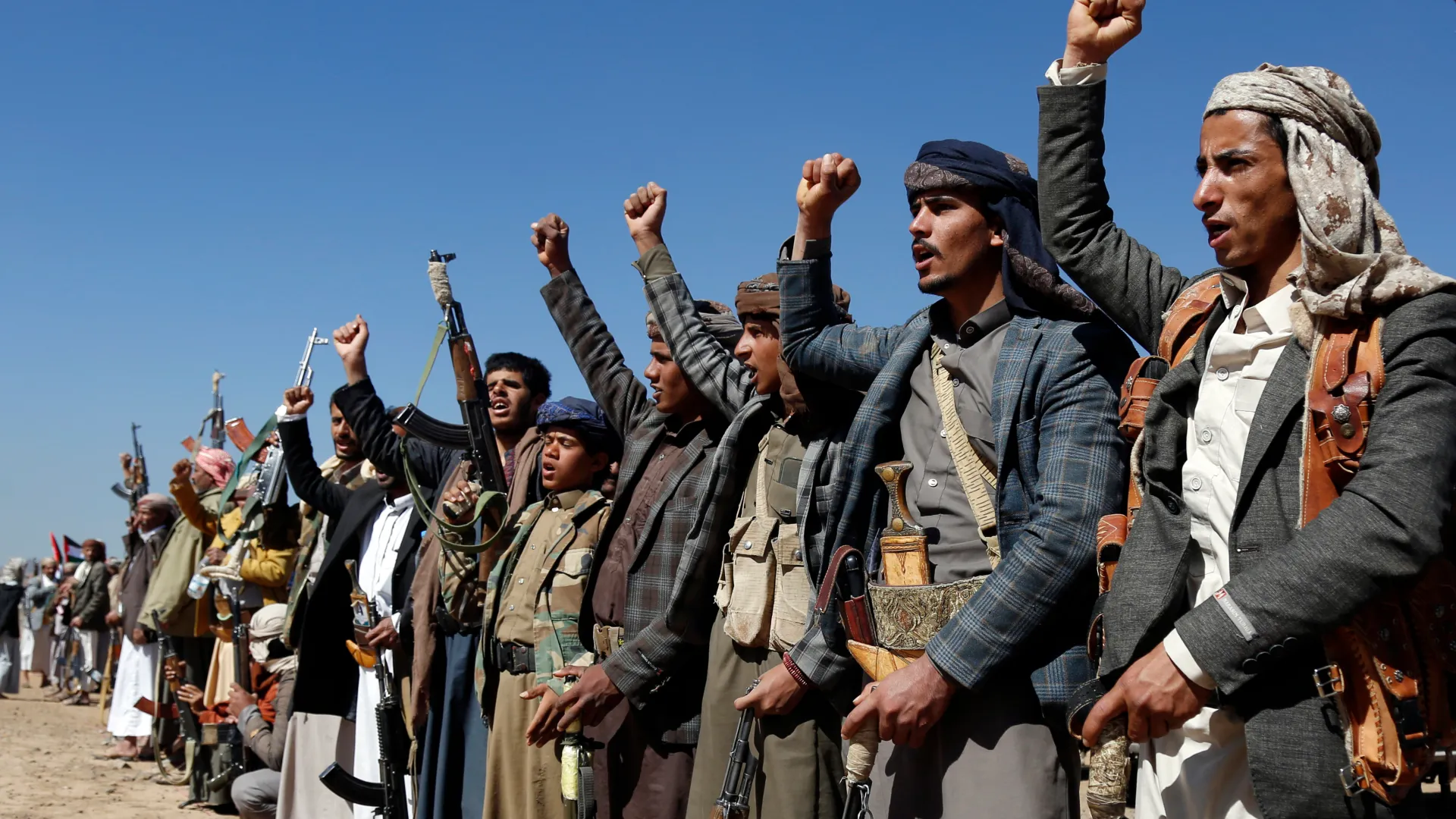
The Houthis (Ansar Allah) have transformed from a marginalized insurgent group in Yemen’s northern mountains into one of the most disruptive forces in the Middle East. Born out of religious revivalism and local grievances in the 1990s, the movement has outlasted presidents, resisted foreign intervention, and redefined the strategic landscape of the Red Sea and Gulf. Today, the Houthis straddle an uneasy line: insurgent rulers of northern Yemen, proxies of Iran, and disruptors of global trade and security.
Seeds of Rebellion
The Houthis trace their origins to the Saada governorate, a rugged, underdeveloped region dominated by the Zaydi Shia sect. Their founder, Hussein Badreddin al-Houthi, was a charismatic cleric who sought to revive Zaydi identity at a time when Saudi-backed Salafi schools were spreading rapidly across northern Yemen. For Hussein and his followers, this religious encroachment symbolized cultural erosion and foreign domination.
The movement’s slogans—denouncing U.S. influence, condemning Israel, and railing against Saudi Arabia—were both theological and political. They resonated deeply with tribes marginalized by the state, planting the seeds of rebellion that would soon grow into full-scale insurgency.
The Six Wars in Saada
By 2004, tensions with President Ali Abdullah Saleh erupted into armed conflict. Government forces killed Hussein that year, but his death only immortalized him, turning the Houthis into a cause and a name.
Between 2004 and 2010, the Houthis fought six brutal wars against the Yemeni state. Saada became a battlefield of scorched villages, airstrikes, and displacement. Yet the movement survived each campaign, adapting guerrilla tactics and strengthening alliances with disaffected tribes.
By the dawn of the Arab Spring in 2011, the Houthis were no longer simply rebels—they had become an entrenched northern power.
The Arab Spring and the Fall of Sanaa
The 2011 Yemeni uprising toppled Saleh and ushered in a fragile transitional government under Abdrabbuh Mansur Hadi. But the power vacuum was too great, and the Houthis seized the opportunity.
By September 2014, they stormed the capital Sanaa, in an unlikely alliance with loyalists of Saleh—the very man they had fought for years. This reversal marked their arrival as the dominant political-military actor in Yemen.
Saudi Arabia Strikes Back
The Houthi takeover provoked Saudi Arabia into launching a military intervention in March 2015, backed by the UAE and supported by the U.S. and U.K. Riyadh expected a quick campaign to restore Hadi’s government. Instead, the war turned into a quagmire.
Armed with Iranian-supplied missiles, drones, and advisors, the Houthis fought a grinding war of attrition. By 2017, their alliance with Saleh collapsed violently, culminating in his death at their hands.
The humanitarian toll was catastrophic: famine, cholera outbreaks, and the displacement of millions, described by the UN as one of the worst crises in modern history.
Expanding the Battlefield
Unable to be uprooted from northern Yemen, the Houthis widened the conflict. They unveiled an arsenal of long-range missiles and drones, striking deep into Saudi Arabia and later targeting the UAE.
By 2022, the war settled into a stalemate: Saudi-backed forces controlled the south, while the Houthis ruled the north. But their ambitions were no longer confined to Yemen.
A New Front: The Red Sea
The Gaza war in 2023 reignited regional tensions. Positioning themselves as defenders of Palestine and part of Iran’s “Axis of Resistance”, the Houthis turned to the Red Sea.
They began attacking commercial shipping, claiming to target vessels linked to Israel or its allies. In reality, their strikes disrupted one of the world’s busiest trade routes, forcing shipping giants to reroute around Africa. Costs soared, delivery times lengthened, and global markets trembled.
The U.S. and U.K. retaliated with waves of airstrikes in 2024. But the Houthis, hardened by decades of war, absorbed the blows and responded defiantly—cementing their status as a global disruptor.
2025: A Movement at a Crossroads
In August 2025, Israel carried out a dramatic airstrike in Sanaa that killed the Houthi prime minister and senior officials. It was one of the most significant attacks on the group’s leadership since the war began, underscoring how deeply the Houthis are now entangled in the regional conflict.
Today, they are simultaneously:
- Rulers of northern Yemen, administering territory home to millions.
- Proxies of Iran, shaping the balance of power in the Gulf and Red Sea.
- Disruptors of global commerce, threatening oil flows and shipping routes.
But their future is uncertain. Internal dissent, economic collapse, and humanitarian suffering could weaken their hold, even as external enemies intensify pressure.
What Comes Next
Analysts outline three possible trajectories for the Houthis:
- Consolidation of Power – They secure international recognition through negotiations, entrenching their rule in northern Yemen.
- Regional Expansion – They deepen ties with Iran, evolving into a permanent regional power akin to Hezbollah, projecting influence across the Middle East.
- Escalation and Retaliation – Their attacks provoke heavier Western and Israeli responses, risking a broader regional war.
Conclusion: A Global Disruptor Born of Local Struggles
The Houthis began as mountain rebels, fighting to preserve Zaydi identity against local and regional threats. Two decades later, they are a global disruptor, capable of rattling oil markets, destabilizing sea lanes, and forcing world powers into costly military campaigns.
Their rise demonstrates how local grievances can escalate into international crises, especially in a region where insurgencies often become proxies in wider struggles.
In 2025, the question is no longer whether the Houthis matter—it is how the world intends to deal with them.