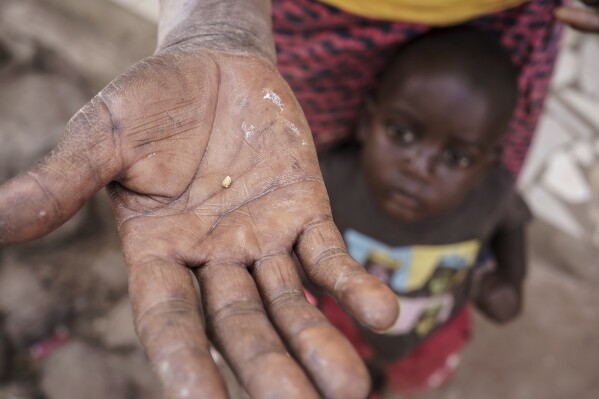
In Senegal’s Kedougou Region, mercury in gold mining remains a dangerous but common practice. Sadio Camara and other women spend their days washing sediment in search of gold, using mercury to separate the metal from the earth. She empties a small packet of mercury into a bucket of sediment, swirls the mixture with her bare hands, and continues her work despite the dangers.
“I know it’s dangerous,” says Camara, “because when we go to exchange the gold, the men wear masks to avoid the smoke.” She believes that since she only processes small amounts of gold at a time, the risk is manageable. However, even small-scale exposure to mercury can lead to severe health consequences.
Across West Africa, mercury remains the dominant method for extracting gold in the informal mining sector. This sector is largely unregulated and often illegal. In Senegal, women like Camara regularly use mercury without protective gloves or masks to make a living. Mercury exposure can cause irreversible brain damage, developmental delays, and other health issues, including tremors and loss of vision and hearing.
Once released into the environment, mercury easily spreads through air, water, and soil. It contaminates rivers, poisons fish, and accumulates up the food chain. Camara, as she works, says, “We are doing this because of ignorance and lack of means. If the government knows what is good for us, they should come and show us.”
Mercury is favored for its ability to bind quickly with gold, making it an efficient method in the gold extraction process. However, it comes with grave risks. In Camara’s kitchen hut, she heats mercury-laced sediment with an open flame, allowing the toxic mercury to evaporate and leave behind gold. This process takes place with no mask, no gloves—just her bare hands. Her children play nearby, exposed to the dangerous fumes.
This cheap and effective method of gold extraction comes with deadly consequences. Doudou Dramé, president of a local advocacy group for gold miners, explains, “If mercury did the same as a knife wound, people wouldn’t touch it. But with mercury, you don’t feel the effects for years. The consequences come later.”
Women are particularly vulnerable. Modou Goumbala, an NGO manager in southeastern Senegal, highlights how women are more exposed to contaminated water. “Women do the laundry, dishes, and wash the children,” he says. This increased contact with contaminated water puts women, especially pregnant and nursing mothers, at risk. Mercury can cross the placenta, harming developing fetuses and causing birth defects. Infants can also absorb mercury through contaminated breast milk.
There are alternatives to mercury in gold mining, such as gravity separation methods using shaking tables. These machines can extract gold without exposing workers to harmful mercury vapors. In 2020, the Senegalese government pledged to build 400 mercury-free processing units, but progress has been slow. So far, only one machine has been constructed, and it remains unused. The machine, located in Bantaco, is impractical for most miners due to logistical challenges. Goumbala suggests that having one machine per village could better address the issue.
Jen Marraccino, senior development director at Pure Earth, an NGO focused on reducing mercury and lead poisoning, advocates for gravitational separation. “The more this technology is used in the region, the costs go down,” she says. As supply chains grow, solutions can become more accessible to local miners.
Despite the challenges, there are signs of hope. New technologies and better practices can reduce mercury exposure in mining communities. But for now, many women in Senegal’s gold mines continue to work with hazardous materials, without proper protection, to make a living.