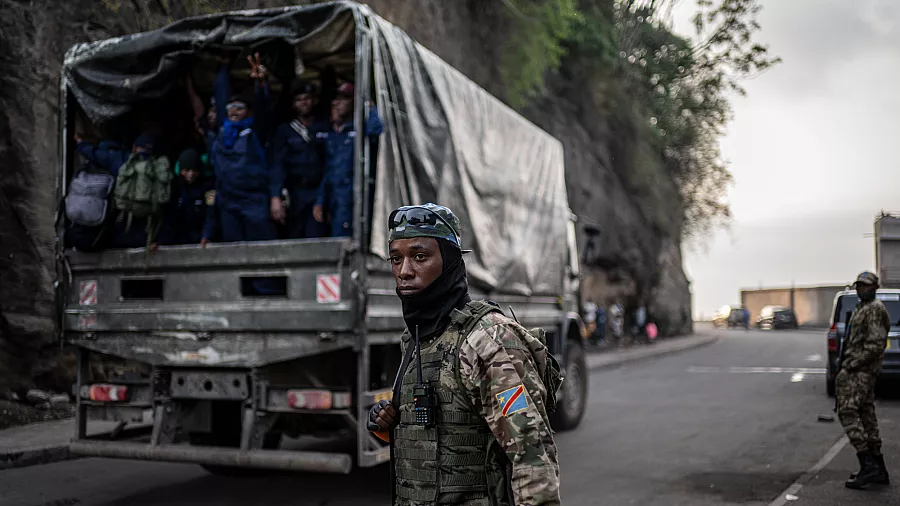
DOHA, QATAR | The Democratic Republic of Congo (DRC) government and the M23 rebels missed the deadline to reach a peace agreement during talks in Doha. This failure raises concerns that the peace process could reverse.
Escalation of Conflict in Eastern DRC
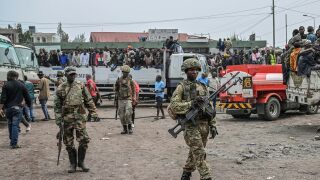
In January, the M23 rebels, supported by Rwanda, captured large parts of the eastern DRC, including Goma. This intensified the conflict, prompting both sides to start peace talks under Qatari mediation.
In July, the two parties signed a declaration of principles and agreed to a ceasefire. The declaration was supposed to lay the groundwork for further peace negotiations. They set the final deadline for the peace deal on 18 August, but they missed it.
M23 Rebels Demand Action on Terms
A Qatari official confirmed that they shared a draft peace agreement with the rebels and the Congolese government. However, the M23 refused to resume talks until all terms of the declaration were met. The most important demand is the release of prisoners.
Accusations of Ceasefire Violations
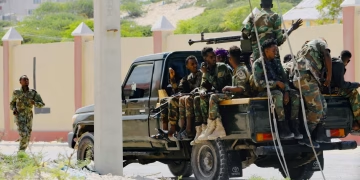
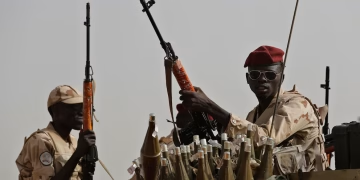
The Congolese army accused the M23 rebels of violating the ceasefire by launching multiple attacks in the east. Jeremy Laurence, a spokesperson for the UN High Commissioner for Human Rights, condemned the violence. The attacks killed 319 civilians. Laurence called for an immediate halt to attacks on civilians and for accountability.
On the other hand, the M23 rebels said the government forces continued to target their positions.
Looking Ahead: Future Negotiations
The failure to meet the deadline leaves the future of the peace process uncertain. New negotiations will likely occur in Qatar, but the conflict could worsen if the talks collapse.
Conclusion
The missed deadline for the DR Congo peace agreement highlights the ongoing instability in the eastern DRC. Though both sides made some progress, their inability to finalize the peace deal has left the situation fragile. Both sides must honor the agreement’s terms to avoid further violence and ensure lasting peace.