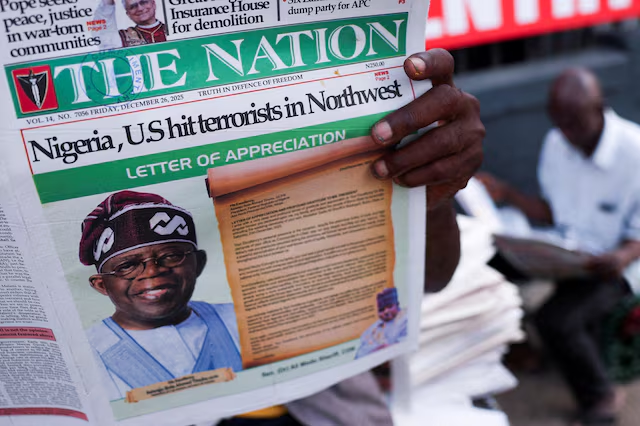
About 100 U.S. military personnel have arrived in Nigeria as Washington scales up an operation to target Islamist insurgents. A Nigerian defence spokesperson confirmed the deployment on Monday. The personnel will train and advise local forces but will not take part in combat operations. This deployment follows U.S. strikes targeting Islamic State-linked militants in December.
A small U.S. military team has been operating on the ground to boost Nigeria’s intelligence capabilities since those strikes. The new arrivals expand that presence significantly. In recent days, several planes carrying U.S. troops and equipment have headed to Nigeria’s northern states, according to flight tracking data reviewed by Reuters. The build-up appears systematic and ongoing.
Political Context
U.S. President Donald Trump has accused Nigeria of failing to protect Christians from Islamist militants in the northwest. These comments have created some diplomatic friction between the two countries. Nigeria denies discriminating against any religion. Its security forces target armed groups that attack both Christians and Muslims, officials say.
The military cooperation continues despite these political tensions. Both nations share an interest in defeating Islamist insurgents operating in the region. Therefore, practical security cooperation proceeds alongside diplomatic exchanges. The new deployment demonstrates this pragmatic approach.
Previous Operations
The U.S. carried out strikes targeting Islamic State-linked militants in December. Those operations signaled a more direct American role in Nigeria’s counterinsurgency efforts. Prior to those strikes, U.S. involvement had focused primarily on training and intelligence sharing. The December action represented an escalation in direct engagement.
A small U.S. military team has been operating on the ground since December to boost Nigeria’s intelligence capabilities. This team laid groundwork for expanded cooperation. The new arrivals will build on their efforts and relationships. Therefore, the deployment represents evolution rather than entirely new mission.
Scope of New Deployment
Major General Samaila Uba, spokesperson for Nigeria’s Defence Headquarters, provided details about the new troops. He said they would train and advise local forces. He emphasized that they would not take part in combat operations. This clarification addresses potential concerns about U.S. combat involvement.
Earlier this month, Nigeria’s military said it expected around 200 more U.S. troops. The current arrival of approximately 100 personnel may represent the first wave. Additional troops could arrive in coming weeks. The final total remains unclear based on current announcements.
Nigerian Request for Support
Presidential spokesperson Sunday Dare outlined Nigeria’s expectations from the United States. Nigeria needs “massive support from the U.S. government” in terms of fighter jets and munitions, he said. However, he declined to give numbers or a timeframe for such deliveries. This request goes beyond personnel to include direct military hardware.
The focus on equipment reflects Nigeria’s specific capability gaps. The country has struggled with aging aircraft and limited munitions supplies. Modern fighter jets and precision weapons would enhance counterinsurgency effectiveness. Therefore, Dare’s comments signal hope that expanded cooperation includes material support.
Nigeria’s Security Situation
Nigeria’s 240 million people are evenly split between Christians mainly in the south and Muslims mainly in the north. This demographic division creates complexity for security operations. Insurgent groups exploit religious tensions while also committing violence against all communities.
The country acknowledges serious security problems, including from Islamist fighters. Boko Haram and Islamic State West Africa Province operate in northeastern regions. These groups have killed thousands and displaced millions over many years. The insurgency shows no signs of ending despite sustained military efforts.
Religious Persecution Claims
Nigeria denies that Christians face widespread or systematic persecution. Officials point to attacks that kill both Christians and Muslims. They argue that insurgents target all Nigerians who oppose their ideology. Therefore, they frame the conflict as terrorism rather than religious warfare.
However, international observers note that some attacks specifically target Christian communities. Kidnappings of Christian schoolchildren have drawn global attention. Churches have been burned and worshippers killed in their pews. These realities complicate the Nigerian government’s narrative about equal treatment.
Regional Implications
U.S. military involvement in Nigeria affects the broader Sahel region. Islamist insurgents operate across borders, exploiting weak state control in multiple countries. Therefore, strengthening Nigerian capabilities benefits regional security. It may also encourage other nations to seek similar U.S. assistance.
The Lake Chad Basin region has become a hub for insurgent activity. Nigeria, Niger, Chad, and Cameroon all face threats from these groups. Coordinated international responses prove more effective than isolated national efforts. Therefore, U.S. engagement with Nigeria could expand to regional cooperation.
Humanitarian Considerations
The insurgency has created massive humanitarian needs in affected areas. Millions of people live in displacement camps or host communities. Food insecurity affects large populations unable to farm or access markets. Children have missed years of education due to conflict.
Military operations must consider these humanitarian dimensions. Effective counterinsurgency protects civilians while targeting militants. Poorly executed operations can increase displacement and suffering. Therefore, U.S. training may include human rights and civilian protection components.
Intelligence Cooperation
The small U.S. military team already on the ground has focused on boosting Nigeria’s intelligence capabilities. This remains a critical area for improvement. Nigerian forces have often lacked actionable intelligence about insurgent movements and plans. Better intelligence enables more precise and effective operations.
The new arrivals will likely expand this intelligence cooperation. U.S. technical capabilities can enhance Nigerian situational awareness. Satellite imagery, signals intelligence, and analysis support all contribute to better outcomes. Therefore, intelligence cooperation forms a core part of the expanded mission.
Training Focus
The U.S. troops will train and advise local forces according to official statements. This training likely covers multiple areas of military operations. Tactical skills, planning processes, and logistics management all require improvement. Professional military education enhances Nigerian capabilities across the board.
Advising involves working alongside Nigerian commanders to improve decision-making. It does not involve directing operations or making command decisions. Therefore, Nigerian forces retain full operational control. This arrangement respects Nigerian sovereignty while providing U.S. expertise.
Political Reactions
The expanded U.S. presence may generate political reactions within Nigeria. Some voices may welcome increased international support against insurgents. Others may question foreign military involvement in Nigerian affairs. The government must manage these diverse perspectives while pursuing security cooperation.
Regional powers may also watch the deployment closely. African Union members sometimes express concern about external military involvement. However, the pressing security threat may outweigh such concerns. Therefore, significant opposition appears unlikely at present.
Long-Term Implications
The deployment signals deepening U.S.-Nigeria security cooperation. This relationship could continue growing through future administrations. It may also serve as model for other African partnerships. Therefore, the current expansion carries significance beyond immediate counterinsurgency needs.
Nigeria’s position as Africa’s largest economy and population makes it strategically important. U.S. engagement reflects this reality. Successful cooperation could strengthen American influence across West Africa. It could also demonstrate effective counterterrorism approaches applicable elsewhere.
Next Steps
Additional U.S. personnel may arrive in coming weeks to reach the 200 figure previously mentioned. Equipment deliveries would follow political approvals and logistics arrangements. Training programs will commence once troops are in place. Intelligence cooperation continues developing alongside these other efforts.
The insurgency will not end quickly despite increased support. However, expanded U.S. involvement may accelerate progress. Nigerian forces will gain capabilities that persist beyond any individual operation. Therefore, the deployment builds long-term capacity while addressing immediate threats. Nigeria says 100 more U.S. personnel have arrived to help tackle the country’s persistent security challenges.