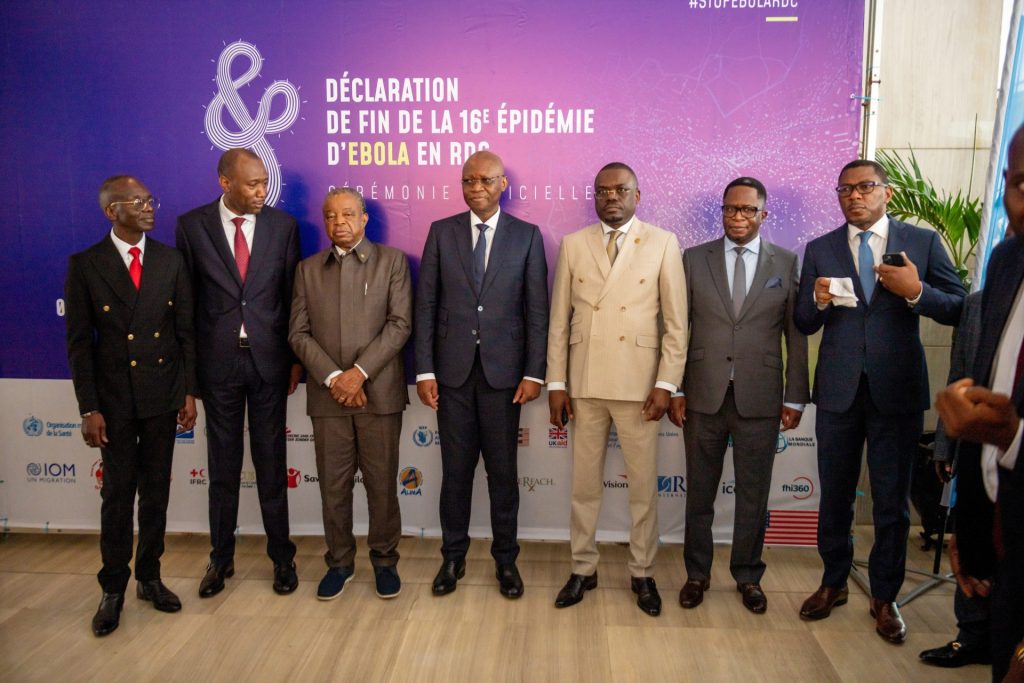
Health authorities have officially declared the Ebola outbreak declared over in the Democratic Republic of the Congo (DRC). This announcement follows the critical 42-day period with no new confirmed cases, which began after the last patient’s recovery on October 19, 2025. The successful containment of this 16th epidemic highlights the effectiveness of coordinated national and continental health responses.
Outbreak Timeline and Impact
The outbreak, centered in Kasai Province, began with an index case on September 4, 2025. A 34-year-old pregnant woman presented with high fever and repeated vomiting, later confirmed as the deadly Zaire strain of Ebola.
Case Numbers and Fatality
Initially, authorities reported 15 deaths and 28 suspected cases. The final totals, however, were more severe. The DRC’s National Institute of Public Health (INSP) confirmed 53 cases and 34 deaths among them, with an additional 11 probable cases. Consequently, INSP Head Dieudonne Mwamba Kazadi placed the likely total deaths at 45. All confirmed cases originated from the Bulape Health Zone, underscoring the outbreak’s concentrated yet intense nature.
The Path to Zero
The turning point came on October 19, when the last active case was discharged from treatment. This event triggered the mandatory 42-day surveillance countdown—two full incubation cycles for the virus. Through intense surveillance and community engagement, health teams detected no further transmissions, meeting the World Health Organization’s criteria for declaring an end to an outbreak.
Keys to Success: Coordination and Vaccination
The rapid containment is a testament to a multi-faceted strategy led by the DRC’s Ministry of Health with robust international support.
Exemplary Coordination and Leadership
Dr. Jean Kaseya, Director General of the Africa Centres for Disease Control and Prevention (Africa CDC), praised the “exceptional determination and exemplary coordination” behind the response. He specifically commended the DRC government, Health Minister Dr. Roger Kamba, and the INSP. Furthermore, he highlighted the courageous role of local communities and field teams in implementing control measures.
The Critical Role of Vaccination
A cornerstone of the response was the swift and strategic deployment of vaccines. Health workers administered over 48,000 Ebola vaccine doses, protecting more than 44,400 individuals. This ring vaccination strategy targeted frontline health workers, contacts of confirmed cases, and their contacts, effectively creating a buffer of immunity to halt the virus’s spread.
Looking Beyond the Outbreak: Post-Epidemic Priorities
Declaring an end to the outbreak is not the final step. As Dr. Kaseya emphasized, “managing an epidemic does not end when the outbreak ends, but rather it is at that moment that the most decisive work begins.”
Investment in Lessons Learned
To that end, Africa CDC has allocated $1 million to fund comprehensive post-epidemic studies. A team from its Science and Innovation Division will collaborate with the DRC’s Ministry of Health, the WHO, and other partners. The goal is to rigorously document the response—analyzing what succeeded, what failed, and how systems can improve. This work strengthens future alert systems, laboratories, and community mobilization for subsequent health threats.
Maintaining Vigilance
Although the current outbreak is over, the Ministry of Health and its partners continue vigilant monitoring. The DRC’s history with Ebola, driven by the virus’s presence in animal reservoirs, means the risk of future spillover events remains. Therefore, sustaining community vigilance and surveillance systems is paramount to preventing a new epidemic.
A Blueprint for Future Health Emergencies
The conclusion of the DRC’s 16th Ebola outbreak offers a powerful blueprint for managing public health crises in Africa. It demonstrates that with strong national leadership, coordinated continental support through agencies like Africa CDC, rapid vaccine deployment, and engaged communities, even deadly pathogens can be contained. The ongoing work to document and learn from this outbreak will undoubtedly strengthen health systems across the continent, better preparing them for the next challenge.