For years, the search for extraterrestrial life has focused on planets. After all, Earth is a planet, and its conditions—liquid water, a stable temperature range, and protection from harmful radiation—are the foundation of life as we know it. But what if life doesn’t need a planet to thrive? New research by scientists Robin Wordsworth from Harvard and Charles Cockell from the University of Edinburgh challenges this assumption, suggesting that self-sustaining ecosystems could exist in space without planetary surfaces.
Why We Look to Planets
Planets are natural focal points in the hunt for life. They offer environments where liquid water can exist, temperatures are regulated, and harmful UV radiation is blocked by atmospheres. These conditions are key for photosynthetic life, the basis of Earth’s ecosystems. However, the new study, published in Astrobiology, argues that living systems could create their own “mini-planets” in space. These biologically generated structures could mimic planetary conditions, providing habitats for life even in the vacuum of space.
Reimagining Habitability
The researchers propose that life could build its own barriers to sustain the necessary conditions for survival. These structures could:
- Transmit visible light for photosynthesis.
- Block harmful UV radiation.
- Maintain internal pressure and temperature for liquid water.
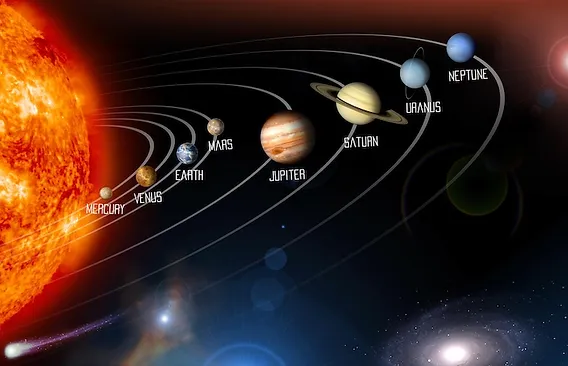
These “living habitats” could theoretically survive in environments between 1 to 5 astronomical units (AU) from the Sun, encompassing regions from Earth’s orbit to Jupiter’s.
Earth’s Recipe for Life
To understand the potential for extraterrestrial life, it’s essential to revisit why Earth supports life so effectively. Earth offers:
- Liquid Water: The triple point of water allows it to exist as a liquid under specific pressure and temperature ranges.
- Energy Source: The Sun provides an accessible energy supply.
- Elemental Cycling: Essential elements like carbon, hydrogen, and nitrogen are recycled through processes like volcanism and plate tectonics.
- Redox Gradients: The planet offers oxidizing and reducing environments, fueling diverse metabolic processes.
But could these conditions be replicated elsewhere, even in the vacuum of space?
How Life Could Thrive Without Planets
Pressure and Temperature Control
Maintaining liquid water in space requires specific pressures. On Earth, cyanobacteria thrive in low-pressure environments, maintaining internal pressures around 10 kPa. Similarly, seaweed species like Ascophyllum nodosum create internal air bladders with pressures between 15-25 kPa. This demonstrates that biological materials can sustain pressure differences needed for liquid water.
Temperature regulation, another key factor, is more challenging in space. Earth’s atmosphere acts as a greenhouse, but small bodies in space lack this capability. Instead, life could use materials like silica aerogels—lightweight and highly insulating substances that mimic Earth’s thermal balance. Some organisms on Earth, like Saharan silver ants, already manage extreme heat by reflecting and emitting infrared radiation, showcasing nature’s ingenuity.
Radiation Shielding
UV and cosmic radiation in space pose serious threats to life. However, certain materials like amorphous silica, found in biofilms on Earth, can block UV light while allowing visible light to pass through. This could enable photosynthetic life in space, even under harsh radiation conditions.
Volatile Retention
To sustain life, habitats must prevent the loss of water and other essential volatiles into space. The same biologically generated barriers that maintain pressure could also trap these substances, ensuring long-term survivability.
Self-Sustaining Habitats
For such ecosystems to thrive, they would need to regenerate their protective walls. On Earth, photosynthetic organisms already produce materials like amorphous silica and organic polymers, which could serve as building blocks for these barriers. These walls could evolve naturally, enabling life to maintain its environment independently.
Life’s Evolutionary Pathways
The study explores whether these habitats could arise without intelligent intervention. The researchers believe that non-sentient life forms could potentially evolve to sustain all the conditions necessary for survival in space. Earth’s ecosystems have shown remarkable adaptability over billions of years, suggesting that life could take entirely different evolutionary paths elsewhere.
Implications for Space Exploration
If life can sustain itself in space, it opens exciting possibilities for human space exploration. Such habitats could inspire new technologies, allowing humans to build self-sustaining systems for long-term survival in space. Moreover, these findings expand the scope of astrobiology, suggesting that life might exist in unconventional environments across the universe.
A New Perspective on Life
This research challenges our Earth-centric view of life and habitability. It suggests that life could exist in free-floating habitats in space or on small celestial bodies without atmospheres. These ecosystems would have unique biosignatures, offering new avenues for detecting extraterrestrial life.
The potential for life to adapt and thrive beyond planets reminds us that our understanding of the universe is still in its infancy. As we continue to explore space, this research encourages us to broaden our horizons and imagine life in forms we’ve yet to conceive. Could the cosmos be teeming with life in ways we’ve never considered? The possibilities are as vast as space itself.