IMF Warns Trump’s Tariffs Will Slow Global Growth to 2.8% in 2025
April 23, 2025 | By Toni Kan
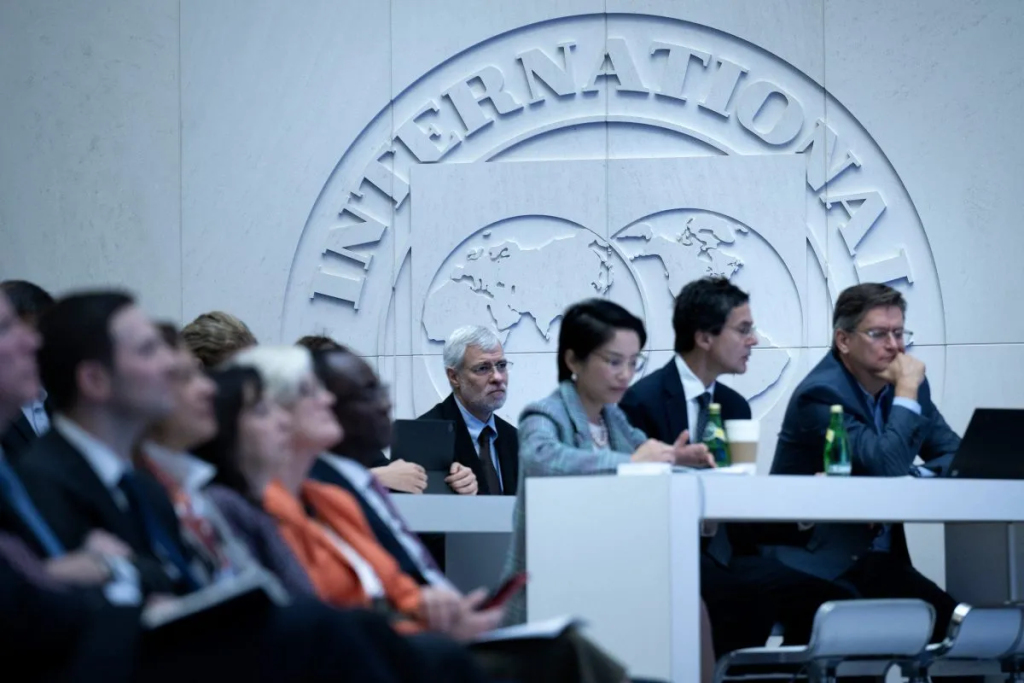
The International Monetary Fund (IMF) has issued a grim update in its World Economic Outlook (WEO), projecting that global growth will fall to 2.8% in 2025 and slightly recover to 3.0% in 2026. The slowdown is largely attributed to new U.S. tariffs introduced under President Donald Trump, alongside retaliatory trade measures from global partners.
“Near-universal U.S. tariffs introduced on April 2 have pushed effective tariff levels to historic highs,” the IMF said. “This surge in trade tensions, coupled with extreme policy uncertainty, is dampening global economic activity.”
These figures represent a 0.5% downward revision from the 3.3% projections made in January 2025.
🔍 Uncertainty and Tariffs: A Dual Blow to Growth
The IMF said that tariffs alone are a significant shock to global output, but the unpredictability surrounding policy implementation exacerbates the impact. The lack of transparency and shifting trade conditions have unsettled businesses, making it harder to forecast or plan.
“The unpredictability with which these measures have been unfolding also has a negative impact on the economic outlook,” the report noted.
As a result, the IMF opted to present a “reference forecast” rather than a traditional baseline, relying on data available as of April 4, 2025, following the enactment of U.S. tariffs and early countermeasures.
🌍 Emerging Markets and Developing Economies Hit Hardest
Emerging markets will see growth slow to 3.7% in 2025 and 3.9% in 2026, down from earlier forecasts. China, one of the main targets of the new tariffs, is expected to bear the brunt of the impact, alongside other heavily trade-exposed developing nations.
Key Projections:
- Advanced Economies: 1.4% growth in 2025
- United States: 1.8% growth, 0.9% lower than January’s projection
- Euro Area: Revised down 0.2% to 0.8%
- Global Inflation: Slower decline, now projected at 4.3% in 2025 and 3.6% in 2026
🌍 Africa’s Growth Momentum Disrupted
The IMF’s African Consultative Group, co-chaired by Central African Republic Finance Minister Hervé Ndoba and IMF Managing Director Kristalina Georgieva, issued a joint statement expressing concern:
“While growth in Africa has shown resilience, the sudden shift in global trade dynamics has interrupted this momentum,” they said.
Growth across Africa is now expected to reach 3.9% in 2025, revised down by 0.3 percentage points, with fragile and conflict-affected states facing the sharpest risks.
Strong fiscal and monetary policies that were beginning to stabilize inflation and debt across the continent now face renewed stress amid global volatility.
🛠️ IMF Recommendations for Policymakers
To mitigate further economic fallout, the IMF urged global policymakers to:
- Promote stable, predictable trade environments
- Advance debt restructuring efforts for vulnerable economies
- Address domestic structural imbalances
- Coordinate policy responses to improve transparency and cooperation
The Fund warned that without clear global coordination, trade disruptions could deepen, and recovery could be delayed well beyond 2026.
📉 A Global Call for Stability
As the world grapples with lingering effects of past shocks—pandemics, inflation surges, and geopolitical tensions—the IMF’s warning on Trump’s tariffs slowing global growth underlines the urgent need for constructive, multilateral policy approaches.
“The international community must work to reduce uncertainty, protect vulnerable economies, and rebuild confidence in global trade systems,” the IMF concluded.