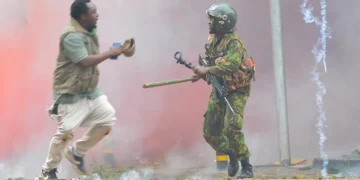
Prominent Kenyan activist Boniface Mwangi has been released on bail after pleading not guilty to illegal possession of ammunition—a charge linked to the deadly June 25 anti-government protests. Although authorities initially suggested Mwangi would face terrorism-related charges, the case took a sharp turn as those accusations were dropped.
Mwangi was arrested after police raided his home in Lukenya and office in Nairobi, seizing laptops, phones, notebooks, and even tear gas canisters and a blank round. Authorities implied he was behind unrest during protests that left at least 19 dead, but human rights groups condemned the arrest, calling it a clear attempt to intimidate dissenting voices.
“I am not a terrorist,” Mwangi wrote on X (formerly Twitter), rejecting what he called state efforts to silence legitimate protest.
The protests, triggered by tax hikes and economic grievances, turned violent when police opened fire. According to the Kenya National Commission on Human Rights (KNCHR), most of the 19 fatalities were caused by gunshots. Activists blame law enforcement for excessive force, a trend that’s led to more than 100 deaths in similar demonstrations since June 2024.
While Interior Minister Kipchumba Murkomen likened the protests to “terrorism disguised as dissent”, critics argue that the government’s crackdown is unconstitutional. Mwangi, speaking outside court, said:
“People hate Ruto for free. He thinks this anger is paid for.”
The charges follow an ongoing pattern of persecution. A coalition of 37 civil rights organizations released a joint statement condemning Mwangi’s arrest as part of a systematic suppression of young Kenyan voices and protest leaders. “This is a full-scale assault on Kenya’s democracy,” the statement read.
Mwangi has long been at the forefront of Kenya’s civil resistance. A former award-winning photojournalist, he became globally recognized for documenting the 2007 post-election violence, which claimed over 1,000 lives. He later shifted to activism, organizing dramatic protests like the bloody piglets outside Parliament in 2013, and the 2024 “coffin protest” symbolizing excessive police killings and economic despair.
His boldness has come at a cost—detentions, beatings, and torture. In 2024, Mwangi and Ugandan activist Agather Atuhaire were abducted and assaulted in Tanzania, an ordeal now under review by the East African Court of Justice.
Despite it all, Boniface Mwangi remains undeterred.https://www.youtube.com/watch?v=eAKKtHqaWSM