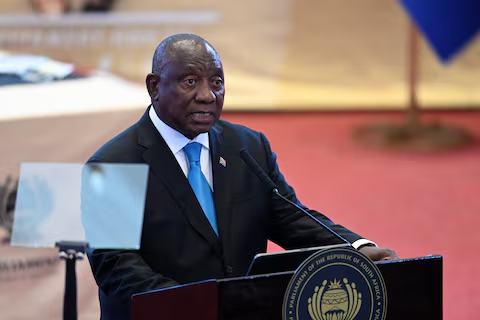
South Africa stands ready to mediate in the Middle East conflict if asked, President Cyril Ramaphosa said Tuesday. The offer comes as the US-Israeli air war against Iran expands, disrupting global travel and energy supplies. Ramaphosa spoke on the sidelines of an energy conference in Cape Town. Local broadcaster Newzroom Afrika carried his comments. “South Africa is always ready to play a contributing role, either in mediation or whatever,” Ramaphosa said. He emphasized that if a gap opens or if asked, his country always lives up to its obligations.
The South Africa Middle East mediate offer reflects the country’s diplomatic tradition of involvement in international conflict resolution. Ramaphosa outlined his approach to potential talks. “If the opportunity were to open, we would talk and say: there must be a ceasefire. Dialogue is always the best way of ending conflict and then ending the war.” He expressed urgency about the current situation. “We want this war to come to an end immediately,” he added.
Stranded Citizens Priority
Beyond the South Africa Middle East mediate offer, Ramaphosa addressed practical concerns for his citizens. The president said his government is doing everything possible to bring home South Africans stranded in the region. The conflict has severely disrupted air travel across the Middle East. Major aviation hubs remain closed, leaving thousands of travelers unable to depart.
South Africa joins multiple countries working to assist citizens caught in the crisis. The government has not yet specified how many South Africans require evacuation assistance. Ramaphosa’s statement suggests consular officials are actively working on departure options. The South Africa Middle East mediation offer thus accompanies concrete efforts to protect nationals.
Diplomatic Tradition
South Africa has a long history of international mediation involvement. The country played roles in conflicts across the African continent and beyond. Its post-apartheid foreign policy emphasized peaceful resolution of disputes. The South Africa Middle East mediation offer continues this tradition of engagement.
Ramaphosa personally brings mediation experience to any potential role. He helped negotiate South Africa’s democratic transition and later served as a international mediator in various contexts. His government has taken strong positions on Middle East issues, particularly regarding Palestinian rights. This history may influence how other parties view the South Africa Middle East mediation offer.
Regional Context
The South Africa Middle East mediation offer arrives amid intensifying conflict. US and Israeli forces continue striking Iranian targets. Iran has launched retaliatory strikes, including a drone attack on the US embassy in Saudi Arabia. Global air travel remains severely disrupted. Energy prices have spiked on fears of broader regional war.
Several countries have offered mediation services or called for de-escalation. The South Africa Middle East mediation offer adds another voice to these international appeals. Ramaphosa’s emphasis on dialogue and ceasefire aligns with positions taken by other non-aligned nations. Whether combatants will accept outside mediation remains uncertain given the conflict’s intensity.
Timing and Reception
The offer comes as fighting shows no signs of abating. Both sides have committed significant military resources to the campaign. Civilian casualties and infrastructure damage continue mounting. The South Africa Middle East mediation offer may gain traction if the conflict reaches a stalemate or produces mutual exhaustion.
International reaction to Ramaphosa’s statement remains preliminary. Major powers involved in the conflict have not publicly responded. Regional actors directly affected by fighting may view South Africa as sufficiently distant to serve as honest broker. The South Africa Middle East mediation offer’s success depends on acceptance from parties who currently show little interest in negotiation.
Practical Considerations
Any mediation effort would face substantial obstacles. The conflict involves multiple state and non-state actors with competing objectives. Previous diplomatic initiatives have failed to produce lasting ceasefires. The South Africa Middle East mediation offer would require significant resources and sustained engagement.
South Africa would need to coordinate with other international actors pursuing similar goals. The United Nations, African Union, and various national governments have all expressed concern about the conflict. Coordinating among these various initiatives presents diplomatic challenges. The Middle East mediation offer might eventually merge with broader international efforts.
For now, Ramaphosa has positioned his country as willing to help if asked. He has not proposed specific mechanisms or timelines. The offer remains open-ended, awaiting response from parties directly involved. Meanwhile, his government continues addressing immediate humanitarian concerns for stranded citizens. The South Africa Middle East mediation offer represents both diplomatic tradition and practical response to a worsening crisis. Whether it leads to actual engagement depends on combatants’ willingness to consider outside assistance in ending their war.