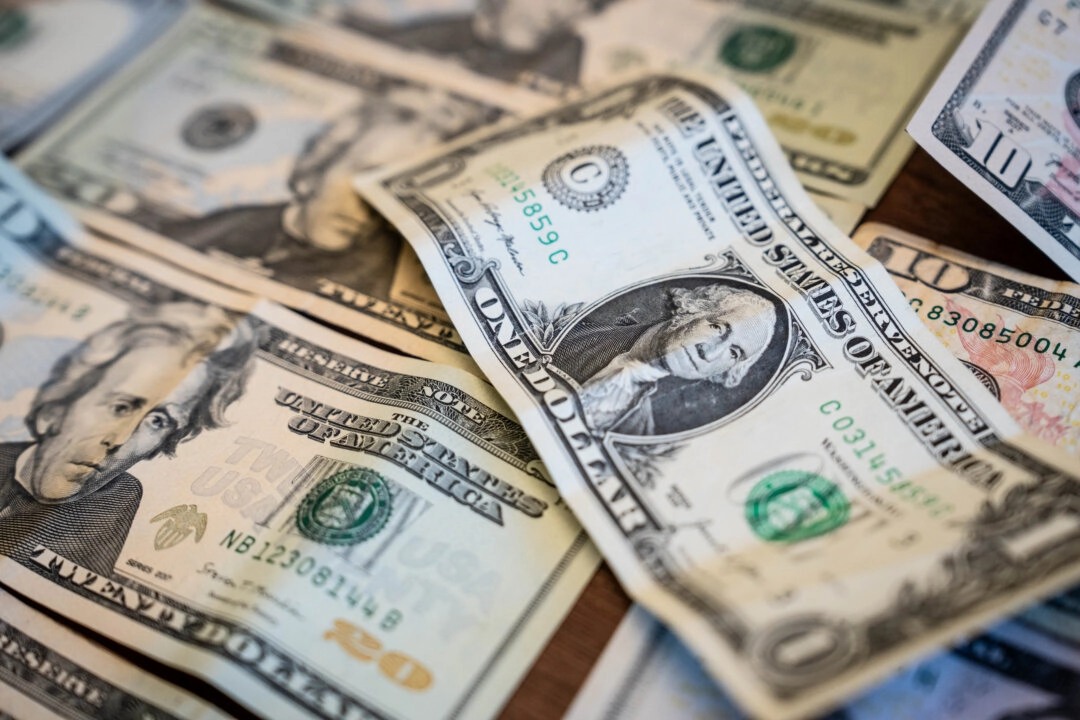
The US dollar is on track for its largest annual decline since 2003, as a variety of economic and geopolitical factors continue to exert downward pressure on the currency. While stock markets and precious metals have shown resilience in recent months, the greenback has been struggling, shedding 10% of its value against a basket of currencies in 2025. This decline is largely driven by global shifts in investment strategies, diversification into non-dollar assets, and the Federal Reserve’s continued monetary easing. As the world’s largest economy grapples with fiscal challenges and rising geopolitical tensions, the outlook for the US dollar in 2026 remains uncertain.
The US Dollar’s 2025 Performance
In 2025, the US dollar index—which tracks the value of the greenback against a weighted basket of major currencies—has dropped by around 10 percent, with the majority of this decline occurring in the first half of the year. In particular, the first half of the year saw the dollar drop nearly 11 percent, while the second half has seen a slight recovery. The alternative trade-weighted dollar index, compiled by the Federal Reserve, has experienced a 7% decline.
Despite this, analysts have noted that the dollar has shown surprising resilience in recent months. ING strategists observed that the currency has managed to stabilize, although questions remain about whether the worst is over or if further weakness is to come in 2026.
Factors Behind the Dollar’s Decline
Several key factors have contributed to the US dollar’s downward trajectory over the past year. Among them are:
1. Global Diversification
Global private investors and central banks have increasingly sought to diversify their portfolios away from the dollar. This shift has been evident in rising demand for non-dollar assets, such as gold and alternative currencies. At the same time, foreign investors have increased their holdings in US Treasury securities, which provide higher yields compared to other major assets.
For example, foreign holdings of US debt rose by 6 percent year-over-year in October 2025, totaling $9.242 trillion, according to US Treasury data. While this represents a continued demand for US Treasuries, it also reflects an ongoing trend of diversifying away from the dollar in favor of safer, non-dollar assets like gold.
2. Geopolitical Tensions
Geopolitical tensions, particularly with China and Russia, have also played a role in the dollar’s decline. As countries look to reduce their dependence on the greenback, there has been growing momentum toward diversifying their foreign currency reserves. These tensions have further undermined the dollar’s supremacy in global trade, contributing to its downward pressure.
Additionally, the ongoing global fiscal challenges, such as the US’s growing deficit, have added to concerns about the long-term stability of the dollar. The US budget deficit for fiscal year 2025 reached a staggering $1.8 trillion, and projections suggest it could surpass $2 trillion in 2026. Persistent fiscal worries continue to weigh on the dollar, contributing to market uncertainty.
3. Federal Reserve Easing Policies
A major factor in the dollar’s decline has been the Federal Reserve’s monetary policy, which has included three quarter-point rate cuts in 2025. These cuts have helped lower the benchmark federal funds rate to a target range of 3.5% to 3.75%, a level that is now lower than the rates offered by many other major central banks.
Monetary easing by the Fed, aimed at stimulating economic growth, has eroded the US interest rate premium that once supported the dollar. As the Fed continues to ease monetary policy, the dollar faces additional pressure, especially with interest rates in other regions, such as Japan and the Eurozone, either rising or expected to rise.
The Divergence of Central Bank Policies
One of the primary reasons for the US dollar’s decline is the monetary divergence between the Federal Reserve and other major central banks. For example, the Bank of Japan recently raised its policy rate to its highest level in 30 years in response to persistent inflation. If inflation remains above trend, the Bank of Japan may implement further rate hikes in the coming months, further strengthening the Japanese yen against the US dollar.
Meanwhile, the European Central Bank (ECB) has been involved in its own easing cycle, though it has signaled that further rate cuts may be unlikely. In fact, investors are now betting on a 30% chance of rate hikes in the second half of 2026, which could widen the gap between the euro and the dollar, further diminishing the greenback’s strength.
This central bank divergence has contributed to the dollar’s weakness, as the Fed’s easing policies contrast with the tightening cycles being implemented by other major central banks.
The Outlook for 2026: Will the Dollar Continue to Decline?
As 2026 approaches, the outlook for the US dollar remains uncertain. While the dollar has shown signs of stabilizing in recent months, many analysts believe that it will continue to face downward pressure due to several ongoing factors.
- Monetary Easing: The Federal Reserve is expected to continue its easing cycle, with two or three additional rate cuts forecast for the spring of 2026. This will likely contribute to further erosion of the US dollar’s appeal compared to other currencies with higher interest rates.
- Geopolitical and Fiscal Concerns: Persistent geopolitical tensions and the US budget deficit are likely to continue influencing investor sentiment toward the dollar. These concerns could lead to further diversification away from the greenback in favor of alternative assets.
- Global Investment Trends: Global diversification into non-dollar assets will likely persist, with more investors looking to hedge against dollar exposure by increasing their holdings in gold, foreign currencies, and US Treasuries.
The US dollar is poised to finish 2025 with its largest annual decline since 2003, driven by a complex set of factors including global diversification, geopolitical tensions, and Federal Reserve easing. While the dollar has shown some resilience, the overall trend suggests that the currency will continue to face downward pressures in 2026. With continued fiscal challenges, a potential interest rate divergence between the Fed and other central banks, and the ongoing shift towards non-dollar assets, the outlook for the US dollar remains uncertain as we move into the new year.