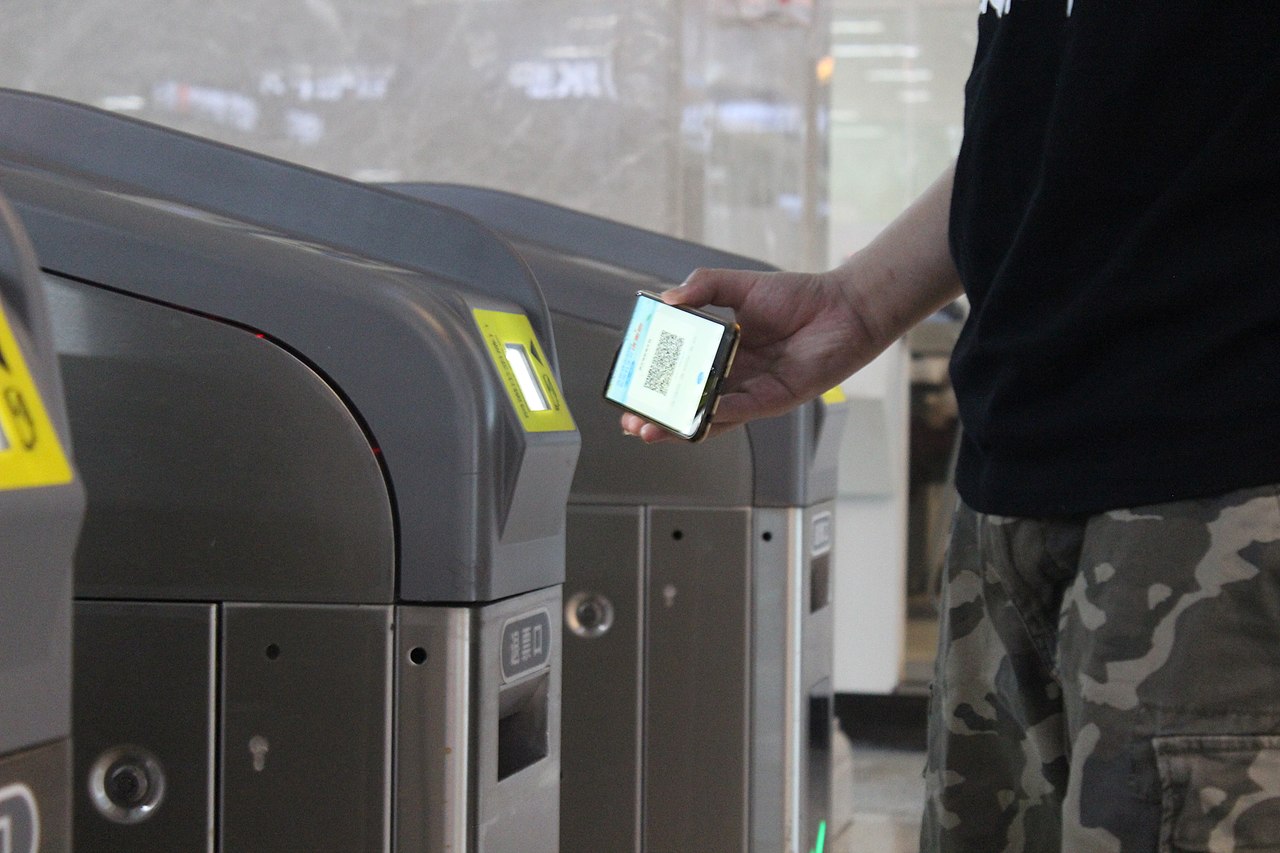
QR code payment is a contactless payment method where payment is performed by scanning a QR code from a mobile app. This is an alternative to doing electronic funds transfer at point of sale using a payment terminal. This avoids a lot of the infrastructure traditionally associated with electronic payments such as payment cards, payment networks, payment terminal and merchant accounts.
To make a QR code payment, the consumer scans the QR code displayed by the merchant with their smartphone to pay for their goods. They enter the amount they have to pay and finally submit. This is a more secure card-not-present method than others.
History
The QR code system was invented in 1994 by Masahiro Hara from the Japanese company Denso Wave.
The first mobile wallet app for cryptocurrency Bitcoin featured the ability to send and receive payments with QR codes in March 2011. In 2011, Chinese company Alipay designed a QR code payment method which allowed partnering offline stores to accept payment by scanning an individual’s QR code in Alipay Wallet.[6] In 2014, Chinese technology company Tencent introduced a similar feature on its messaging app WeChat to allow its users to make QR code payments. QR code payment has helped mobile payment become the most popular method of payments in China, accounting for 83% of all payments as of 2018. Nearly all shops, street vendors, most metro systems, buses, and taxis in Mainland China accept either WeChat Pay, Alipay, or Cloud QuickPass for payment.
In 2017, the National Payments Corporation of India (NPCI) launched BharatQR as a single, interoperable QR code that could be used for making payments to and from bank accounts using UPI and wallets. It works alongside QR codes from wallet providers as well as card providers such as Visa’s mVisa and Mastercard’s Masterpass.[10]
In 2020, PayPal announced the ability to pay with QR codes in its mobile app