RICHEST & WEALTHIEST ETHIOPIANS. Ethiopia, officially the Federal Democratic Republic of Ethiopia, is a landlocked country located in the Horn of Africa. It shares borders with Eritrea to the north, Djibouti to the northeast, Somalia to the east and southeast, Kenya to the south, South Sudan to the west, and Sudan to the northwest. Ethiopia covers land area of 1,112,000 square kilometres (472,000 sq. miles). As of 2023, it is home to around 116.5 million inhabitants, making it the 13th-most populous country in the world, the 2nd-most populous in Africa after Nigeria, and the most populated landlocked country on Earth. The national capital and largest city, Addis Ababa, lies several kilometres west of the East African Rift that splits the country into the African and Somali tectonic plates.
Anatomically modern humans emerged from modern-day Ethiopia and set out to the Near East and elsewhere in the Middle Paleolithic period. Southwestern Ethiopia has been proposed as a possible homeland of the Afroasiatic language family. In 980 BCE, the Kingdom of D’mt extended its realm over Eritrea and the northern region of Ethiopia, while the Kingdom of Aksum maintained a unified civilization in the region for 900 years. Christianity was embraced by the kingdom in 330,[26] and Islam arrived by the first Hijra in 615. After the collapse of Aksum in 960, a variety of kingdoms, largely tribal confederations, existed in the land of Ethiopia. The Zagwe dynasty ruled the north-central parts until being overthrown by Yekuno Amlak in 1270, inaugurating the Ethiopian Empire and the Solomonic dynasty, claimed descent from the biblical Solomon and Queen of Sheba under their son Menelik I. By the 14th century, the empire grew in prestige through territorial expansion and fighting against adjacent territories; most notably, the Ethiopian–Adal War (1529–1543) contributed to fragmentation of the empire, which ultimately fell under a decentralization known as Zemene Mesafint in the mid-18th century. Emperor Tewodros II ended Zemene Mesafint at the beginning of his reign in 1855, marking the reunification and modernization of Ethiopia.
From 1878 onwards, Emperor Menelik II launched a series of conquests known as Menelik’s Expansions, which resulted in the formation of Ethiopia’s current border. Externally, during the late 19th century, Ethiopia defended itself against foreign invasions, including from Egypt and Italy; as a result, Ethiopia and Liberia preserved their sovereignty during the Scramble for Africa. In 1935, Ethiopia was occupied by Fascist Italy and annexed with Italian-possessed Eritrea and Somaliland, later forming Italian East Africa. In 1941, during World War II, it was occupied by the British Army, and its full sovereignty was restored in 1944 after a period of military administration. The Derg, a Soviet-backed military junta, took power in 1974 after deposing Emperor Haile Selassie and the Solomonic dynasty, and ruled the country for nearly 17 years amidst the Ethiopian Civil War. Following the dissolution of the Derg in 1991, the Ethiopian People’s Revolutionary Democratic Front (EPRDF) dominated the country with a new constitution and ethnic-based federalism. Since then, Ethiopia has suffered from prolonged and unsolved inter-ethnic clashes and political instability marked by democratic backsliding. From 2018, regional and ethnically based factions carried out armed attacks in multiple ongoing wars throughout Ethiopia.
Ethiopia is a multi-ethnic state with over 80 different ethnic groups. Christianity is the most widely professed faith in the country, with significant minorities of the adherents of Islam and a small percentage to traditional faiths. This sovereign state is a founding member of the UN, the Group of 24, the Non-Aligned Movement, the Group of 77, and the Organisation of African Unity. Addis Ababa is the headquarters of the African Union, the Pan African Chamber of Commerce and Industry, the United Nations Economic Commission for Africa, the African Standby Force and many of the global non-governmental organizations focused on Africa. Ethiopia has been invited to join BRICS and will become a full member starting January 1, 2024. Ethiopia is one of the least developed countries but is sometimes considered an emerging power, having the fastest economic growth in Sub-Saharan African countries because of foreign direct investment in expansion of agricultural and manufacturing industries. However, in terms of per capita income and the Human Development Index, the country is regarded as poor with high rates of poverty, poor respect for human rights, and a literacy rate of only 49%. Agriculture is the largest economic sector in Ethiopia, accounting for 36% of the country’s gross domestic product as of 2020.
Even though Ethiopia is classified as one of the developing countries in the world, there are still rich people who are living and enjoying life as the Westerners do. They have such an amount of money because of connections with the country’s politics and a stable business that takes the supplies from the country and sends them to other places.
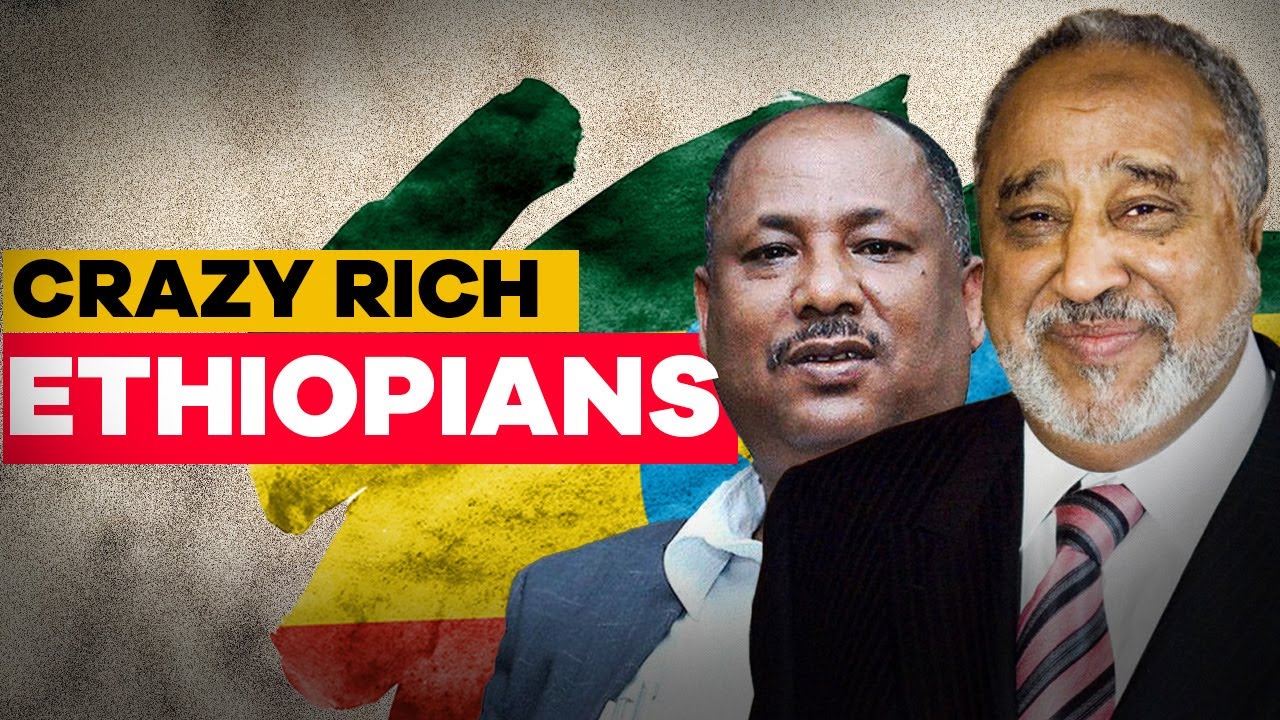
Below is a list of the top 10 richest Ethiopians in 2023
1. Mohammed Al Amoudi – $8.3 Billion
Mohammed Al Amoudi, the son of a Saudi father and an Ethiopian mother is Ethiopia’s richest businessman.
Al-Amoudi’s fortune is derived mainly from closely held companies in Sweden, Saudi Arabia, and Ethiopia.
Source: Oil & Gas, Real Estate and Technology
2. Azeb Mesfin – $4 Billion
She is the widow of the late dictator Meles. She has her own business and owns shares in various companies around Ethiopia. She also has a criminal image of herself among the people of Ethiopia, with the name mother of corruption given to her by the people. In the biggest companies and industries, she is a stakeholder and thus she has an estimated worth of $4 billion combining the worth of the dictator and all that she got out of the interests of the companies.
3. Meles Zenawi – $3 Billion
Meles Zenawi was an Ethiopian politician and businessman born on May 9, 1955, but died on Aug 20, 2012, at age of 57 years old. He had a net worth of $3 billion
4. Eyob Joe Mamo – $2.5 Billion
Eyob Joe Mamo is an Ethiopian oil tycoon known for running and controlling half of the gas stations in Washington, D.C., through Capitol Petroleum Group, a leading wholesale distributor of petroleum services in the Metro D.C. area and New York City.
5. Berhane Gebrekristos – $2 Billion
He was one of the closest to the dictator Meles and his wife Azeb Mesfin. He is a really trusted apprentice to the dictator and even now he is a partner of Azeb Mesfin in various businesses. He was a part of the diplomatic works that were used by the dictator for money laundering. The dictator himself looted a huge amount of money in the name of taxes from the common people and before the government was formed, he helped them in the loot of money.
6. Sebhat Nega – $2 Billion
Sebhat Nega is considered a magnate within the Tigray People’s Liberation Front (TPLF). He is known for having built a multibillion-dollar business empire in Ethiopia over the 27 years that the group was in power.
7. Seyoum Mesfin – $1.8 Billion
He is presently the Ethiopian ambassador to China. He was previously in the position of foreign affairs minister where he had a lot of power over trade. He has been chairman of Ethiopian Airlines. His power in the Ethiopian cabinet along with the airlines helped him smuggle a lot of drugs within Africa and Asia. He is the richest drug lord in Africa with a long criminal history of selling illegal drugs. He has made a lot of profit in this business in the past few years and his estimated worth at present is $1.8 billion.
8. Samuel Tafesse – $1.6 Billion
Samuel Tafesse is one of the most famous businessmen in Ethiopia. The 63-year-old real estate mogul is the founder of Sunshine Investment Group, a construction and real estate development company that develops residential, leisure, and commercial properties in Ethiopia and the Middle East.
9. Abay Tsehaye – $1.5 Billion
He is a politician from the ruling party in Ethiopia. He has enough influence inside the party because he is a veteran there. That is one reason he has made a lot of connections and made a lot of worth to the country’s economy. He has also invested in various sectors of business that have made the work simpler for him to gain profits. The shares from the company have made her present estimated worth of about $1.5 billion. He is extremely influential in the country.
10. Belayneh Kindie
Belayneh Kindie has amassed a fortune through his Belayneh Kindie (BK) Business Group, an Ethiopia-based group initially focused on exporting oil seeds, nuts, and other products.