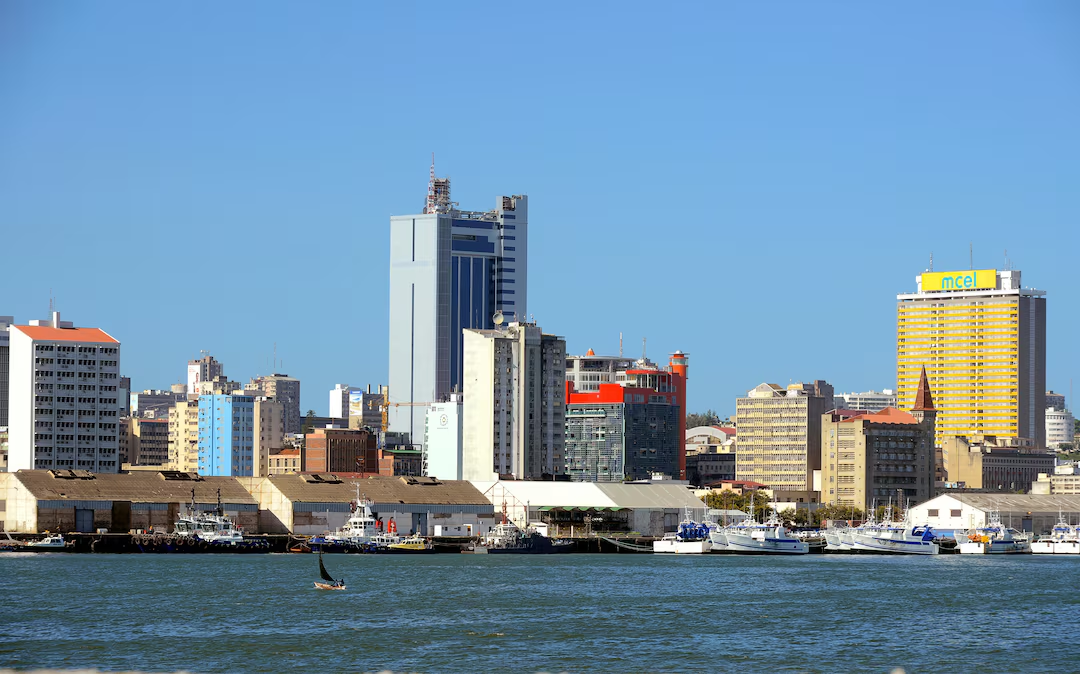
JOHANNESBURG: The World Bank is working with Mozambique to tackle the country’s mounting debt challenges, a senior bank official said. Borrowing costs are surging, highlighting pressure on its finances against a backdrop of heightened geopolitical risk. The country is struggling to stabilise its economy, burdened by debt, weak growth, and the impact of climate shocks. Hopes of a recovery hinge partly on the restart of major liquefied natural gas projects.
Fily Sissoko, World Bank regional director for Mozambique, said a Debt Sustainability Analysis drafted with the International Monetary Fund and published in February showed debt was not sustainable. “The government is very well aware of this and working very closely to see how we can help them address some of these imbalances, looking at all options,” he told Reuters. The assessment confirms the severity of the Mozambique debt crisis and the need for urgent action.
Financial Support Package
The bank is already preparing $6 billion in mostly concessional financing over five years, Sissoko said. Another $4 billion in private sector investment could be brought in with the help of World Bank private sector arm, the International Finance Corporation. Loan and investment guarantee platform the Multilateral Investment Guarantee Agency would also participate. This combined $10 billion potential package represents significant support for the struggling economy.
The financing would address immediate liquidity needs while supporting longer-term structural reforms. Concessional terms would ease the burden on government finances compared to commercial borrowing. The private sector component aims to catalyze investment in productive sectors, particularly energy.
Market Signals Flash Red
Mozambique’s sovereign spread rose above a 1,000 basis-point threshold this week to hit a ten-month high, data from JPMorgan showed. The sovereign spread represents the premium investors demand to hold its hard-currency debt over US Treasuries. Crossing the 1,000 basis-point level typically indicates market perceptions of significant distress.
The surge also reflects a broader retreat from emerging market debt, spurred in part by the Middle East conflict. Global investors have grown risk-averse amid geopolitical uncertainty. The Mozambique debt crisis occurs against this challenging external backdrop. Higher spreads make it more expensive for the government to borrow and complicate any return to international capital markets.
Debt Restructuring Prospects
Mozambique’s sole international $900 million bond is in the spotlight since President Daniel Chapo said in January some debt restructuring might be necessary. He did not give more details at that time. Chapo emphasised a focus on renegotiating terms with international creditors following an anticipated deal with the IMF. Mozambique’s previous IMF programme ended prematurely in April 2025.
The debt analysis showed Mozambique had debt servicing arrears on external and domestic debt equivalent to 1.3 percent of GDP by end-2025. Public debt stood at 91 percent of GDP, driven by liabilities at state-oil company ENH. The report flagged missed repayments to multilateral and bilateral creditors, including China, India, and Saudi Arabia. These arrears complicate relationships with key development partners.
Structural Reform Agenda
Sissoko said Mozambique could address some long-standing structural issues with improved revenue collection. Enhancing fiscal efficiency and advancing fiscal consolidation would also help reduce high fiscal deficits. “What we’re looking at is a three-to-five-year plan,” he said. “We hope that in the next few months this fiscal consolidation plan and macro fiscal plan will be finalised.”
The goal is to achieve “more stability in the market, more predictability for all the private investors.” Credible reform plans would help restore confidence and attract investment. The Mozambique debt crisis requires both immediate relief and fundamental changes to fiscal management. The World Bank and IMF are pressing for concrete commitments before releasing additional funds.
LNG Potential Offers Hope
Sissoko highlighted the potential of Mozambique’s LNG projects and the possibility of setting up a sovereign wealth fund to manage revenues. “LNG could mean really huge opportunities for Mozambique. The country could be one of the largest LNG producers in the world,” he said. LNG prices have soared since the US-Israeli war on Iran has constrained shipments from the Middle East.
Mozambique holds significant natural gas reserves off its northern coast. Several major international energy companies have invested in liquefaction facilities. However, Islamist insurgency in the region has disrupted development. Security improvements could allow projects to restart and eventually generate substantial export revenues. A sovereign wealth fund would help manage resource wealth and avoid the resource curse that has afflicted other African oil producers.
Challenges Remain Formidable
Despite the potential upside from LNG, near-term challenges dominate. The government must address arrears, negotiate with creditors, and implement reforms. Climate shocks including cyclones and drought regularly damage infrastructure and disrupt agriculture. Weak institutions limit the effectiveness of government programs. Poverty remains widespread, with limited social safety nets.
The Mozambique debt crisis did not emerge overnight. It stems from years of weak fiscal management, hidden borrowing, and economic shocks. The “hidden debt” scandal of the 2010s, where government-backed loans were concealed from parliament and the public, eroded trust and burdened the country with obligations it could not service. Rebuilding credibility will take time and sustained effort.
Path Forward
The World Bank’s willingness to consider “all options” suggests flexibility in crafting a response. This could include budget support, project financing, and guarantees to catalyze private investment. Coordination with the IMF will be essential, as the Fund typically leads on macroeconomic policy conditionality.
For Mozambique, the coming months will be critical. The government must finalize its fiscal consolidation plan and reach agreement with creditors. It must demonstrate commitment to transparency and good governance. Success could unlock substantial support and put the country on a sustainable path. Failure would deepen the Mozambique debt crisis and prolong suffering for its citizens. The stakes could hardly be higher.