The History of Famine in Bunyore and Agricultural Adaptation Strategies
The history of famine in Bunyore, a region in Western Kenya inhabited by the Abasiekwe and Nganyi communities, is rich with stories of survival, resilience, and adaptation. Famines were not only devastating ecological and economic events—they also shaped local culture, language, and agricultural practices. Unique to Bunyore is the tradition of naming children after famines, creating generational identity linked to historical drought events.
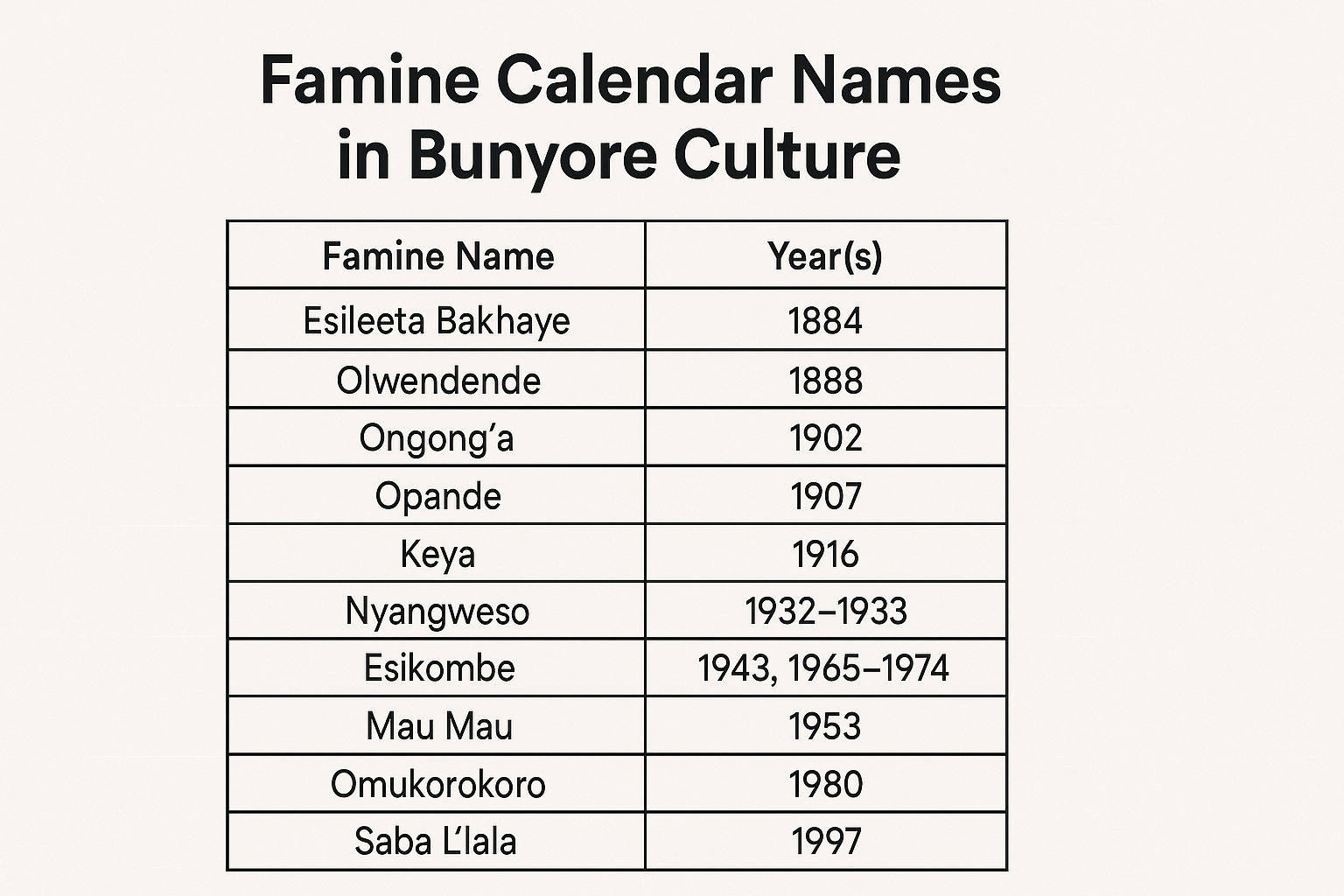
Major Famines in Bunyore: A Chronological Table
| Name of Famine | Year(s) |
|---|---|
| Esileeta Bakhaye | 1884 |
| Olwendende | 1888 |
| Ongong’a | 1902 |
| Opande | 1907 |
| Keya | 1916 |
| Nyangweso | 1932–1933 |
| Esikombe | 1942–1943 |
| Mau Mau | 1953, 1965–1974 |
| Omukorokoro | 1980 |
| Saba L’lAla | 1997 |
Each of these famines had unique causes ranging from drought, pests, and war, to global economic disruptions.
Key Famines and Their Causes
1. Nyangweso (1932–1933): Armyworm Invasion and Ecological Collapse
This famine was triggered by a massive infestation of armyworms (tsisiche), which devoured all vegetation. The Nganyi people, severely affected, turned to their Luo neighbors in Siaya for food support. The community also relied on sweet potatoes and vines introduced by white settlers, marking one of the earliest documented instances of agricultural adaptation in Bunyore.
2. Esikombe (1942–1943): Hailstorms and Cup-Rationed Relief
Both the Luo and Nganyi communities were affected by this widespread disaster, caused by destructive hailstones. Relief was rationed using a cup known as esikombe, which gave the famine its name. Food availability during this time depended on one’s financial capacity—showcasing a shift toward aid-based food access.
3. Mau Mau Famine (1953 and 1965–1974): Drought, Pests, and Conflict
Coinciding with Kenya’s Mau Mau uprising, the 1953 famine was exacerbated by severe drought and armyworms, which destroyed crops. The population survived on traditional “hunger crops” like cassava, sweet potatoes, and arrowroots. In 1965, relief came in the form of yellow maize imported from the U.S., introducing new staple grains to the region.
Agricultural Adaptation and Crop Introduction
Early Farming Practices and Transition
When the Luyia migrated from Uganda, they relied on hunting and gathering. The first cultivated crops were millet and sorghum, used for making obusuma (Luyia) or kuon (Luo), now known as ugali nationwide.
As famine patterns continued, foreign-introduced crops became crucial for food security:
- Maize (Lituma): Introduced by Indian laborers during the railway construction.
- Sweet Potatoes: Vine introduced around 1931–1932 after armyworm destruction.
- Cassava (Mukhongo): Originating from the coast, with both edible and bitter varieties.
- Bananas and Pumpkins: Allegedly spread through elephant movement.
- Fruits: Guavas, pawpaws, and oranges became common in the 1930s, indicating diversification.
These introductions reshaped Bunyore’s agricultural calendar, aligning it with both local resilience strategies and global food systems.
Cultural and Agricultural Legacy
The history of famine in Bunyore reflects not just hardship but innovation. Naming generations after famine events helped preserve memory and identity. Adaptation through crop diversification, barter with neighboring communities, and eventual acceptance of food relief programs illustrate how Bunyore’s people have consistently balanced tradition with change.
Understanding this legacy is vital for modern food security planning and resilience-building in Western Kenya and similar agro-ecological zones.