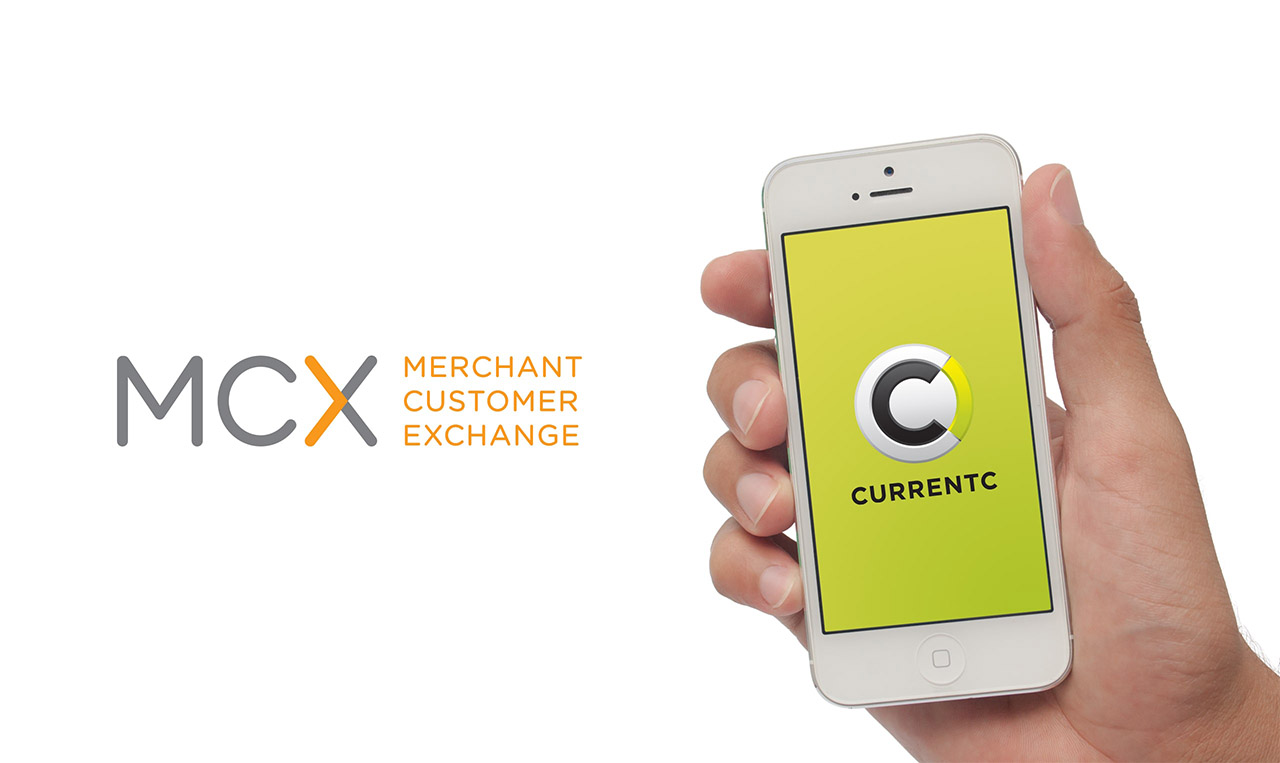
Merchant Customer Exchange (MCX) was a company created by a consortium of U.S. retail companies to develop a merchant-owned mobile payment system, which was to be called “CurrentC.” The joint venture was announced on August 15, 2012.
The company was led by merchants such as 7-Eleven, Alon Brands, Best Buy, CVS Health, Darden Restaurants, HMSHost, Hy-Vee, Lowe’s, Michaels, Publix, Sears Holdings, Shell Oil Products US, Sunoco, Target Corporation and Walmart. The initial retailers that were part of the company account for about $1 trillion in annual sales.
In March 2017, the technology developed by MCX was purchased by JPMorgan Chase for its Chase Pay system.
CurrentC
MCX’s flagship product was CurrentC, a mobile payments platform. The system utilized a smartphone app and digital wallet: to make a purchase, the user scanned a QR code shown on the cashier’s screen, or had the cashier scan a QR code from the phone’s screen. Instead of transmitting financial data over the internet, the transaction used a token placeholder that was then converted by the financial institution to initiate the Automated Clearing House (ACH), gift card, private label charge card or other type of payment and charge the consumer. The CurrentC app also included features that would help the user locate a retailer, display coupons, display loyalty program details, and track receipts using data collected from transactions and the user’s device.
The system was designed by Joseph Corcoran and provided to MCX under NDA and based on the granted US Patent that he invented. Gemalto was contracted to provide the backend processing. Weeks after Dekkers Davidson became CEO of MCX, Dekkers favoured doing a deal with Paydiant instead (A company he already had a relationship with). The breach of the Gemalto contract resulted in a Court Judgment being granted to Gemalto against MCX for over $40 million. Paydiant is a startup based in Boston, now acquired by PayPal. The system, intentionally, does not support all credit cards, as one of its goals is to prevent merchants from having to pay their interchange fees. CurrentC transactions can directly debit customers’ banking accounts via the ACH system.
On launch, CurrentC supported the use of QR codes, Bluetooth Low Energy beacons and geolocation, unlike its competitors which mainly use near-field communications. CurrentC entered public beta for users in Columbus, Ohio in September 2015. The trial period at Target stores ended on June 30, 2016.